
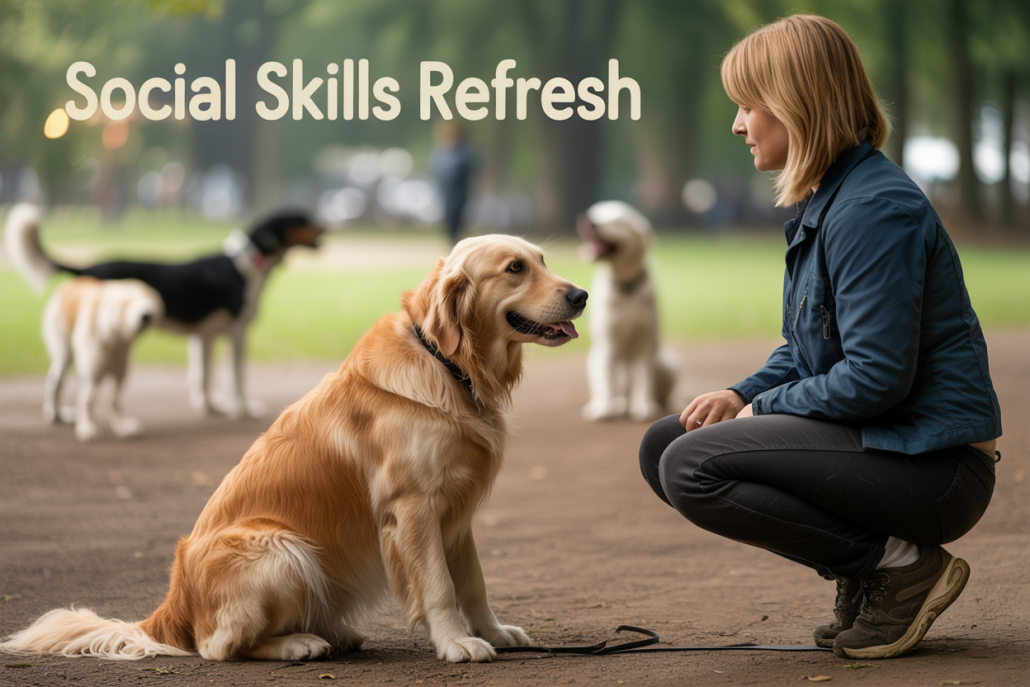
Social Skills Refresh: Helping Dogs Rebuild Confidence After Time Off
Social Skills Refresh: Helping Dogs Rebuild Confidence After Time Off
Dogs coming back from extended isolation, illness, or major life changes often struggle with basic social interactions they once handled with ease. This guide is for dog owners whose pets have lost their social edge and need gentle support getting back into the swing of things with other dogs and people.
Your dog might seem more anxious around strangers, more reactive to other dogs, or more hesitant in situations they once loved. Dog socialization doesn’t have to start from scratch—with the right approach to rebuilding dog confidence, you can help your furry friend regain their social skills and feel secure again.
We’ll walk through how to spot when your dog needs extra social skills training, plus practical dog reintegration techniques that work at your pet’s pace. You’ll also learn specific strategies for socializing anxious dogs and managing setbacks that pop up along the way. These dog confidence-building methods focus on creating positive experiences that stick, so your dog can enjoy social situations again without stress or fear.
Recognizing Signs Your Dog Needs Social Skills Support
Identifying behavioral changes after isolation periods
Dogs who’ve spent extended time away from social situations often show subtle but telling changes in their behavior. You might notice your once-confident pup now hesitates at the dog park gate or seems unsure about approaching familiar canine friends. These shifts in dog socialization patterns can manifest as increased clinginess to you, reluctance to explore new environments, or even changes in their walking pace when other dogs are nearby.
Watch for dogs who suddenly become “velcro pets” – constantly seeking reassurance from their humans in situations they previously handled independently. Some dogs develop new habits, such as excessive ground sniffing when other dogs approach, which can be a displacement behavior indicating stress. Others might start exhibiting regressive behaviors, like accidents in the house or destructive chewing, as their confidence wavers in social settings.
Understanding fear-based reactions to other dogs
Fear manifests differently in every dog, making social anxiety solutions for dogs a personalized journey. Some dogs freeze completely when they spot another dog, while others might try to hide behind their owner’s legs or pull frantically toward the nearest exit. You’ll often see physical signs like a tucked tail, flattened ears, or a lowered body posture that scream, “I want to disappear.”
More subtle fear indicators include lip licking when no food is present, yawning in non-sleepy situations, or panting despite cool weather. Some anxious dogs become hypervigilant, constantly scanning their environment for potential threats. Watch for dogs who seem unable to settle or focus on their owner when other dogs are present – this scattered attention often signals internal stress that needs addressing through socializing anxious dogs techniques.
Spotting over-excitement or lack of impulse control
While fear receives significant attention, over-excitement poses equally challenging socialization hurdles. Dogs struggling with impulse control might launch themselves at other dogs with such enthusiasm that they overwhelm both the other dog and their own nervous system. This behavior often stems from a lack of recent practice in reading social cues and managing their own energy levels.
Look for dogs who can’t seem to “turn off” their excitement – they might spin in circles, bark incessantly, or completely ignore your attempts to redirect their attention. These dogs often struggle to build confidence because their high energy pushes other dogs away, creating negative social experiences. You might also notice they struggle with basic commands they normally know well when other dogs are present, indicating their arousal level is too high for learning.
Assessing your dog’s comfort level in social situations
Reading your dog’s comfort level requires looking beyond obvious stress signals to understand their emotional state. A comfortable dog moves with loose, flowing body language and shows genuine curiosity about their environment and other dogs. They can disengage from social interactions at will and readily refocus on you when called.
Dogs who need canine confidence training often show mixed signals: they might approach other dogs with stiff body language, or they may show interest from a distance but become uncomfortable when the other dog reciprocates. Monitor how quickly your dog recovers from exciting or stressful encounters. A resilient dog bounces back quickly, while one needing support might remain unsettled for extended periods. These observations guide your approach to dog behavioral rehabilitation and help you determine the right pace for rebuilding their social skills.
Creating a Safe Foundation for Social Reintegration
Establishing Calm Energy and Confident Leadership
Your emotional state sets the tone for every interaction your dog has with the world. Dogs are incredibly sensitive to human energy, and an anxious or uncertain owner often creates an anxious dog. Before you begin any dog socialization efforts, you need to check your own mindset and body language.
Start by practicing deep breathing exercises before outings. Your dog picks up on tension in your shoulders, the speed of your movements, and even changes in your voice pitch. When you approach social situations with genuine confidence rather than forced enthusiasm, your dog feels that stability and begins to trust your leadership.
Confident leadership doesn’t mean being dominant or harsh. Instead, it means being predictable, calm, and decisive in your actions. Walk with purpose, keep your shoulders relaxed, and maintain a steady pace. Your dog should feel that you have everything under control, allowing them to focus on learning rather than worrying about potential threats.
Practice this energy at home first. During feeding time, walking around the block, or even simple training sessions, work on projecting calm confidence. Notice when you feel rushed or stressed, and consciously slow down your movements and breathing.
Practicing Basic Obedience Commands for Better Control
Solid obedience skills form the backbone of successful dog confidence building. Before your dog encounters other animals or people, they need to trust that you can guide them through challenging situations. Focus on mastering four essential commands: sit, stay, come, and leave it.
Practice these commands in progressively more distracting environments. Start in your quiet living room, then move to your backyard, then to the front yard with minimal activity. Each successful response in a slightly more challenging environment builds your dog’s confidence in following your guidance.
The “leave it” command becomes particularly crucial during socialization. Your dog needs to understand that when you give this cue, they should immediately disengage from whatever has their attention. This creates a safety net that prevents overwhelming situations from escalating.
Make training sessions short but frequent. Five minutes of focused practice three times daily is more effective than one long session. Keep treats handy and reward immediately when your dog responds correctly. The goal is to create muscle memory so your dog can follow commands even when stressed or excited.
Work on these skills until your dog responds reliably, even with mild distractions present. This foundation provides the tools to interrupt negative interactions and redirect your dog’s attention in social situations.
Building Positive Associations with Outdoor Environments
Many dogs who need social skills support have developed negative associations with outdoor spaces. Perhaps they had a scary encounter at a park, or maybe they simply haven’t been outside enough to feel comfortable. Rebuilding these positive associations takes patience and strategic planning.
Start by simply sitting outside with your dog in a quiet area. Bring high-value treats and let your dog explore at their own pace while you remain calm and relaxed. Don’t force interactions or push your dog toward anything that makes them uncomfortable. Let them sniff, look around, and process the environment naturally.
Gradually choose different outdoor locations, starting with the least stimulating environments. An empty parking lot or a quiet residential street is more effective initially than a busy park. Spend time at each location until your dog shows relaxed body language, then move to more challenging environments.
Create positive experiences by pairing outdoor time with things your dog already enjoys. Bring their favorite toy, practice basic commands they’ve mastered, or even feed meals outside in safe spaces. These activities help your dog associate being outdoors with positive experiences.
Pay attention to your dog’s body language during these sessions. Signs of stress include panting when it’s not hot, excessive drooling, trembling, or trying to hide behind you. If you notice these signs, create more distance from stressors and slow your progress. Dog behavioral rehabilitation requires moving at your dog’s pace, not yours.
Gradual Exposure Techniques That Build Confidence
Starting with visual contact at safe distances
Visual contact serves as the cornerstone of rebuilding dog confidence during socialization. Begin by positioning your dog where they can see other dogs from a comfortable distance – typically 20 to 50 feet away, depending on your dog’s anxiety level. This distance allows your anxious dog to observe without feeling threatened or overwhelmed.
Watch your dog’s body language carefully during these sessions. Signs of relaxation include soft eyes, a loose body posture, and normal breathing. If you notice stiff movements, whale eye, or excessive panting, increase the distance until your dog appears more comfortable. The goal isn’t to push boundaries but to create positive associations with seeing other dogs.
Bring high-value treats and reward calm, relaxed behavior when your dog notices other dogs but doesn’t react fearfully. This dog-confidence-building technique helps create positive neural pathways associated with interactions with dogs. Start with just 5-10-minute sessions to prevent mental fatigue, which can actually set back your progress.
Choose locations with predictable dog traffic, like the edge of a dog park or a busy walking trail. This consistency helps your dog develop expectations and reduces anxiety about surprise encounters. Some dogs may need weeks at this stage before showing readiness to move closer.
Using controlled parallel walking exercises
Parallel walking transforms static observation into dynamic movement while maintaining emotional safety. Find a calm dog with an experienced handler willing to participate in structured exercises. Both dogs should walk in the same direction with sufficient space between them – usually starting at 15-20 feet apart.
The beauty of parallel walking lies in its natural mimicry of pack behavior without direct confrontation. Dogs often feel more confident when moving together rather than facing each other head-on. This dog social skills training method reduces pressure while building positive associations with canine companionship.
Keep initial sessions short – around 10 minutes – and maintain consistent pacing. Avoid sudden changes in direction or stops that could create tension. If either dog shows stress signals, increase the distance or take a break. Success in parallel walking often manifests as relaxed body language, a natural gait, and occasional neutral glances toward the other dog.
Gradually decrease the distance over multiple sessions as your dog demonstrates comfort. Some dogs progress from 20 feet to 10 feet within a few weeks, while others need months. Ideally, the helper dog should be calm, well-trained, and nonreactive to support your dog’s learning.
Implementing brief, positive interactions with calm dogs
Direct interactions mark a significant milestone in socializing anxious dogs and require careful orchestration and timing. Choose helper dogs known for their gentle, patient temperaments – ideally older, well-socialized animals who won’t overwhelm your rebuilding dog with excessive energy or pushy behavior.
Start with brief greetings lasting just 30-60 seconds. Keep both dogs on loose leashes to prevent tension while maintaining control. Allow natural sniffing and investigation, but intervene if either dog shows signs of stress or overstimulation. Positive interactions should end on a high note, before any negative dynamics develop.
Location matters tremendously for these meetings. Neutral territory prevents territorial behavior that might complicate interactions. Parks, quiet streets, or training facilities work better than homes or familiar walking routes where your dog might feel more protective or anxious.
Watch for signs of successful interaction: play bows, relaxed facial expressions, natural tail wagging, and voluntary proximity. These indicate your dog is rebuilding social confidence rather than merely tolerating the encounter. End each session with treats and praise to reinforce the positive experience.
Progressing to supervised off-leash play sessions
Off-leash play represents the culmination of successful dog behavioral rehabilitation, but timing this progression requires careful assessment. Your dog should demonstrate consistent calm behavior around other dogs, show interest in play rather than avoidance, and respond reliably to recall commands before attempting off-leash interactions.
Choose secure, fenced areas with escape routes your dog can access if feeling overwhelmed. Many dogs need the option to retreat to feel truly comfortable engaging in play. Start with one calm, compatible dog rather than group situations that can quickly become chaotic.
Initial off-leash sessions should last only 10-15 minutes and be supervised at all times. Watch for healthy play signals like reciprocal chasing, play bows, and brief pauses where dogs check in with each other. Interrupt any interactions that become too intense or one-sided, as these can damage your dog’s newfound confidence.
Building longer play sessions happens gradually over weeks or months. Some dogs quickly thrive in off-leash environments, while others prefer controlled interactions indefinitely. Respect your dog’s preferences and comfort level – successful canine confidence training means honoring individual personality traits rather than forcing universal outcomes.
Managing Your Dog’s Emotional State During Socialization
Reading and responding to stress signals effectively
Your dog’s body language tells the complete story of their emotional state during social interactions. Watch for subtle signs like lip licking, yawning when not tired, or sudden scratching when not itchy – these are early stress indicators that many pet owners miss. More obvious signals include panting without physical exertion, trembling, or trying to hide behind you. When socializing anxious dogs, these signals are your guide to adjusting the experience’s intensity.
Monitor your dog’s posture and movement patterns. A confident dog moves freely with relaxed muscles, while a stressed dog might freeze, move stiffly, or exhibit repetitive displacement behaviors, such as excessive ground sniffing. Ears pinned back, tail tucked, or excessive drooling are clear signs to immediately distance yourself from the trigger. Dog social skills training becomes much more effective when you respond to these signals before your dog reaches their breaking point.
Using calming techniques and redirection methods
Deep-breathing exercises work surprisingly well for dogs; encourage slow, calm breathing by speaking in soft, measured tones. Create positive associations by pairing challenging social situations with high-value treats or favorite toys. When your dog shows signs of overwhelm, redirect their attention to simple commands they know well, such as “sit” or “touch,” to reset their mental state and build confidence.
Physical calming techniques include gentle massage along your dog’s shoulders and neck, or the “calming wrap” technique, using your hands to apply gentle pressure along their body. Some dogs respond well to classical music or white noise to mask overwhelming environmental sounds during dog socialization sessions. Canine confidence training often benefits from teaching your dog a specific “go to place” command, where they can retreat to a designated safe spot when feeling stressed.
Timing rest breaks to prevent overwhelming experiences
Smart timing prevents setbacks in rebuilding dog confidence. Watch for early stress signals and call breaks before your dog becomes overwhelmed. Most dogs can handle 10-15 minutes of active socialization before needing a mental break, though this varies significantly based on individual temperament and past experiences.
Create structured downtime by moving to a quiet area where your dog can decompress. This might mean stepping away from other dogs, finding a peaceful corner of the park, or even returning to your car for a few minutes. During these breaks, avoid forcing interaction – let your dog choose whether to rest, sniff around, or simply observe from a distance. Dog behavioral rehabilitation works best when you respect your dog’s need for processing time between social challenges.
Rewarding calm, appropriate social behaviors
Timing your rewards makes all the difference in helping shy dogs socialize successfully. Mark and reward the exact moment your dog shows relaxed body language around other dogs or people. This might be as simple as acknowledging when they maintain a loose, wiggly posture or when they choose to look at another dog without stiffening up.
Use a variety of rewards to keep your dog engaged – some dogs prefer treats, others respond better to verbal praise or brief play sessions. The key is delivering the reward while the good behavior is happening, not after the social interaction ends. Dog social anxiety solutions often involve building a strong history of rewards for calm behaviors, which gradually replaces fearful responses with confident, appropriate social skills. Remember that even small improvements deserve celebration – a dog who used to cower behind their owner but now stands calmly beside them has made significant progress worthy of recognition.
Troubleshooting Common Setbacks and Challenges
Addressing aggressive or fearful reactions appropriately
When your dog exhibits aggressive or fearful behaviors during socialization, staying calm makes all the difference. Your dog picks up on your energy, so panicking will only escalate the situation. First, create distance immediately – not as punishment, but as relief. Move your dog to a spot where they can see the trigger but feel safe enough to observe without reacting.
Watch for early warning signs such as stiffening, a “whale eye” (showing the whites), or lip licking. These signals precede dramatic reactions, giving you a chance to redirect before things spiral. Never punish fear-based aggression, as this creates more anxiety and can make your dog’s social anxiety solutions less effective.
Counter-conditioning works wonders here. When your dog notices another dog but remains below the threshold, reward immediately with high-value treats. You’re teaching them that other dogs predict good things. Start this process at whatever distance keeps your dog comfortable – even if that’s across a parking lot initially.
Some dogs need professional help for serious aggression issues. A certified dog behaviorist can design a customized canine confidence training plan that addresses your dog’s specific triggers safely.
Handling over-stimulation and excitement issues
Over-excitement during dog social skills training is often mistaken for progress, but it can actually hinder real learning. An overstimulated dog can’t process information properly or make good choices about social interactions.
Signs of overstimulation include excessive panting, difficulty settling, inappropriate jumping on other dogs, or ignoring your cues. When you spot these red flags, it’s time for a break – not more interaction.
Teaching a reliable “settle” or “place” command before starting socialization gives you a reset button. Practice this at home first, then use it during social sessions when your dog becomes too excited. The goal is to help them learn self-regulation rather than just burning off energy.
Structure helps prevent overstimulation. Instead of free-for-all playtime, try parallel walking with another calm dog, or short supervised greetings with clear start and stop points. This builds socialization skills in anxious dogs while keeping arousal levels manageable.
Consider your dog’s individual limits as well. Some dogs can handle 15 minutes of interaction, others need just 5 minutes to start. Ending on a positive note before overstimulation sets in creates stronger associations than pushing through until your dog melts down.
Working through regression periods with patience
Regression happens to almost every dog going through behavioral rehabilitation, so don’t beat yourself up when your previously social dog suddenly seems scared of their canine buddies again. Dogs don’t learn in straight lines – they have good days and challenging days just like people do.
Common triggers for regression include changes in routine, illness, traumatic experiences, or even just growing up (adolescent dogs often become more reactive). Weather changes, moving homes, or family stress can also cause temporary setbacks in your dog’s progress.
During regression periods, go back to basics without shame. If your dog was comfortable meeting dogs on leash but now seems worried, return to just watching other dogs from a distance. This isn’t failure – it’s smart training that meets your dog where they are today.
Keep detailed notes about what works and what doesn’t. Patterns often emerge that help you better understand your dog’s needs. Maybe mornings work better than afternoons, or maybe your dog does better with female dogs than males.
Helping shy dogs socialize requires celebrating small wins during tough periods. If your dog looked at another dog without hiding, that’s progress worth acknowledging. These small steps lay the foundation for larger breakthroughs later.
Stay consistent with your dog reintegration techniques even when progress feels slow. Dogs find comfort in predictable routines, especially when they’re feeling uncertain about the world around them.
Every dog deserves to feel comfortable and confident around other people and pets, especially after spending extended time away from social situations. The signs are usually clear when your furry friend needs some extra support – they might hide behind you, show signs of stress, or seem overwhelmed in situations they once handled easily. By starting with a solid foundation at home and gradually introducing new experiences, you’re giving your dog the best chance to rebuild their social skills at their own pace.
Remember that setbacks are completely normal and don’t mean you’re doing anything wrong. Your dog’s emotional well-being should always come first, so take breaks when needed and celebrate the small wins along the way. With patience, consistency, and plenty of positive reinforcement, most dogs can regain their social confidence and enjoy being around others again. If you’re feeling stuck or your dog seems particularly stressed, don’t hesitate to reach out to a professional dog trainer or behaviorist who can provide personalized guidance for your specific situation.
Want to see real progress in your dog’s obedience and focus? Our Basic Dog Training in Carlsbad, CA, teaches foundational skills that build confidence and control. For dogs needing a more customized plan, our Private Dog Training in Carlsbad, CA delivers one-on-one instruction to target specific behaviors. If you’re looking for intensive results, our Board & Train in Carlsbad, CA, provides structured, professional training with ongoing support. Explore our full approach to Dog Training and experience expert Dog Training in Carlsbad built on trust, consistency, and proven success.

