Father’s Day Training Sessions Teaching Dads Essential Commands Their Dogs Need
Why Father’s Day is the Perfect Time to Start Dog Training
The Special Bond Between Dads and Dogs
There’s something magical about watching a father interact with his dog. Maybe it’s the way dads naturally take on the role of protector and leader, or how they instinctively understand the need for structure and boundaries. This Father’s Day presents an incredible opportunity to strengthen that unique bond through focused training sessions.
Dogs respond exceptionally well to consistent, calm leadership—qualities many fathers naturally possess. Unlike the emotional ups and downs that can happen with children, dogs thrive on predictable energy and clear expectations. When dads take charge of dog training, they often discover their natural ability to communicate effectively with their four-legged family members.
The timing couldn’t be better. Father’s Day weekend typically offers more relaxed schedules and quality time at home. Instead of rushing through quick training attempts between work and other obligations, dads can dedicate proper attention to building lasting communication patterns with their dogs.
Building Consistency in Household Training Routines
One of the biggest challenges in dog training happens when family members use different commands or inconsistent expectations. Dogs get confused when mom says “down,” dad says “lie down,” and the kids say “get off the couch.” Father’s Day training sessions provide the perfect opportunity to establish household standards that everyone can follow.
Dads often excel at creating systematic approaches to problems. This analytical mindset translates beautifully to dog training, where consistency is absolutely crucial for success. When fathers take the lead on establishing training routines, they typically develop clear protocols that other family members can easily follow.
Think about it this way: dogs learn through repetition and clear communication. Having one person (dad) establish the foundation means fewer mixed signals and faster progress. Once the basic framework is solid, other family members can participate using the same commands and expectations.
The weekend setting allows for multiple short training sessions throughout the day. Rather than cramming everything into one long session, dads can work on 5 essential commands during natural breaks—before meals, after walks, or during quiet evening time.
Setting Up Success for Long-Term Behavioral Goals
Father’s Day training isn’t just about teaching a few commands over the weekend. Smart dads use this focused time to lay groundwork for ongoing behavioral improvements. Whether you’re dealing with excessive barking, jumping on guests, or leash pulling, establishing clear communication patterns now prevents bigger problems later.
Many fathers approach training with specific goals in mind. They want their dog to greet visitors politely, walk calmly on leash, or settle quietly during family gatherings. These aren’t unrealistic expectations—they’re achievable outcomes when training starts with proper foundation work.
The key is understanding that the benefits extend far beyond simple obedience. Well-trained dogs are happier, more confident, and better integrated into family life. They experience less stress because they understand what’s expected of them.
Dads who invest time in proper training often find their dogs become more responsive to subtle cues and corrections. This makes daily life smoother for everyone—no more struggling with an unruly dog during walks or feeling embarrassed when guests visit.
Creating Positive Training Experiences for the Whole Family
Here’s what makes Father’s Day training sessions particularly valuable: they set a positive tone for ongoing family involvement. When dads demonstrate patience, consistency, and effective techniques, they model good training habits for their children to observe and learn from.
Kids love being part of the training process, but they need clear guidance on proper techniques. Fathers who take the lead during initial sessions can teach children how to give commands correctly, when to offer rewards, and how to maintain consistent expectations.
The family dynamic improves dramatically when everyone works together using the same methods. Dogs respond better because they receive consistent messages from all family members. Children learn responsibility and develop stronger bonds with their pets. And parents enjoy a calmer, more controlled household environment.
Father’s Day weekend also provides opportunity for celebration and positive reinforcement. When training sessions go well, the whole family can acknowledge the progress together. This creates positive associations with training for both the dog and family members, making future sessions more enjoyable and productive.
The relaxed holiday atmosphere helps everyone approach training with patience and good humor, rather than frustration or urgency. This positive energy translates directly to better learning outcomes for your dog.
Essential Basic Commands Every Dad Should Master
The Foundation Five: Sit, Stay, Come, Down, and Heel
Every successful dog training journey starts with mastering five fundamental commands that form the backbone of your dog’s obedience. Think of these as the essential vocabulary your dog needs to communicate effectively with you as their handler.
The “sit” command establishes the foundation for all other training. Position yourself directly in front of your dog, hold a treat just above their nose, and slowly move it backward over their head. As their head follows the treat, their bottom naturally touches the ground. The moment they sit, say “sit” clearly and reward immediately. Practice this 5-10 times daily during short sessions.
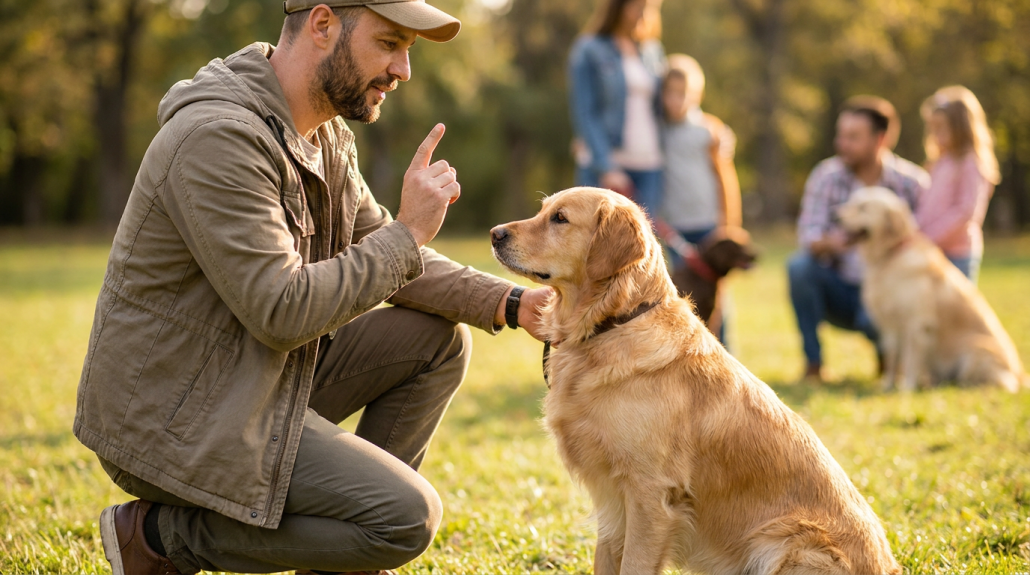
Building on sit, the “stay” command teaches impulse control and patience. Start with your dog in the sitting position, hold your hand up in a stop gesture, take one small step backward, and say “stay.” Wait just two seconds before returning and rewarding. Gradually increase the distance and duration as your dog shows consistency.
The “come” command could literally save your dog’s life in dangerous situations. Begin training in a secure, enclosed area. Get down to your dog’s level, open your arms wide, and say “come” in an enthusiastic voice. When they approach, reward generously with treats and praise. Never call your dog to come for something they perceive as negative.
Teaching “down” requires patience since many dogs view this position as vulnerable. From the sitting position, hold a treat near your dog’s nose and slowly lower it to the ground between their front paws. As they follow the treat down, their elbows should touch the ground. Mark the behavior with “down” and reward immediately.
The “heel” command keeps your dog walking calmly beside you rather than pulling ahead. Hold treats at your hip level on the side where you want your dog to walk. Start walking and reward when your dog maintains position beside your leg. Practice in short bursts to avoid overwhelming your dog.
Establishing Clear Communication Through Consistent Cues
Successful communication with your dog depends entirely on consistency in your verbal cues, hand signals, and body language. Dogs thrive on predictability, and mixed signals create confusion that undermines your training progress.
Choose one word for each command and stick with it throughout your dog’s training journey. If you start with “sit,” don’t switch to “sit down” or “park it” later. The same rule applies to hand signals. A raised palm means stay, a pat on your leg means come, and these gestures should remain constant across all family members.
Your tone of voice matters significantly more than the actual words you choose. Commands should be delivered in a clear, confident voice without shouting or pleading. Dogs respond better to calm authority than frustrated demands. Practice your commands when your dog isn’t around to perfect your delivery.
Body language speaks volumes to your dog before you even open your mouth. Stand tall with confident posture when giving commands. Avoid leaning over your dog, which can seem threatening, or crouching down, which might signal playtime rather than training time.
Common Training Mistakes Dads Make and How to Avoid Them
Many well-intentioned fathers sabotage their training efforts through common mistakes that seem helpful but actually confuse their dogs. Understanding these pitfalls helps you avoid weeks of frustration and inconsistent results.
The biggest mistake involves repeating commands multiple times when your dog doesn’t respond immediately. Saying “sit, sit, SIT” teaches your dog that they don’t need to obey until the third repetition. Instead, give the command once, wait three seconds, and if there’s no response, gently guide your dog into position while repeating the command just once.
Another frequent error involves inconsistent timing. The magic window for marking good behavior is within two seconds of the action. Delayed rewards confuse your dog about which specific behavior earned the treat. Keep treats readily accessible during training sessions to ensure immediate reinforcement.
Many dads also fall into the trap of training only when they’re frustrated with their dog’s behavior. This creates negative associations with training sessions. Instead, schedule regular 5-10 minute sessions when both you and your dog are calm and focused.
Punishment-based corrections often backfire spectacularly. Yelling, physical corrections, or showing frustration teaches your dog to fear training rather than enjoy it. Focus on rewarding correct behaviors rather than punishing mistakes.
Building Confidence in Your Training Voice and Presence
Your confidence level directly impacts your dog’s willingness to follow your lead. Dogs instinctively respond to confident leadership, and building this presence requires practice and patience with yourself.
Start by practicing commands in front of a mirror to observe your posture, facial expressions, and hand gestures. Record yourself giving commands to identify any uncertainty in your voice. Confident trainers speak clearly without rushing through commands or trailing off at the end of instructions.
Establish yourself as the leader through consistent daily routines rather than dominance tactics. Control resources like food, toys, and attention by making your dog work for these rewards through simple commands. This builds respect without creating fear.
Understanding foundation training principles boosts your confidence significantly. Knowledge about why certain techniques work gives you the assurance to stay consistent even when progress seems slow. Remember that building a strong relationship with your dog takes time, and every small success builds toward long-term obedience.
Advanced Commands for Active Dads and Their Dogs
Teaching Drop It and Leave It for Safety and Control
Active dads need commands that work instantly when their dog finds something dangerous on a hiking trail or decides that leftover barbecue is fair game. The “drop it” and “leave it” commands form your safety net, and Father’s Day provides the perfect opportunity to master these essential skills with your canine companion.
Start with “drop it” using a toy your dog enjoys but isn’t obsessed with. Let them play for a few seconds, then offer a high-value treat near their nose while saying “drop it” in a calm, firm voice. The moment they release the toy, mark the behavior with “yes” and reward immediately. Most dogs catch on within three to five repetitions, but consistency matters more than speed.
The “leave it” command requires more impulse control from your dog. Begin by holding a treat in your closed fist and waiting. Your dog will likely paw, lick, and nibble at your hand, but don’t say anything until they back away or look at you.
The instant they disengage, say “yes” and reward from your other hand (never from the fist they were trying to access). This teaches them that ignoring something gets them something better.
Practice these commands during your Father’s Day training sessions using real-world scenarios. Drop a piece of food on the floor and use “leave it” before your dog reaches it. The goal isn’t just obedience—it’s building training methods when you actually need them, like preventing your dog from eating something harmful during outdoor adventures.
Place Command for Managing Energy and Boundaries
Every dad with an energetic dog knows the chaos that ensues when guests arrive or when you’re trying to grill dinner. The “place” command transforms your dog from a whirlwind of excitement into a calm, controlled companion who understands boundaries.
Choose a specific spot—a dog bed, mat, or designated area—and make it your dog’s “place.” Start by leading your dog to the spot on leash, saying “place” as they step onto it. The moment all four paws are on the designated area, reward enthusiastically. Initially, release them after just a few seconds with an “okay” or “free” command.
Build duration gradually during your Father’s Day training sessions. Once your dog understands the basic concept, add distractions. Have family members walk by, drop toys nearby, or practice while you’re cooking. The place command isn’t about punishment—it’s about giving your dog a job and a clear expectation during busy moments.
This command becomes invaluable for active families. Before opening doors for guests, send your dog to place. During outdoor gatherings, use place to prevent begging or jumping on people with food. Smart dads realize that a dog who knows where to go is much easier to manage than one who’s constantly being told what not to do.
Recall Training for Off-Leash Adventures
Nothing beats the freedom of hiking with your dog off-leash, but reliable recall training makes the difference between an enjoyable adventure and a stressful chase through the woods. Father’s Day training sessions should prioritize building a recall that works even when squirrels, other dogs, or interesting smells compete for attention.
Start recall training in a secure, enclosed area where your dog can’t escape if they don’t respond. Use an enthusiastic, happy voice when calling their name followed by “come.” Make yourself irresistible by running away, clapping, or getting low to the ground. When your dog reaches you, reward like you’ve just won the lottery—treats, praise, and play should make coming to you the best part of their day.
Never call your dog to come for something they perceive as negative. If bath time or nail trimming is approaching, go get them instead of using the recall command. This preserves the positive association with coming when called, which could literally save their life in an emergency situation.
Practice recall during your Father’s Day sessions using marker-based training techniques to clearly communicate when your dog makes the right choice. Start with short distances and gradually increase the challenge by adding distractions or practicing in new environments.
Emergency Stop Commands Every Dog Owner Needs
Every active dad needs an emergency brake command that stops their dog instantly, regardless of what’s happening around them. The emergency stop goes beyond regular commands—it’s your last line of defense when your dog is heading toward danger.
Choose a word you don’t use in everyday conversation, like “freeze” or “stop.” Practice this command when your dog is moving toward something they want—their food bowl, a favorite toy, or the door for a walk. Say your emergency word in a firm, clear voice and reward the instant they pause, even briefly.
Build reliability by practicing the emergency stop during high-energy activities. Call it when your dog is running in the yard, playing with other dogs, or investigating something interesting. The goal is creating an automatic response that overrides their current focus, which requires consistent practice and high-value rewards.
Remember that emergency commands only work when they’re trained properly and used sparingly. Using your emergency stop for everyday situations diminishes its effectiveness when you actually need it to prevent your dog from running into traffic or approaching an aggressive animal.
Training Techniques That Work with Dad’s Natural Leadership Style
Leveraging Natural Authority Without Intimidation
Most dads naturally project authority in their daily lives, but translating that presence into effective dog training requires finesse. The key lies in using calm, confident energy rather than force or volume to establish leadership. Dogs respond to consistent, predictable behavior from their handlers, and fathers often excel at providing this steady presence.
Your natural tendency to take charge becomes a training asset when channeled correctly. Instead of raising your voice when your dog doesn’t comply, lower it slightly and maintain steady eye contact. This approach demonstrates control without creating fear or anxiety in your pet. Dogs instinctively recognize authentic leadership and will naturally look to you for guidance when you project quiet confidence.
Body language plays a crucial role in establishing authority. Stand tall with relaxed shoulders, and move deliberately rather than frantically. When your dog tests boundaries (and they will), your calm persistence sends a clear message about who makes the decisions. This measured approach prevents the intimidation that can shut down learning and builds the trust essential for effective training sessions.
Positive Reinforcement Methods That Feel Authentic
Many dads initially feel awkward using high-pitched praise or excessive enthusiasm during training, but positive reinforcement doesn’t require you to change your personality. Find rewards that feel natural to give and that your dog genuinely values. Some dogs respond better to calm approval and physical affection than animated verbal praise.
Timing your rewards correctly matters more than the delivery style. The moment your dog performs the desired behavior, mark it with your chosen reward method. Whether that’s a simple “good” in your normal voice, a treat, or a brief scratch behind the ears, consistency trumps theatrics. Your dog will learn to associate your particular style of approval with success.
Consider using activities your dog enjoys as rewards instead of relying solely on treats. A quick game of tug, permission to sniff an interesting spot during walks, or access to a favorite toy can be powerful motivators. This approach feels more natural for dads who prefer action-based interactions and helps create training sessions that feel like quality time rather than work.
Setting Boundaries While Maintaining Fun and Play
Effective training requires clear rules, but rigidity can kill your dog’s enthusiasm for learning. The most successful dads learn to establish non-negotiable boundaries while keeping sessions engaging and enjoyable. Start each training session with a few minutes of play to build positive associations, then transition smoothly into structured work.
Use play breaks strategically throughout longer sessions to maintain your dog’s attention and prevent frustration. If your dog struggles with a particular command, shift to something they know well to rebuild confidence before returning to the challenging skill. This approach prevents training from becoming a source of stress for either of you.
Teaching commands like “place” command becomes easier when you incorporate fun elements. Turn boundary training into a game by hiding treats in designated areas or making the “place” location extra comfortable with their favorite blanket. Your dog learns the rules while still enjoying the process, creating positive associations with structure and discipline.
Balancing Firmness with Patience in Training Sessions
Patience doesn’t come naturally to everyone, especially when you’re used to giving instructions that get followed immediately. Dog training operates on a different timeline than human interactions, requiring you to adjust expectations accordingly. Progress happens in small increments, and setbacks are normal parts of the learning process.
Firmness in training means consistent enforcement of rules, not harsh corrections. When your dog doesn’t respond to a command, calmly repeat it once, then guide them through the motion if necessary. Avoid the temptation to repeat commands multiple times, which teaches your dog they can ignore you initially. Instead, make the command happen through gentle physical guidance, then reward the successful completion.
Professional in home dog can provide valuable insights into maintaining this balance, especially for dads who struggle with the slower pace of canine learning. Remember that dogs don’t understand deadlines or urgency the way humans do. Your patient persistence combined with clear expectations creates the ideal learning environment for lasting behavioral changes.
The most effective training happens when you can remain calm during challenging moments while maintaining clear standards. This combination of patience and firmness models the kind of leadership that dogs naturally want to follow, making dog training sessions more productive and enjoyable for everyone involved.
Creating Structured Training Sessions That Fit Busy Schedules
15-Minute Daily Training Routines That Make a Difference
Busy dads often think they need hours to make training progress, but consistency beats duration every time. A focused 15-minute session can accomplish more than sporadic hour-long attempts that happen once a week.
Start each session with a two-minute warm-up using commands your dog already knows. This builds confidence and gets their attention focused on you rather than distractions around the house. Spend the next eight minutes on your primary training goal (whether that’s perfecting “stay” or introducing “heel”), then finish with five minutes of practice mixing old and new commands.
The key is timing these sessions when your energy levels match your dog’s needs. Most dogs are naturally more focused during morning hours or early evening, which often aligns perfectly with dad’s schedule before work or after dinner. If your dog gets restless during afternoon naps, that fifteen-minute window becomes productive dog training time instead of frustrated energy.
Keep a simple checklist by the door: warm-up commands, main focus skill, and review mix. This removes the mental load of planning each session and makes it easier to maintain consistency even during stressful weeks.
Weekend Intensive Sessions for Skill Building
Weekends offer the luxury of extended training time, but the goal isn’t marathon sessions that exhaust both you and your dog. Instead, plan two or three focused 30-minute blocks with breaks in between for optimal learning retention.
Saturday mornings work particularly well for introducing complex commands that require more patience and repetition. Your dog’s mind is fresh, and you haven’t hit that afternoon energy crash yet. Use this time for challenging skills like “place” training or leash walking without pulling.
Sunday sessions can focus on real-world application. Take those commands you’ve been practicing in the living room and test them at the local park or during a neighborhood walk. This progression from controlled environment to distractions helps solidify the training in practical situations.
Consider dedicating one weekend session to working on problem behaviors rather than new commands. If your dog jumps on guests or barks at delivery drivers, weekend intensive time allows you to set up controlled scenarios for practice without the pressure of actual visitors.
Incorporating Training Into Daily Activities and Walks
The most effective dads recognize that training doesn’t require formal sessions with treats and clickers. Every interaction becomes an opportunity to reinforce good behavior and practice commands.
Morning coffee routines become “sit” and “wait” practice while you prepare breakfast. Your dog learns patience while you handle your priorities, creating a win-win situation that doesn’t add time to your schedule.
Daily walks transform from simple exercise into mobile classrooms. Practice “heel” for the first block, work on “stay” at intersections, and use interesting smells or other dogs as opportunities to test “leave it” commands. The natural distractions during walks actually accelerate learning because your dog practices focus despite temptations.
Mealtime becomes automatic training time. Before the food bowl goes down, your dog performs a “sit” and “stay.” This routine reinforces your leadership role while teaching impulse control around food, which translates to better behavior in other exciting situations.
Tracking Progress and Celebrating Training Milestones
Dads appreciate measurable progress, and dog training provides plenty of opportunities to track improvement. Keep a simple log (even notes on your phone work) of which commands your dog masters and how consistently they respond.
Rate each command on a scale from one to five: 1 means they ignore you completely, 3 means they respond about half the time, and 5 means immediate compliance regardless of distractions. This system helps you identify which skills need more work and celebrate genuine progress rather than getting frustrated with perfectionist expectations.
Set weekly mini-goals that build toward larger objectives. Rather than expecting perfect “heel” walking immediately, celebrate when your dog stops pulling for ten consecutive steps, then twenty, then a full block. These incremental victories maintain motivation during the inevitable plateaus.
Consider involving the whole family in milestone celebrations. When your dog successfully performs a difficult command sequence, everyone acknowledges the achievement. This reinforces training as a family value rather than just dad’s hobby, and many families find that utilizing board & train programs can accelerate these milestone moments.
Document progress with photos or short videos. That blurry action shot of your dog successfully completing an obstacle course or sitting calmly during a family barbecue becomes a tangible reminder of how far you’ve both come.
Professional Support and Resources for Dad Trainers
When to Seek Professional Training Assistance
Every dad has moments when they realize their training efforts need professional backup. If your dog isn’t responding to basic commands after several weeks of consistent practice, or if behavioral issues like excessive barking, jumping, or leash pulling persist despite your best efforts, it’s time to bring in expert help. Professional trainers offer specialized knowledge that can identify underlying issues you might miss.
Safety concerns warrant immediate professional intervention. Dogs showing signs of aggression, resource guarding, or fear-based reactions require experienced handling to prevent escalation. Similarly, if training sessions consistently end in frustration for both you and your dog, a professional can reset the dynamic and introduce more effective techniques.
Consider professional support when your schedule makes consistent training challenging. Rather than letting gaps in training undo progress, working with dog training professionals ensures continuity even during busy periods at work or family commitments.
Group Classes vs. Private Sessions for Different Learning Styles
Group classes offer unique advantages for social dogs and dads who thrive in community settings. Your dog learns to follow commands despite distractions from other dogs and people, building real-world reliability. The structured environment of basic obedience dog classes provides accountability and consistent progress monitoring.
Private sessions work better for dogs with specific behavioral challenges or dads preferring personalized attention. One-on-one training allows customization for your dog’s unique needs and your family’s specific goals. If your dog struggles with anxiety around other animals or you’re dealing with complex behavioral issues, private sessions provide focused solutions without external pressures.
Consider your learning style too. Some dads benefit from observing other dog-owner pairs, picking up tips from watching different training scenarios. Others prefer the intensive focus of private instruction where every question gets immediate attention. Budget also plays a role, as group classes typically cost less while private sessions offer premium customization.
Continuing Education Resources for Ongoing Success
Training doesn’t end after mastering basic commands. Advanced workshops covering specialized skills like agility, scent work, or therapy dog preparation keep both you and your dog mentally stimulated. Many training facilities offer progression programs that build on foundational skills, introducing new challenges as your confidence grows.
Online resources supplement hands-on training with video demonstrations, troubleshooting guides, and training logs to track progress. Professional trainers often provide recommended reading lists covering canine psychology, positive reinforcement techniques, and breed-specific considerations that deepen your understanding of effective training methods.
Regular refresher sessions prevent skill decay and address new challenges as they arise. Dogs’ needs change with age, health, and environment, requiring ongoing adaptation of training approaches. Staying connected with professional trainers through follow-up sessions ensures long-term success rather than short-term fixes.
Building a Support Network with Other Dog-Owning Dads
Connecting with other fathers navigating similar training journeys creates invaluable support systems. Local dog parks, training classes, and community groups provide natural meeting points for dads sharing experiences, challenges, and solutions. These connections often develop into lasting friendships built around shared responsibilities of pet ownership.
Online communities and social media groups offer 24/7 support when immediate questions arise. Whether dealing with midnight barking, weekend training setbacks, or planning family vacations with dogs, having experienced dads to consult provides practical solutions and emotional support during frustrating moments.
Consider organizing informal training meetups with other families. Group practice sessions reinforce commands in social settings while building community connections. Kids benefit from seeing other families successfully managing well-trained dogs, and dads share techniques that work in real-world situations.
Professional training programs like boot camp often foster these connections naturally, creating cohorts of families working toward similar goals. The shared experience of intensive training builds bonds that extend beyond formal classes, providing ongoing motivation and accountability. Building this network transforms individual training efforts into community support, ensuring both you and your dog have resources for continued success long after Father’s Day training sessions conclude.