Daycare Staff Management During Peak Summer Enrollment Periods
Planning Your Staffing Strategy Before Summer Rush Begins
The first dog comes bounding through your doors at 7 AM, tail wagging and ready for adventure. By 8:30, you’ve got fifteen more pups checking in, and your staff is already feeling stretched thin. Sound familiar? Welcome to summer at a dog daycare, where sunny weather and school vacations create a perfect storm of peak enrollment that can make or break your operational success.
Most daycare owners underestimate just how dramatically their staffing needs will shift during summer months. While you might coast through winter with a skeleton crew, summer demands a completely different approach to dog daycare management that requires months of advance planning.
Analyzing Historical Enrollment Data to Predict Staffing Needs
Your best predictor of future chaos is past chaos, so dig into those enrollment numbers from previous summers. Look beyond just total monthly figures and examine weekly patterns within each month. You’ll often discover that the third week of June hits differently than the first week of August.
Create a detailed spreadsheet tracking daily attendance for each summer month over the past three years. Note which days consistently see 40% higher attendance and which weeks remain surprisingly manageable. Pay special attention to holiday patterns – many families travel during July 4th week, but Memorial Day often brings unexpected rushes as families test out daycare before summer vacations.
Don’t forget to factor in your growth trajectory. If you’ve gained 30% more regular clients since last summer, your peak days won’t just repeat – they’ll amplify. A Tuesday that brought 35 dogs last year might deliver 45 this year, requiring different staff ratios entirely.
Weather data provides another valuable layer of insight. Rainy summer days typically see 15-20% higher attendance as outdoor plans get cancelled, while heat waves above 90 degrees often reduce attendance by 10% as families opt for indoor activities or shorter daycare days.
Creating Flexible Staffing Models for Variable Daily Attendance
Fixed staffing schedules become liability during summer’s unpredictable swings. Instead, develop a tiered staffing model that adapts to daily reality rather than hoping reality adapts to your schedule.
Establish three staffing levels: baseline (your typical winter crew), enhanced (adding 2-3 staff members), and surge (your full summer arsenal). Each level should have predetermined staff-to-dog ratios that maintain safety while maximizing efficiency. For example, baseline might handle 25 dogs comfortably, enhanced manages 40, and surge accommodates 55.
Build shift flexibility into your core team’s contracts from the start. Offer split shifts where staff work morning rush (7-11 AM) and evening pickup (3-7 PM) with breaks between. This approach provides coverage during peak times while reducing labor costs during slower midday periods.
Cross-train your team extensively before summer arrives. When your lead dog handler calls in sick during a 45-dog day, you need multiple people capable of stepping into that role seamlessly. Every team member should understand basic canine behavior management, feeding protocols, and emergency procedures.
Building a Reliable Pool of Seasonal and Part-Time Staff
Your seasonal staffing pool should be recruited and trained well before you need them. Start reaching out to college students, teachers, and other seasonal workers in March, not June when desperation sets in.
Develop relationships with local veterinary schools and animal behavior programs. Students often seek summer experience working with dogs, and they bring valuable knowledge while learning practical skills. Create structured internship programs that benefit both parties while providing you reliable summer coverage.
Consider recruiting previous volunteers or dog walker clients who already understand your facility and philosophy. These individuals require less training time and often appreciate flexible scheduling that accommodates their primary commitments.
Maintain a waitlist of qualified applicants even when you’re fully staffed. Summer brings unexpected turnover as people’s schedules change, and having pre-screened candidates ready eliminates scrambling when positions open suddenly.
Establishing Emergency Coverage Protocols for Last-Minute Changes
Summer emergencies multiply faster than puppies, so prepare for scenarios beyond typical call-outs. What happens when three staff members get food poisoning from the same restaurant? How do you handle unexpected enrollment surges when word-of-mouth brings five new clients on the same Tuesday?
Create an emergency contact tree that includes backup staff, trusted dog walkers, and even friendly competitors who might help during genuine emergencies. Maintain relationships with temporary staffing agencies that place animal care workers, even if their rates seem high – they’re cheaper than turning away paying customers.
Establish clear protocols for reducing capacity safely when staffing falls short. Know which clients have flexible schedules and would accept shortened days, and maintain waiting lists of people willing to take last-minute spots when others cancel.
Document every emergency scenario and your response for future reference. These situations become learning opportunities that strengthen your planning for subsequent summers and help refine your staffing strategies.
Recruiting and Onboarding During High-Demand Seasons
Streamlining Your Hiring Process for Quick Turnaround
When summer enrollment spikes, you can’t afford a hiring process that drags on for weeks. The most successful daycare facilities build streamlined systems that get quality candidates through the door within 5-7 days of initial contact.
Start by creating a standardized application that focuses on the essentials: previous experience with dogs, availability during peak hours (typically 7 AM to 6 PM), and physical ability to handle multiple energetic animals. Skip lengthy personality assessments during the initial screening. You can evaluate cultural fit during the practical interview stage.
Implement batch interviewing sessions twice weekly rather than scheduling individual appointments. This approach lets you compare candidates side-by-side while maintaining momentum in your hiring pipeline. During these sessions, include a practical component where applicants interact with your facility dogs under supervision.
Consider partnering with local veterinary schools, animal behavior programs, and even pet sitting services to build a pre-qualified talent pipeline. These partnerships often yield candidates who already understand canine behavior basics and can hit the ground running.
Essential Training Requirements for New Summer Hires
Summer hires need focused, practical training that prepares them for high-volume operations without overwhelming them with information they won’t use immediately. Your training program should prioritize safety protocols, basic dog training commands, and emergency procedures within the first three days.
Create a competency checklist covering critical skills: recognizing signs of overheating, breaking up play that becomes too rough, and identifying stress signals in overwhelmed dogs. New hires should demonstrate proficiency in each area before working independently with customer pets.
Pair inexperienced staff with seasoned team members for their first week. This mentorship approach reduces training time while ensuring new employees learn your facility’s specific protocols rather than generic dog handling techniques. The mentor can gradually increase the new hire’s responsibilities as confidence builds.
Don’t forget administrative training. Summer staff need to understand check-in procedures, vaccination record verification, and communication protocols with pet owners. These operational details often get overlooked but directly impact customer satisfaction during busy periods.
Background Check and Certification Considerations
Background checks become more complex during peak hiring seasons, but you can’t compromise on safety standards. Work with screening services that offer expedited processing for an additional fee. The investment pays for itself when you can onboard qualified candidates before they accept positions elsewhere.
Prioritize checks that reveal criminal history involving animal welfare, theft, or violence. Financial background issues might be less critical for temporary seasonal positions, but any history of animal abuse should be an immediate disqualifier regardless of other qualifications.
For certifications, focus on requirements you can control. Pet first aid and CPR certifications can often be completed online within 24-48 hours. Some facilities arrange group certification sessions for new hires, which reduces individual costs while ensuring everyone receives consistent training.
Consider provisional hiring with the understanding that employment is contingent on clean background checks and required certifications. This approach lets promising candidates start orientation and non-animal contact training while their paperwork processes, reducing overall time to productivity.
Setting Clear Expectations for Seasonal Employment Terms
Transparent communication about employment terms prevents misunderstandings that can derail your staffing strategy mid-summer. Be explicit about the temporary nature of seasonal positions, typical end dates, and any potential for conversion to permanent roles.
Address scheduling expectations upfront. Summer staff often need flexibility around existing commitments, but your facility requires reliable coverage during peak hours. Create written agreements that specify minimum availability requirements, advance notice needed for time off requests, and consequences for no-shows.
Establish clear performance standards specific to high-volume operations. Seasonal employees should understand that summer intensity differs significantly from quieter periods. Spell out expectations for multitasking, maintaining energy levels throughout long shifts, and handling stressed or overstimulated animals.
Consider offering performance incentives tied to completion of the full seasonal contract. Bonuses for staff who work through Labor Day weekend help reduce turnover during your busiest weeks. These incentives often cost less than constantly recruiting and training replacements.
Finally, discuss potential career development opportunities. Many seasonal hires are students or career changers exploring the pet care industry. Those who demonstrate strong performance during summer might become excellent candidates for permanent positions when regular staff positions open.
Managing Increased Workloads and Staff Burnout
Implementing Rotation Schedules to Prevent Exhaustion
During peak summer enrollment, maintaining fresh energy among your daycare staff becomes crucial for both employee wellbeing and dog safety. A well-structured rotation schedule prevents the physical and mental fatigue that naturally builds when managing larger groups of energetic dogs in hot weather.
Create rotation patterns that move staff between high-intensity areas (like outdoor play zones) and lower-energy positions (such as indoor rest areas or feeding stations) every two to three hours. This approach gives team members regular breaks from the most demanding aspects of dog supervision while ensuring coverage remains consistent.
Consider implementing a buddy system where experienced handlers pair with newer staff during peak hours. The veteran employee can provide guidance while the newer team member handles routine tasks, creating a natural learning environment that distributes workload effectively.
Schedule your most experienced staff during the busiest arrival and pickup times, typically early morning and late afternoon. These periods often involve managing anxious dogs and stressed pet parents, requiring handlers who can maintain calm authority even when dealing with challenging situations.
Recognizing Early Warning Signs of Staff Overwhelm
Staff overwhelm doesn’t happen overnight, but it can escalate quickly during intense summer periods. Watch for behavioral changes like increased irritability, shortened patience with both dogs and clients, or reluctance to take on additional responsibilities they normally handle well.
Physical exhaustion manifests differently in daycare environments. Team members might start favoring easier tasks, avoiding the more active play areas, or showing decreased attention to safety protocols. When staff begin cutting corners on cleaning routines or dog observation, it’s often a sign they’re reaching their capacity limits.
Communication patterns also shift under stress. Staff who typically collaborate well might become more isolated, while others may express frustration more frequently about workload distribution or facility conditions. These changes in team dynamics often precede more serious burnout issues.
Monitor attendance patterns closely during summer months. Increased sick days, requests for schedule changes, or reluctance to work overtime shifts that were previously acceptable can indicate mounting stress levels that need immediate attention.
Creating Support Systems for High-Stress Days
Establish clear protocols for particularly challenging days when enrollment spikes unexpectedly or when weather conditions create additional stress factors. Having predetermined support systems eliminates the need for on-the-spot decisions during already hectic periods.
Develop a rapid-response plan that includes calling in backup staff, adjusting group sizes, or temporarily modifying activity schedules to reduce intensity. Your team should know exactly who to contact and what procedures to follow when situations become overwhelming.
Create designated quiet zones where staff can take brief mental health breaks throughout their shifts. These areas should be separate from dog activity zones but still allow for supervision responsibilities. Even five-minute decompression periods can significantly impact stress management during summer heat challenges.
Implement a check-in system where supervisors regularly connect with team members about their stress levels and workload concerns. These conversations should happen proactively, not just when problems become apparent. Regular communication prevents small issues from developing into larger burnout situations.
Maintaining Quality Care Standards Despite Volume Increases
Higher enrollment numbers can pressure staff to rush through important safety and care protocols. Establish non-negotiable standards that remain consistent regardless of how busy the facility becomes, particularly around dog monitoring, health checks, and emergency procedures.
Adjust your staff-to-dog ratios appropriately for summer volume increases. While it might seem cost-effective to stretch existing staff further, maintaining proper ratios ensures both dog safety and manageable workloads for your team. Most facilities find that 1:10 or 1:12 ratios work well for supervised play groups.
Focus on efficiency improvements rather than shortcuts. Train staff on streamlined cleaning procedures, optimized feeding routines, and effective group management techniques. These skills help maintain quality while reducing the time required for essential tasks.
Regular quality audits become even more important during peak periods. Schedule brief daily reviews of key areas like cleaning standards, dog behavior observations, and client communication. This ongoing assessment helps identify when volume increases are beginning to impact care quality, allowing for immediate adjustments.
Remember that maintaining standards during busy periods actually reduces stress for both staff and dogs. When everyone knows what’s expected and systems run smoothly, the increased workload becomes more manageable for your entire team.
Optimizing Daily Operations with Larger Staff Teams
Coordinating Multiple Staff Members During Busy Periods
When your daycare team suddenly doubles in size for summer, coordination becomes your biggest operational challenge. Rather than letting staff figure things out on their own, establish clear positioning systems that prevent chaos during the busiest parts of the day.
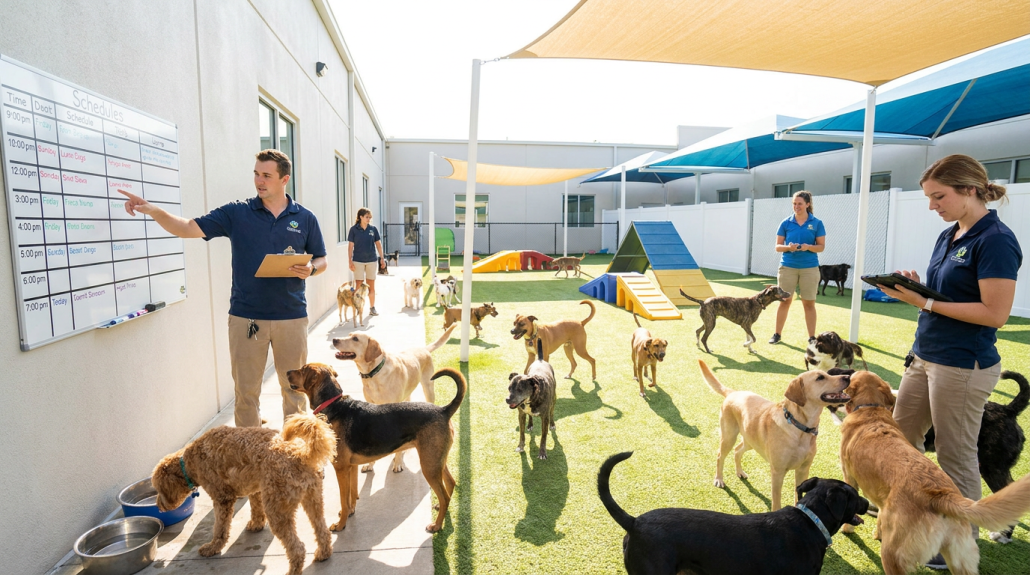
Create designated zones within your facility and assign specific staff members to each area. This might include a play yard supervisor, an indoor activity coordinator, and a feeding station manager. Having staff rotate through these zones every two hours prevents burnout while ensuring no area gets overwhelmed when dog parents arrive for pickup between 4-6 PM.
The most successful daycares implement a buddy system pairing experienced staff with summer hires. This approach helps new team members learn your specific protocols while providing backup during unexpected situations. When dealing with doggie daycare operations that suddenly expand from 30 to 80 dogs, having these support structures prevents small issues from becoming major problems.
Consider implementing visual cues like colored vests or name tags that indicate each staff member’s primary responsibility. Dogs often respond better to familiar faces, so maintaining some consistency in who handles feeding times or outdoor activities helps reduce anxiety levels during busy periods.
Communication Systems That Scale with Team Size
Your two-person team communication system won’t work when you’re managing eight staff members simultaneously. Summer enrollment periods demand robust communication tools that function even when everyone’s hands are literally full of leashes and treats.
Invest in hands-free communication devices like headsets or walkie-talkies for key supervisors. This allows immediate coordination when someone needs backup in the play yard or when a dog requires immediate attention from specific staff members. Many facilities find that having one designated “communication hub” person during peak hours prevents important messages from getting lost in the chaos.
Establish simple hand signals for common situations that occur during outdoor activities. A raised fist might signal “need assistance,” while pointing to a specific area indicates where help is needed. These visual systems work particularly well when managing large groups of energetic dogs who make verbal communication challenging.
Daily briefings become essential with larger teams. Schedule 10-minute team meetings before opening and after closing to address any behavioral changes in regular dogs, discuss new arrivals, and coordinate the next day’s activities. This prevents miscommunication that could affect both dog training consistency and overall safety protocols.
Delegation Strategies for Lead Staff and Supervisors
Effective delegation during peak enrollment requires trust in your team’s abilities while maintaining quality standards. Start by identifying which tasks absolutely require experienced staff oversight and which can be safely handled by newer team members.
Create task hierarchies that match staff experience levels. Experienced team members should handle dog intake assessments, manage challenging behavioral situations, and oversee medication administration. Summer staff can focus on basic play supervision, cleaning protocols, and assisting with feeding routines under guidance.
Develop clear escalation procedures that newer staff can follow when situations exceed their experience level. This might include protocols for breaking up dog conflicts, handling anxious dogs, or managing aggressive behavior. Having these procedures written down and posted in key areas prevents hesitation during critical moments.
Avoid the temptation to micromanage every decision when your team grows. Instead, establish outcome-based expectations and let experienced staff determine the best methods for achieving them. This approach builds confidence in your team while ensuring that quality standards remain consistent even during the busiest summer days.
Managing Group Activities with Extended Staffing
Larger staff teams create opportunities for more engaging group activities, but they also require careful coordination to prevent confusion among both dogs and handlers. Structure these activities around clear leadership roles and backup plans.
Designate activity leaders who take primary responsibility for specific group exercises or enrichment sessions. This person directs the activity while other staff members position themselves strategically around the group to provide support and manage individual dogs who need extra attention.
Plan activities that can accommodate varying staff skill levels. Simple activities like group walks or basic agility courses allow experienced staff to lead while newer team members learn through observation and gradual participation. This approach maintains engagement for the dogs while providing valuable training opportunities for your summer hires.
Build flexibility into your activity schedules that accounts for unexpected staffing changes. Summer staff might call in sick or face transportation issues, so having backup activity options that require fewer people prevents disappointing the dogs or disrupting their daily routines.
Remember that dogs pick up on staff energy levels and coordination. When your team works smoothly together, the dogs remain calmer and more responsive to commands. This positive feedback loop makes managing larger groups significantly easier throughout those demanding summer enrollment periods.
Financial Planning for Seasonal Staffing Fluctuations
Budgeting for Temporary Staff Compensation
Summer enrollment spikes can catch daycare owners off guard financially, especially when it comes to compensating temporary staff. The key is building a realistic budget that accounts for higher hourly rates, overtime costs, and potential signing bonuses that become necessary during peak demand periods.
Start by calculating your expected enrollment increase (typically 30-40% during summer months) and determine the additional staff hours needed. Temporary workers often command 15-20% higher hourly rates than permanent employees, and you might need to offer weekend or holiday pay to attract quality candidates. Factor in recruitment costs, background check fees, and any equipment or uniform expenses for new hires.
Consider establishing a dedicated summer staffing reserve fund throughout the year. Setting aside 8-10% of your monthly revenue during slower periods creates a financial cushion for peak season expenses. This approach prevents cash flow strain when you suddenly need to hire five additional staff members in June.
Balancing Labor Costs with Enrollment Revenue
While summer brings increased revenue through higher enrollment, labor costs can quickly eat into profits if not managed carefully. The goal is maintaining quality care while keeping staffing expenses at sustainable levels.
Monitor your staff-to-dog ratio closely during busy periods. Many facilities aim for 1:10 or 1:12 ratios, but consider whether slight adjustments (1:14 with experienced staff) might work without compromising safety or service quality. This requires training your team to handle larger groups effectively, which connects to your broader dog training expertise.
Track daily labor costs as a percentage of revenue. During summer peaks, labor might represent 35-45% of daily income compared to the typical 25-30%. If this percentage climbs too high, consider premium pricing for peak hours or implementing waiting lists rather than over-staffing.
Smart scheduling becomes crucial. Stagger staff arrival times based on drop-off patterns, and cross-train employees to handle multiple roles. A staff member trained in both daycare supervision and basic dog training provides flexibility when managing fluctuating daily numbers.
Planning for Post-Summer Staff Retention or Transitions
The end of summer creates a financial planning challenge: which temporary staff should you retain, and how do you handle the transition without damaging morale or breaking the budget?
Evaluate each temporary employee’s performance throughout the summer. Strong performers who show genuine interest in dog care might become valuable permanent additions. However, retaining too many staff members post-summer can strain finances during typically slower fall months.
Plan for graduated transitions rather than abrupt layoffs. Offer part-time positions to your best temporary workers, or create a reliable substitute list for future busy periods. This approach maintains relationships while controlling costs. Some facilities offer temporary staff first priority for holiday coverage or future summer positions.
Consider the costs of constant turnover versus retaining slightly more staff year-round. Training new employees each summer involves significant time and money. Keeping a few additional permanent staff members might actually prove more economical than repeatedly hiring and training temporary workers.
Understanding Payroll and Benefits Implications
Summer staffing increases create complex payroll considerations that affect your bottom line beyond basic hourly wages. Understanding these implications prevents costly surprises come tax season.
Temporary employees still require proper tax withholdings, workers’ compensation coverage, and unemployment insurance contributions. These costs add approximately 15-20% to their base hourly rate. Factor this into your budgeting calculations rather than discovering it later.
Overtime regulations become particularly important during busy summer periods. Employees working over 40 hours weekly require time-and-a-half compensation, which can significantly impact labor costs. Monitor weekly hours carefully and consider hiring additional part-time staff rather than allowing excessive overtime.
Benefits decisions affect both costs and retention. While temporary staff typically don’t receive full benefits packages, consider offering small perks like staff discounts, flexible scheduling, or performance bonuses. These low-cost benefits can improve retention without major financial impact.
Keep detailed records of all summer staffing expenses. These costs may qualify for various business deductions, and accurate documentation supports budget planning for future peak periods. Many daycare owners underestimate the true cost of seasonal staffing, leading to repeated financial strain each summer.
Preparing for the Post-Summer Transition
Evaluating Staff Performance During Peak Periods
Summer enrollment creates the perfect environment for assessing staff capabilities under pressure. The increased workload, new team dynamics, and heightened client expectations reveal who truly excels in fast-paced daycare environments. Document specific instances where staff members demonstrated exceptional problem-solving skills, maintained calm during chaotic moments, or went above and beyond for clients.
Pay attention to how employees interact with both dogs and their human families during stressful periods. Staff who maintain positive attitudes while managing twenty energetic pups deserve recognition. Those who struggle with basic commands or become overwhelmed might need additional training before next summer’s rush.
Create performance metrics that capture both quantitative and qualitative factors. Track attendance rates, client feedback scores, and incident reports throughout the peak period. Staff members who consistently show up on time, receive glowing reviews from pet parents, and maintain safety standards even when exhausted demonstrate the reliability your business needs year-round.
Identifying Top Performers for Permanent Positions
Summer staff who shine brightest often make excellent candidates for permanent roles. Look beyond technical skills to identify employees who genuinely connect with dogs and understand the nuances of canine behavior. These individuals typically become your most valuable team members because they view dog training and daycare as more than just seasonal work.
Consider offering permanent positions to staff who proactively suggest improvements, help train newer employees, or naturally take leadership roles during busy periods. These employees often possess the initiative and passion that drive long-term business success. Their familiarity with your facilities, protocols, and clientele gives them significant advantages over completely new hires.
Schedule one-on-one conversations with your top performers before summer ends. Discuss their interest in permanent positions, potential career growth opportunities, and any additional training they might need. Early conversations prevent losing quality staff to competitors and demonstrate your investment in their professional development.
Managing Staff Reductions as Enrollment Normalizes
Reducing staff numbers requires careful planning and clear communication. Begin conversations about seasonal expectations during the hiring process, but revisit these discussions as summer winds down. Provide at least two weeks’ notice before ending temporary positions, allowing staff time to secure other employment opportunities.
Handle departures professionally by offering positive references and maintaining open doors for future seasonal positions. Staff members who performed well but weren’t offered permanent roles might return next summer with additional experience and improved skills. Building a reliable pool of returning seasonal workers reduces future recruitment costs and training time.
Consider offering part-time positions to exceptional seasonal staff who don’t qualify for full-time roles. Weekend and holiday coverage often creates gaps in regular schedules, and familiar faces help maintain consistency for your four-legged clients. These arrangements keep valuable employees connected to your business while providing flexible scheduling options.
Documenting Lessons Learned for Next Year’s Planning
Capture detailed insights while summer experiences remain fresh in everyone’s memory. Schedule debriefing sessions with both permanent and seasonal staff to gather feedback about what worked well and what needs improvement. Their frontline perspectives often reveal operational blind spots that management might miss.
Document specific challenges you encountered, from staffing shortages during unexpected enrollment spikes to communication breakdowns during shift changes. Record the solutions that proved most effective, including which training methods worked best for new hires and how you successfully managed peak-period stress levels.
Create a comprehensive playbook that includes recruitment timelines, interview questions that identify quality candidates, onboarding checklists, and performance evaluation criteria. This documentation transforms hard-won experience into actionable strategies for future summers. Include financial data about optimal staff-to-dog ratios, overtime costs, and revenue impacts from different staffing levels.
The post-summer transition period offers invaluable opportunities to strengthen your daycare’s foundation for long-term success. By thoughtfully evaluating performance, retaining top talent, and documenting lessons learned, you’re building systems that will make next year’s peak season smoother and more profitable. Take time now to implement these practices while the summer experience is still fresh, ensuring your staff management strategies continue evolving and improving year after year.