May Weather Transitions Adjusting Outdoor Daycare Activities for Temperature Changes
Recognizing Early Spring Weather Patterns That Impact Canine Comfort
Picture this: it’s 7 AM and your facility’s outdoor temperature reads a comfortable 65°F, perfect for morning playtime. By noon, that same thermometer hits 78°F, and suddenly your energetic Golden Retriever pack is panting heavily in what was supposed to be ideal weather. Spring’s unpredictable nature creates unique challenges for dog daycare professionals who must constantly adapt their outdoor programs to protect canine comfort and safety.
The transition from winter’s predictability to spring’s volatile weather patterns requires vigilant monitoring and quick decision-making. Unlike the steady cold of February or consistent heat of July, May presents a moving target that can shift dramatically within hours. Professional daycare providers know that supervised outdoor activities become exponentially more complex during these transitional months.
Temperature fluctuation warning signs throughout the day
Early morning temperatures during May can deceive even experienced daycare staff. What starts as a crisp 55°F at sunrise often climbs to 75°F by 10 AM, creating a 20-degree swing that affects different dogs in varying ways. Senior dogs with joint issues may struggle with the morning chill, while thick-coated breeds like Huskies become uncomfortable once temperatures rise.
Watch for subtle behavioral changes that signal temperature discomfort. Dogs may seek shade more frequently, reduce their play intensity, or position themselves near building walls for warmth during cooler periods. Conversely, increased panting, excessive drooling, or reluctance to engage in normal activities often indicates the temperature has climbed beyond their comfort zone.
Smart daycare facilities implement hourly temperature checks during transitional weather periods. Staff should document not just air temperature, but also note wind conditions and cloud cover, as these factors significantly impact how dogs experience the environment. A 70°F day with strong winds feels much different than the same temperature on a calm, sunny afternoon.
Wind chill factors and their effects on different coat types
Wind chill calculations become crucial during May’s unpredictable weather patterns. A moderate 65°F temperature with 15 mph winds creates an effective temperature closer to 58°F, particularly affecting dogs with thin coats or minimal body fat. Breeds like Whippets, Italian Greyhounds, and senior dogs with sparse fur require additional monitoring during windy conditions.
Double-coated breeds present the opposite challenge. Their natural insulation, designed for cold weather protection, becomes a liability when spring winds shift directions and temperatures rise unexpectedly. Malamutes and Newfoundlands may overheat quickly when wind patterns change from cool northern breezes to warm southern gusts.
Professional daycare staff should position outdoor play areas to take advantage of natural windbreaks during cooler periods while ensuring adequate airflow during warmer parts of the day. Portable barriers or strategic use of facility buildings can help create microclimates that accommodate different coat types simultaneously.
Ground temperature variations and paw pad protection
Ground surfaces absorb and retain heat differently than air temperatures, creating potential hazards that many daycare providers overlook. Concrete surfaces can reach temperatures 20-30 degrees higher than air temperature, while grass and dirt remain closer to ambient conditions. During May’s temperature swings, these differences become pronounced.
The five-second hand test remains the gold standard for ground temperature assessment. If staff cannot comfortably hold their palm against the surface for five seconds, it’s too hot for unprotected paw pads. However, this test should be performed on all surface types within the play area, not just one representative spot.
Morning dew and overnight cooling can create slippery conditions on smooth surfaces, while afternoon sun creates hot spots that weren’t problematic hours earlier. Dogs with sensitive pads or previous injuries require extra attention during these transitional periods. Unlike unsupervised park environments, professional daycare settings allow for constant surface monitoring and immediate relocation when conditions become unsafe.
Humidity changes and breathing considerations for flat-faced breeds
Humidity fluctuations during May weather transitions pose serious risks for brachycephalic breeds like Bulldogs, Pugs, and Boston Terriers. These dogs struggle with temperature regulation under normal conditions, and sudden humidity spikes can quickly lead to breathing distress or overheating.
Morning humidity levels often exceed 80% during spring months, dropping to 40-50% by afternoon as temperatures rise. This dramatic shift affects flat-faced breeds differently than temperature changes alone. High humidity prevents effective panting, their primary cooling mechanism, while rapid humidity drops can irritate sensitive respiratory tissues.
Professional facilities monitor both temperature and humidity levels simultaneously, using the combination to determine safe activity levels for different breed groups. Brachycephalic dogs may require indoor alternatives or reduced activity intensity when humidity exceeds 70%, regardless of air temperature. Providing shaded rest areas with good airflow becomes essential during these transitional weather periods.
Adapting Play Areas and Equipment for Variable Conditions
Creating sheltered zones within outdoor spaces
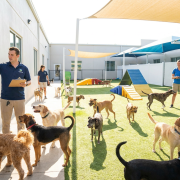
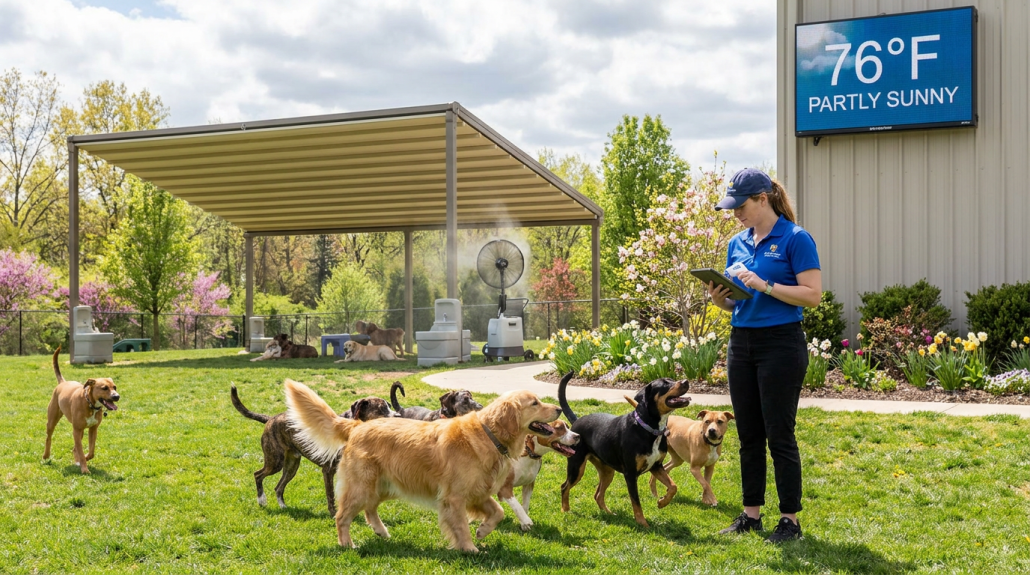
May’s unpredictable weather patterns require strategic planning for sheltered areas that protect dogs from sudden downpours or unexpected temperature drops. Professional daycare facilities must establish multiple refuge zones throughout their outdoor spaces rather than relying on a single covered area.
The most effective approach involves creating a network of interconnected sheltered spaces using permanent structures like gazebos, overhangs, and lean-to shelters. These should be positioned to catch prevailing winds during hot spells while providing adequate drainage during spring storms. Each shelter zone should accommodate approximately 15-20% of your total dog capacity to prevent overcrowding during weather events.
Portable shelter solutions offer additional flexibility for May’s changeable conditions. Pop-up canopies with weighted bases can be deployed quickly when afternoon thunderstorms threaten, while retractable awnings provide adjustable coverage as cloud patterns shift. The key lies in having shelter options that can be modified within minutes rather than requiring lengthy setup procedures that leave dogs exposed.
Adjusting water station placement and temperature
Water accessibility becomes critical during May’s temperature fluctuations, requiring careful consideration of both placement and temperature control. Traditional ground-level bowls may freeze during unexpected cold snaps or become scalding hot when placed in direct sunlight during warm afternoons.
Elevated water stations work best during transitional weather periods, keeping water sources away from muddy ground while making them easily accessible for dogs of all sizes. Installing these stations in partially shaded areas prevents rapid temperature changes while ensuring adequate lighting for supervision. Multiple smaller stations distributed throughout the play area prove more effective than fewer large ones, particularly when weather forces dogs to cluster in sheltered zones.
Temperature monitoring becomes essential during May’s variable conditions. Water should remain between 50-70°F for optimal canine comfort, requiring frequent checks and adjustments. Insulated dispensers help maintain consistent temperatures, while automatic refill systems ensure fresh water availability even when staff attention is focused on managing indoor activities during sudden weather changes.
Modifying agility equipment for wet and dry conditions
Agility equipment requires significant modifications to remain safe and functional during May’s alternating wet and dry periods. Standard equipment configurations that work well in consistent conditions become hazardous when moisture levels fluctuate rapidly throughout the day.
Non-slip surfaces become paramount during this transitional period. Rubber mats with drainage channels should replace basic coverings around jump bases and contact obstacles. These modifications prevent dogs from slipping on wet surfaces while providing adequate grip during dry conditions. The investment in weather-appropriate surfacing materials pays dividends in reduced injury rates and maintained activity levels.
Height adjustments for jumps and obstacles should account for reduced traction during wet conditions. Lowering jump heights by 2-3 inches during morning dew or after rain showers reduces stress on joints while maintaining engagement. Tunnels require elevated positioning to prevent water accumulation, while weave poles benefit from wider spacing when ground conditions affect normal movement patterns.
Equipment inspection protocols must intensify during May’s variable weather patterns. Daily checks should include surface conditions, stability testing, and moisture assessment. Any equipment showing signs of weather-related deterioration should be removed immediately to prevent accidents.
Setting up quick-change shade and windbreak solutions
Rapid weather transitions demand shade and windbreak systems that can be deployed or modified within minutes rather than hours. Fixed installations rarely provide the flexibility needed during May’s unpredictable conditions, making portable solutions essential for maintaining optimal outdoor environments.
Modular shade systems using heavy-duty tarps and adjustable poles offer maximum versatility for changing conditions. These systems can be configured as overhead canopies during sunny periods or angled as windbreaks when temperatures drop and breezes intensify. Staff should be trained in rapid deployment techniques to ensure dog comfort isn’t compromised during weather transitions.
Strategic positioning of windbreaks requires understanding local weather patterns and prevailing wind directions during May. Temporary barriers using portable fencing panels with weather-resistant fabric attachments can redirect uncomfortable breezes while maintaining airflow during warmer periods. These solutions work particularly well when combined with considerations for water safety protocols if pools or water features are present.
The most successful facilities maintain pre-staged equipment caches at multiple locations, enabling rapid response to changing conditions. This approach ensures that shade and wind protection can be established quickly without requiring staff to traverse the entire facility while supervising active dogs during weather transitions.
Scheduling Flexible Activity Rotations Based on Daily Forecasts
Morning assessment protocols for weather-appropriate activities
Professional daycare facilities begin each day with a comprehensive weather evaluation protocol that goes beyond simply checking the thermometer. Staff members conduct a multi-point assessment at 6:30 AM, examining current temperature, humidity levels, wind conditions, and hourly forecasts through 6 PM. This early evaluation determines the day’s activity framework before dogs arrive.
Temperature thresholds require specific documentation. When readings fall between 45-50°F, outdoor time gets reduced by 30% with increased indoor enrichment activities. Above 80°F triggers the summer heat pet protocols, including paw pad checks every two hours and mandatory shade rotations. Wind chill factors below 40°F automatically shift morning exercise to indoor spaces, while humidity above 70% during warm weather necessitates shortened play sessions.
Staff document weather decisions in daily logs, noting specific adjustments made and their reasoning. This creates valuable patterns for future planning and ensures consistency across different team members. Regular morning briefings communicate these decisions to all handlers, establishing clear expectations for the day’s modified routines.
Indoor backup plans for sudden weather shifts
Sudden weather changes demand immediate response systems that maintain dogs’ physical and mental stimulation levels. Professional facilities maintain fully equipped indoor spaces with climate control, allowing seamless transitions when outdoor conditions become unsafe. These backup areas include separate zones for different energy levels and play styles.
Interactive puzzle stations replace traditional outdoor exploration, challenging dogs mentally while keeping them engaged during weather delays. Scent work games using treat-dispensing toys provide excellent alternatives to outdoor sniffing activities. Staff rotate these indoor enrichment options every 45 minutes to prevent boredom and maintain appropriate stimulation levels.
The doggy day camp model proves particularly effective during weather transitions, offering structured indoor programming that mirrors outdoor energy expenditure. Indoor agility courses using soft equipment provide safe physical challenges, while supervised socialization continues in temperature-controlled environments.
Communication protocols ensure pet parents receive real-time updates about schedule modifications. Text alerts inform families when outdoor time gets reduced or eliminated, explaining the safety reasoning behind these decisions. This transparency builds trust and demonstrates the facility’s commitment to canine welfare over convenience.
Group size adjustments for temperature-sensitive periods
Temperature extremes require strategic group size modifications to ensure adequate supervision and individual attention. During hot weather periods, playgroups get reduced by 25-30% to allow closer monitoring of heat stress indicators. Smaller groups enable staff to conduct more frequent individual health checks and ensure proper hydration compliance.
Cold weather adjustments focus on maintaining warmth through controlled activity levels. Groups of 6-8 dogs receive more intensive supervision than standard groups of 12-15, allowing handlers to quickly identify signs of discomfort or excessive shivering. Senior dogs and those with thin coats require special consideration, often receiving separate small-group sessions with modified duration.
Staff-to-dog ratios increase during challenging weather periods, moving from the standard 1:10 ratio to 1:6 or 1:8 depending on conditions. This enhanced supervision enables immediate intervention when individual dogs show signs of weather-related stress. Handlers can provide personalized attention, ensuring each dog’s comfort and safety throughout temperature-sensitive periods.
High-energy indoor alternatives for extreme weather days
Extreme weather conditions require creative indoor programming that matches outdoor energy expenditure levels. High-intensity interval training sessions using hallways and large indoor spaces provide excellent cardiovascular exercise. Dogs participate in structured games like indoor fetch with soft toys, maintaining their physical conditioning despite weather constraints.
Mental stimulation becomes particularly crucial during extended indoor periods. Advanced puzzle feeders, rotating treat-dispensing toys, and supervised training sessions help burn mental energy effectively. Staff implement dog training reinforcement games throughout the day, turning weather delays into valuable learning opportunities.
Sensory enrichment activities replace outdoor exploration during extreme weather. Frozen treat puzzles, scent trails using pet-safe essential oils, and texture exploration bins provide engaging alternatives to natural outdoor stimulation. These activities require minimal space while delivering maximum engagement, keeping dogs mentally satisfied during weather-restricted days.
Structured rest periods become essential components of extreme weather programming. Unlike outdoor days where dogs self-regulate rest, indoor environments require scheduled quiet time to prevent overstimulation. Staff implement calming activities like gentle massage sessions and peaceful music to ensure dogs remain balanced throughout extended indoor stays.
Breed-Specific Considerations During Seasonal Transitions
Managing thick-coated breeds during warming trends
Golden Retrievers, German Shepherds, and Huskies face unique challenges when May temperatures suddenly spike. Their dense double coats, designed for colder climates, can quickly lead to overheating during those unexpected 75-degree days that catch everyone off guard.
Early morning arrival times become crucial for these breeds. Schedule thick-coated dogs for the first outdoor sessions of the day, typically before 9 AM when temperatures remain cooler and humidity levels stay manageable. This strategic timing allows these dogs to enjoy full exercise routines without the stress of rising afternoon heat.
Grooming schedules should accelerate during May transitions. Weekly brushing removes loose undercoat that would otherwise trap heat against the skin. Many daycare facilities partner with professional groomers to offer seasonal grooming packages specifically designed for temperature transitions, helping thick-coated breeds shed winter fur more efficiently.
Watch for subtle signs of overheating that thick-coated breeds display differently than other dogs. These breeds often pant heavily even at moderate temperatures, making it harder to identify genuine distress. Look for excessive drooling, reluctance to continue activities, or seeking shade repeatedly during play sessions.
Supporting senior dogs through temperature changes
Senior dogs experience temperature fluctuations more intensely than younger animals. Their bodies regulate heat less effectively, and arthritis symptoms often worsen with barometric pressure changes that accompany May weather patterns.
Joint stiffness increases during cool mornings, requiring longer warm-up periods before outdoor activities. Allow senior dogs an extra 10-15 minutes of gentle movement before engaging in regular daycare routines. This gradual transition helps prevent injury and maintains their enthusiasm for participation throughout the day.
Arthritis management becomes particularly important during weather transitions. Many senior dogs benefit from shorter, more frequent outdoor sessions rather than extended play periods. Breaking a typical two-hour outdoor block into four 30-minute segments allows these dogs to participate fully while managing physical limitations.
Temperature preference varies significantly among senior dogs. Some seek warm sunny spots during cool mornings, while others prefer shaded areas even on mild days. Successful dog training programs recognize these individual preferences and adjust supervision accordingly, ensuring each senior dog finds comfortable spaces during outdoor time.
Special care protocols for puppies and young dogs
Puppies under six months lack fully developed temperature regulation systems, making May weather transitions particularly challenging for these young dogs. Their smaller body mass means they lose heat quickly during cool mornings but overheat rapidly when temperatures climb.
Vaccination schedules often limit outdoor exposure for very young puppies, but those cleared for daycare activities require careful monitoring during temperature swings. Puppy energy levels remain consistently high regardless of weather, so staff intervention becomes necessary to prevent overexertion during warmer periods.
Hydration needs increase dramatically for active puppies during temperature transitions. Young dogs often forget to drink water during exciting play sessions, requiring scheduled water breaks every 20-30 minutes during outdoor activities. Elevated water stations designed for smaller mouths encourage consistent hydration throughout the day.
Socialization opportunities shouldn’t be compromised by weather concerns, but timing becomes critical. Puppy playgroups scheduled during the most comfortable temperature windows allow for important social development while protecting developing immune systems from weather stress.
Monitoring short-haired breeds during cool mornings
Greyhounds, Whippets, and Pit Bulls struggle with temperature drops that other dogs handle easily. Their minimal coat coverage provides little insulation during those chilly May mornings when temperatures dip into the 50s unexpectedly.
Body temperature monitoring becomes essential for short-haired breeds during cool weather transitions. These dogs often shiver visibly when temperatures drop, signaling immediate need for warming strategies or indoor alternatives to outdoor activities.
Layered clothing systems work effectively for short-haired breeds during unpredictable May weather. Lightweight jackets that can be easily removed as temperatures rise allow these dogs to start outdoor activities comfortably, then adapt as conditions warm throughout the morning.
Exercise intensity adjustments help short-haired breeds stay warm during cooler periods. Increased activity levels generate body heat naturally, so these dogs often benefit from more vigorous exercise routines during cool mornings, followed by rest periods as temperatures climb.
Indoor backup plans become particularly important for short-haired breeds. Facilities should maintain heated indoor spaces where these dogs can warm up between outdoor sessions, ensuring they don’t miss social interaction and exercise opportunities due to temperature sensitivity.
Safety Protocols and Staff Training for Weather Transitions
Early warning systems for rapid weather changes
Successful dog daycare operations depend on real-time weather monitoring systems that go beyond basic weather apps. Professional facilities install dedicated weather stations with wind speed meters, temperature sensors, and humidity gauges that update every fifteen minutes. These systems connect directly to staff mobile devices, sending automatic alerts when conditions shift outside safe parameters.
Digital weather radar becomes essential during transitional months when storm systems develop rapidly. Staff monitor regional weather patterns starting two hours before outdoor activities, checking for temperature drops exceeding ten degrees within thirty minutes or wind gusts approaching twenty-five miles per hour. Spring storms can bring sudden hail or temperature swings that catch facilities unprepared without proper monitoring.
Multiple weather data sources provide redundancy against system failures. Primary monitoring through professional-grade equipment pairs with backup systems including national weather service alerts, local emergency management notifications, and regional radar apps. Staff receive training on interpreting weather maps, understanding pressure system movements, and recognizing visual indicators like cloud formations and wind pattern changes that signal approaching weather events.
Staff communication procedures during outdoor activities
Clear communication protocols ensure every team member receives weather updates simultaneously during outdoor sessions. Designated weather monitors check conditions every twenty minutes, reporting changes through two-way radio systems that reach all outdoor supervisors instantly. This system prevents delayed reactions when weather conditions deteriorate rapidly during doggie daycare activities.
Standardized communication codes eliminate confusion during weather emergencies. “Code Yellow” signals temperature changes requiring activity modifications, while “Code Red” indicates immediate shelter requirements. Staff practice these communication drills monthly, ensuring consistent responses regardless of which team members are on duty during weather transitions.
Documentation during weather events includes time stamps for all communication exchanges. Staff record when alerts were received, decisions made, and actions taken through digital logs accessible to management. This creates accountability trails and identifies communication gaps that need addressing in future training sessions.
Emergency shelter procedures and timing
Lightning detection systems trigger automatic shelter protocols when electrical activity appears within eight miles of the facility. Staff have three minutes maximum to move all dogs from outdoor areas to designated indoor spaces, following predetermined evacuation routes that avoid bottlenecks and reduce stress on animals.
Temperature-based shelter decisions follow specific thresholds established through veterinary consultation. When ambient temperatures drop below forty-five degrees Fahrenheit or exceed eighty-five degrees, outdoor activities transition to covered pavilions or indoor spaces within fifteen minutes. Staff maintain shelter supply inventories including blankets, water stations, and emergency first aid kits accessible within thirty seconds.
Shelter timing procedures account for different dog breeds and their temperature sensitivities. Senior dogs and those with thin coats receive priority during cold weather transitions, while breeds prone to overheating move to air-conditioned spaces first during heat warnings. These protocols, developed through consultation with our about us team’s veterinary partners, ensure individualized care during weather emergencies.
Documentation requirements for weather-related incidents
Comprehensive incident reporting captures every weather-related event affecting outdoor activities, regardless of severity. Reports include specific temperature readings, wind speeds, precipitation levels, and exact timing of all decisions made during weather transitions. This documentation supports insurance requirements and regulatory compliance while identifying patterns that improve future responses.
Digital documentation systems allow real-time reporting through mobile devices, eliminating delays between incidents and record-keeping. Staff photograph weather conditions, document animal behaviors during transitions, and record any signs of weather-related stress or discomfort in individual dogs. These visual records support written reports and provide valuable training materials for future staff development.
Incident analysis reviews occur monthly, examining weather-related documentation to identify improvement opportunities. Management tracks response times, communication effectiveness, and animal welfare outcomes during weather transitions. This data drives policy updates, equipment purchases, and training modifications that enhance safety protocols throughout changing seasons.
Regulatory compliance documentation meets local animal welfare requirements and business licensing standards. Weather incident reports include veterinary consultation records when animals show weather-related stress, facility temperature logs during extreme conditions, and staff certification records for weather emergency procedures. These comprehensive records demonstrate professional standards and support facility accreditation processes.
Communication Strategies for Pet Parents During Unpredictable Weather
Daily weather update notifications and activity adjustments
Effective communication starts with proactive weather monitoring and transparent updates to pet parents. Professional daycare facilities typically check weather forecasts multiple times throughout the day, particularly during May when conditions can shift rapidly from morning to afternoon.
Most daycare centers implement a morning notification system that alerts parents to potential schedule changes by 7 AM. This early communication allows families to adjust their pickup times or provide additional items like cooling mats or light jackets. The notification should specify which activities might be modified and the reasoning behind these decisions.
During unpredictable weather days, facilities benefit from sending mid-day updates through text messages or app notifications. These updates reassure parents that their dogs remain comfortable and engaged, even when outdoor activities become limited. Including photos of dogs enjoying adapted indoor activities helps build confidence in the facility’s flexibility and care standards.
Creating a weather protocol chart that parents can reference eliminates confusion about activity modifications. This chart should outline temperature ranges and corresponding activity adjustments, making the decision-making process transparent and predictable for pet families.
Pickup and drop-off considerations during weather transitions
Weather transitions create unique challenges during pickup and drop-off periods, requiring clear communication about timing and preparation. During May’s variable conditions, facilities should establish flexible pickup windows that account for sudden weather changes that might delay outdoor activities or require extended indoor time.
Parents appreciate advance notice when weather conditions might affect their dog’s energy levels or coat condition at pickup. Dogs who miss their usual outdoor exercise due to storms often have higher energy levels, while those who experience humid conditions might appear more tired than usual. Communicating these expectations helps parents prepare for their evening routine at home.
Establishing covered waiting areas and efficient transition protocols becomes essential during unpredictable weather. Staff should communicate any special considerations, such as wet paws that need drying or dogs that might be more clingy after spending extended time indoors due to weather restrictions.
During severe weather warnings, facilities need clear policies about early pickup requests and potential facility closures. Parents should receive at least two hours’ notice for any significant schedule changes, allowing them to adjust their work commitments accordingly.
Home care recommendations for temperature-sensitive dogs
Professional daycare staff often identify dogs who struggle more with temperature transitions and should communicate these observations to pet parents. Some dogs show increased sensitivity to humidity changes, while others become anxious during thunderstorms that commonly occur during May weather patterns.
Sharing specific observations about each dog’s weather responses helps parents create consistent care strategies between home and daycare environments. For example, a dog who seeks cool surfaces during warm daycare days might benefit from cooling mats at home during temperature spikes.
Facilities should provide guidance on maintaining exercise routines during challenging weather periods at home. This might include indoor activity suggestions or timing recommendations for outdoor walks that complement the daycare’s adjusted schedule. Dog Training techniques can help address weather-related anxiety that some dogs develop during transition periods.
Communication should include hydration reminders and signs to watch for at home, particularly for dogs who spend significant time outdoors during cooler morning temperatures but return home to warmer afternoon conditions.
Building trust through transparent weather-related decisions
Transparency in weather-related decision making strengthens the relationship between daycare facilities and pet families. Parents feel more confident when they understand the specific factors that influence activity modifications and safety protocols.
Regular communication about staff training and weather monitoring procedures demonstrates professional competency. Sharing information about how staff members assess individual dog comfort levels during temperature changes shows attention to personalized care rather than blanket policies.
Documenting and sharing success stories about weather adaptations helps build credibility. When parents hear about how their dog enjoyed alternative activities during a rainy day or remained comfortable during an unexpected temperature drop, they develop trust in the facility’s expertise.
Establishing feedback channels allows parents to share observations about their dog’s responses to weather changes at home, creating collaborative care approaches. This two-way communication ensures that both daycare staff and pet parents work together to support each dog’s comfort and well-being during May’s unpredictable weather patterns. Professional facilities recognize that consistent, transparent communication during challenging weather periods ultimately strengthens long-term relationships with pet families while ensuring the highest standards of care for every dog in their program.