
Cold Mornings, Active Dogs: Winter Energy Outlets That Actually Work
Winter weather doesn’t have to mean restless dogs bouncing off your walls. This guide is for dog owners with high-energy breeds who need practical solutions when cold temperatures make regular outdoor exercise challenging.
Your active dog still needs to burn that same energy, whether it’s 70 degrees or 7 degrees outside. Cold-weather dog activities and indoor dog exercises can tire out even the most energetic pups when you know what actually works.
We’ll cover indoor physical activities that burn the most energy without requiring expensive equipment or large amounts of space. You’ll also learn mental stimulation exercises that can exhaust your dog’s brain just as much as a long hike would tire their body. Finally, we’ll share quick outdoor winter workouts that work even when the weather is less than ideal, plus creative ways to build dog obstacle courses using items you already have at home.
Indoor Physical Activities That Burn Maximum Energy
High-intensity fetch games in hallways and large rooms
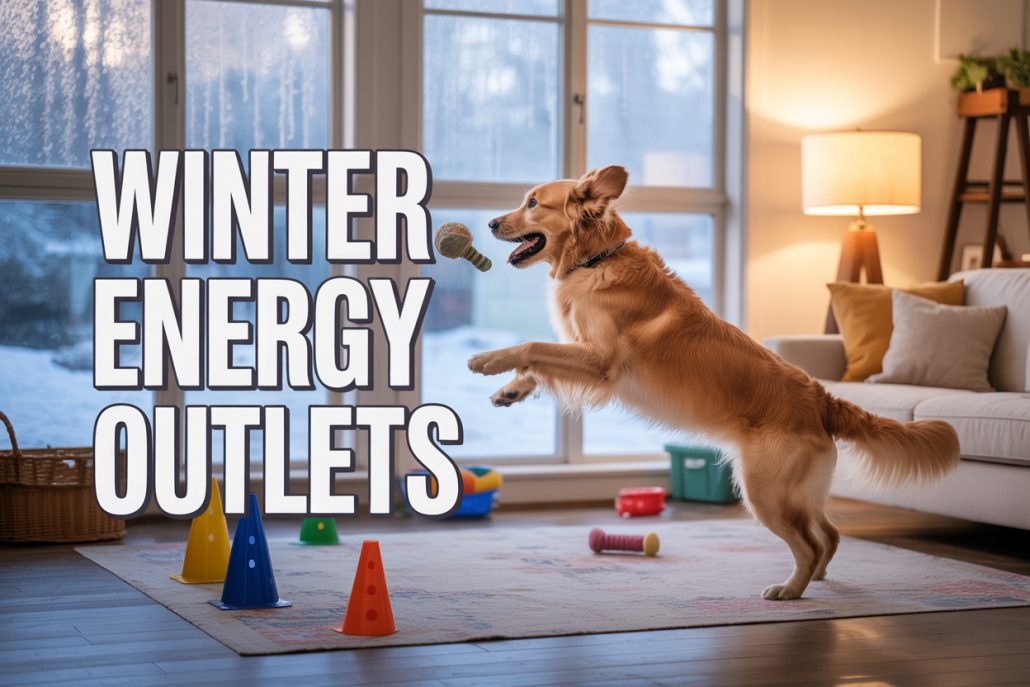
Transform your hallway into a canine gymnasium with strategic fetch variations that maximize energy expenditure. Standard ball throwing gets an upgrade when you introduce rapid-fire sequences – toss a ball to one end, then immediately throw a second toy in the opposite direction as your dog returns. This creates constant motion and quick directional changes that burn serious calories.
Bouncy balls work exceptionally well in hallways because they create unpredictable ricochets off walls, forcing your dog to use quick reflexes and engage their entire body. Use tennis balls on carpeted areas or rubber balls on hardwood floors. The key is maintaining a fast pace that keeps your dog’s heart rate elevated throughout the 10-15 minute session.
Large living rooms provide space for fetch variations such as “find and bring” games. Hide multiple toys around the room and call out specific items for your dog to retrieve. This combines physical activity with mental engagement, doubling the energy burn while keeping your active dog thoroughly entertained during cold winter mornings.
Stair climbing exercises for cardio and strength building
Stairs provide one of the most effective indoor dog exercises available, delivering both cardiovascular benefits and muscle strengthening in a compact space. Start with basic up-and-down repetitions, encouraging your dog to climb at a steady pace rather than racing. Five to ten controlled trips can provide the same workout as a moderate outdoor walk.
Add complexity with “stair intervals” – have your dog climb up slowly, then jog down, alternating between controlled and energetic movements. This variation builds both endurance and leg strength while preventing the monotony that might bore particularly intelligent breeds.
For dogs comfortable with stairs, introduce “step targeting,” placing treats on specific steps to require precise movements and engage different muscle groups. Always supervise stair exercises and avoid overexertion, especially with older dogs or breeds prone to joint issues.
Interactive puzzle toys that require physical manipulation
Mental stimulation for dogs through puzzle toys creates surprisingly effective indoor activities that tire both mind and body. Choose puzzles that require pawing, nudging, and full-body engagement rather than simple treat-dispensing balls. Sliding puzzle boards, where dogs must move pieces with their paws to reveal treats, provide excellent physical manipulation challenges.
Rotating puzzle toys weekly prevents your dog from solving them too quickly and maintains the mental challenge. Level 3 and 4 difficulty puzzles often require 15-20 minutes of concentrated effort, providing mental exhaustion that rivals physical exercise for calming hyperactive dogs.
Consider puzzle toys that require standing, lying down, or moving to different positions during problem-solving. These multi-position challenges engage core muscles and create natural movement patterns that contribute to overall fitness.
Treadmill training for weather-independent cardio
Treadmill training offers the ultimate solution for winter activities for active dogs when outdoor conditions become prohibitive. Dog-specific treadmills provide controlled, regular exercise regardless of temperature or precipitation. Start with extremely short sessions – just 2-3 minutes at the slowest speed – and gradually increase duration as your dog becomes comfortable.
Most dogs adapt to treadmill walking within a week of daily practice. Use high-value treats and positive reinforcement to create positive associations with the equipment. Never force a fearful dog onto a treadmill; patience and gradual introduction are essential to long-term success.
Human treadmills can work for larger, well-trained dogs under constant supervision, but dog-specific models offer better safety features and appropriate sizing. A 20-minute treadmill session provides the equivalent of a substantial outdoor walk, making it invaluable for maintaining fitness during extended cold snaps.
Mental Stimulation Exercises to Tire Active Minds
Scent work and nose games using hidden treats
Dogs possess an incredible sense of smell that’s roughly 40 times stronger than humans, making scent-based mental stimulation for dogs one of the most effective ways to drain their energy during the winter months. Start with simple nose games by hiding treats around your living room while your dog waits in another room. Begin with obvious spots like behind chair legs or under coffee tables, then gradually increase difficulty by placing treats inside boxes, under rugs, or wrapped in towels.
Create a “snuffle mat” using rubber sink mats and fleece strips tied through the holes. Scatter kibble throughout the fleece strands, forcing your dog to use their nose and paws to forage for food. This mimics natural hunting behaviors and can keep even the most energetic dogs occupied for 15-20 minutes.
For advanced scent work, introduce specific scent targets, such as essential oils on cotton balls. Start with one scent and reward your dog when they find it, gradually adding more challenging hiding spots. This type of indoor dog exercise engages their natural abilities while providing serious mental fatigue that often surpasses physical exhaustion.
New trick training sessions with progressive difficulty
Winter is an ideal time to expand your dog’s repertoire through structured training sessions. Start each week with one new trick, building complexity as your dog masters each skill. Begin with foundational tricks such as “spin,” “play dead,” or “shake hands” before progressing to chains of behaviors, such as “fetch my slippers and bring them to the couch.”
Break training into 10-15 minute sessions throughout the day rather than one long session. Dogs learn better with frequent, short bursts of concentration. Document progress with videos to track improvement and identify areas needing more practice.
Advanced tricks like “clean up your toys” or “turn on the light switch” serve as both winter activities for active dogs and practical household tasks. These complex behaviors require sustained concentration and problem-solving, leaving dogs mentally satisfied and physically calmer.
Food puzzle feeders that challenge problem-solving skills
Ditch the regular food bowl and transform mealtime into brain-training sessions. Puzzle feeders range from simple treat-dispensing balls to complex multi-step contraptions that require dogs to manipulate different components in sequence. Rotate among various puzzle types to prevent boredom and maintain challenge.
DIY options work just as well as expensive commercial puzzles. Cut holes in plastic bottles, stuff kibble into cardboard tubes, or freeze wet food in Kong toys to extend engagement. Muffin tins with tennis balls in each cup create an instant puzzle feeder that challenges your dog to remove the balls and discover hidden treats beneath.
Level up with puzzle feeders that require multiple problem-solving steps. Some advanced feeders need dogs to slide panels, lift flaps, and rotate sections before accessing food. These energetic dog indoor activities can turn a 5-minute meal into a 30-minute mental workout that leaves high-energy breeds genuinely tired.
Quick Outdoor Winter Workouts Despite the Cold
Short burst training sessions with maximum impact
High-intensity intervals work wonders for burning energy quickly when time and weather conditions are limited. These winter dog workouts focus on 5-10 minute sessions that pack a serious punch. Start with 30-second sprints followed by 30-second rest periods, repeating 6-8 times. Your dog can run back and forth in your driveway, dash up and down stairs, or chase you in tight circles around your yard.
Fetch becomes exponentially more effective when you throw the ball uphill or into deeper snow. The extra resistance forces your dog to work harder with each retrieve. Try rapid-fire throwing sessions where you launch multiple balls in quick succession, keeping your pup constantly moving without long breaks between throws.
Hill sprints deliver maximum energy burn in minimal time. Find any slight incline in your neighborhood and have your dog run up and down repeatedly. Even a small incline significantly increases workout intensity compared to running on flat ground.
Winter gear essentials for safe outdoor exercise
Protecting your dog’s paws is the top priority during cold-weather activities. Invest in quality booties that stay secure during active movement, or apply paw balm before heading outside to prevent ice buildup between toes. Check paws frequently during longer sessions for cuts from ice or excessive cold exposure.
Reflective gear becomes critical during shorter winter days. LED collars, reflective vests, and clip-on lights ensure visibility during early morning or evening exercise sessions. Layer these safety items over your dog’s regular winter coat if they typically wear one.
Breed-specific considerations matter significantly. Short-haired dogs need insulated coats for extended outdoor time, while thick-coated breeds may overheat quickly even in cold temperatures. Watch for signs of overheating, like excessive panting or seeking shade, even when it’s freezing outside.
Keep towels in your car or by your door for immediate paw drying and warming. Wet paws in freezing temperatures can lead to frostbite faster than many owners realize. A quick wipe-down prevents ice formation and keeps your dog comfortable.
Snow-based activities that maximize energy expenditure
Deep snow transforms ordinary activities into high-energy winter activities for active dogs. Encourage your dog to bound through snow drifts rather than walking on packed paths. The resistance-training effect quickly exhausts even the most energetic dogs.
Hide treats or toys throughout your snowy yard to create treasure hunts that combine physical activity with mental engagement. Bury items at different depths so your dog has to dig extensively. This activity engages their natural foraging instincts while providing serious physical exercise.
Snow pile climbing challenges your dog’s coordination and strength. Build or find natural snow mounds for your dog to scramble up and over. Make it more interesting by calling them from different sides, forcing direction changes that increase the workout intensity.
Snowball games add excitement to traditional fetch. Pack snowballs and throw them for your dog to chase and catch. Many dogs love the challenge of trying to “catch” something that explodes on impact. Just ensure the snow is clean and free from ice chunks that could damage teeth.
Cold weather safety protocols for active sessions
Temperature monitoring goes beyond just checking the thermometer. Wind chill affects dogs similarly to humans, so factor in actual feel temperatures rather than just ambient air temperature. Most dogs can tolerate temperatures down to 20°F with proper preparation, but individual tolerance varies significantly.
Watch for hypothermia warning signs throughout your session: shivering, lethargy, or seeking shelter. These symptoms can develop quickly during high-energy dog workouts in cold conditions. Have an exit strategy planned and don’t push sessions beyond your dog’s comfort limits.
Hydration remains important even in cold weather. Dogs still lose moisture through panting during intense exercise, regardless of air temperature. Bring unfrozen water for longer sessions, and offer frequent small drinks rather than allowing your dog to eat large amounts of snow, which can lower their core temperature.
Post-exercise warming protocols help prevent muscle stiffness and maintain your dog’s comfort. Bring them inside immediately after intense outdoor sessions and provide a warm, dry place to rest. Check paws again for any missed ice accumulation or injuries that might have occurred during the excitement of play.
Creative Indoor Obstacle Courses Using Household Items
Furniture-based agility courses for navigation skills
Your living room transforms into an exciting playground when you strategically arrange furniture to create navigation challenges. Start by pushing your coffee table to one side and positioning chairs in a zigzag pattern, creating a weaving course that encourages your dog to move laterally while building coordination. The couch becomes a perfect tunnel when you drape a blanket from the seat to the floor, creating an enclosed space your dog must crawl through.
Dining room chairs work wonderfully as makeshift hurdles when you place a broomstick or pool noodle between the legs at varying heights. Your dog learns to judge distances and adjust their stride accordingly. Ottoman or footstools become elevated platforms for “stay” commands and balance work, while the space under your dining table creates a low crawling challenge that engages different muscle groups.
Position these furniture pieces to create a continuous flow that keeps your dog moving. Change the layout weekly to prevent boredom and maintain the mental challenge. This type of indoor dog obstacle course work develops spatial awareness and builds confidence as your dog learns to navigate tight spaces and varying heights.
Balance and coordination challenges using everyday objects
Household items transform into powerful coordination tools with a bit of creativity. Pool noodles cut in half and placed on the floor create unstable surfaces that challenge your dog’s balance and core strength. Simply having them walk across these wobbly sections builds proprioception and body awareness.
Yoga mats or bath towels folded and placed strategically create different textures and surfaces. Some dogs initially hesitate with new textures, but this hesitation actually becomes part of the mental workout. Phone books or thick magazines stacked and secured with tape create varying platform heights for stepping exercises.
Large cardboard boxes with the flaps removed become crawl-through tunnels, while smaller boxes positioned as stepping stones challenge precision and planning. A hula hoop held at different heights becomes a “through” command challenge, teaching your dog to judge openings and move deliberately.
Empty laundry baskets serve as “in” and “out” command stations, while rolled towels function as balance beams when secured to the floor with painter’s tape. These indoor dog exercises build the same skills as expensive agility equipment while using items you already own.
Jump and weave exercises in a limited space.
Small spaces don’t limit jumping and weaving opportunities when you think vertically and use portable barriers. Painter’s tape creates ground patterns for weave-pole practice: simply draw parallel lines on your floor about two feet apart and guide your dog through the serpentine pattern. This indoor dog game builds focus and body control without requiring permanent equipment.
Rolled magazines secured with rubber bands become lightweight jump bars that won’t hurt if knocked over. Position them between chair legs, or use paint cans as stands for adjustable-height jumping. Start low and gradually increase height as your dog’s confidence grows.
For weaving practice, plastic water bottles filled with rice and positioned in a line create excellent makeshift weave poles. The slight noise they make when touched provides immediate feedback, helping your dog learn to navigate more precisely. Empty paper towel tubes taped to the wall at your dog’s shoulder height create a stationary weaving course that works in hallways.
Jump exercises don’t always require height – broad jumping over pillows laid flat builds different muscles and teaches distance judgment. These winter dog exercise ideas keep your active dog engaged while protecting them from harsh outdoor conditions, proving that effective workouts happen anywhere with the right approach.
Social Energy Outlets Through Winter Playdates
Indoor Dog Park Alternatives and Facilities
When winter weather keeps you and your pup indoors, commercial dog facilities become lifesavers for maintaining your dog’s social needs. Many pet stores offer indoor play areas where dogs can interact safely while staying warm. Doggy daycare centers often welcome drop-in play sessions, even if you’re not a regular customer. Check out local training facilities that rent space for supervised playgroups during the winter months.
Some innovative spaces have emerged specifically for cold-weather relief – indoor dog parks with climate control, agility equipment, and padded surfaces. These facilities understand that active-dog winter tips go beyond exercise; dogs also need social interaction. Many offer membership packages that include access to specialized equipment and supervised play sessions.
Structured Playgroups with Energy-Matched Companions
Not all dogs play well together, especially high-energy breeds that might overwhelm calmer companions. Organizing playgroups by energy level creates better experiences for everyone involved. Start by connecting with neighbors who have similar needs for indoor dog activity.
Create small groups of 3-4 dogs with comparable play styles and energy levels. High-energy breeds like Border Collies, Australian Shepherds, and Jack Russell Terriers often match well together for intense play sessions. These structured gatherings are more effective than random meetups because the dogs learn each other’s boundaries and develop ongoing friendships.
Consider rotating between different homes to give each dog new environments to explore. This enhances the social aspect, making these winter activities for active dogs even more beneficial.
Rotating Playdate Schedules for Consistent Socialization
Consistency matters more than frequency when maintaining your dog’s social skills during the winter months. Establish a rotating schedule with other dog owners in your area, perhaps alternating among three different homes each week. This gives dogs something to look forward to while ensuring regular social interaction.
Weekly schedules work well for most dogs, but high-energy breeds might need twice-weekly social sessions. Create a group chat with participating families to coordinate schedules and share indoor dog exercise ideas for group activities. Some families host “theme” playdates – puzzle toy challenges, hide-and-seek games, or even dog obstacle course sessions using household items.
Track which combinations of dogs work best together and adjust your rotation accordingly. Some dogs might prefer one-on-one playdates while others thrive in larger groups.
Group Training Classes as Social and Physical Outlets
Winter training classes serve dual purposes: mental stimulation for dogs and social opportunities. Many training facilities offer specialized classes for high-energy breeds during colder months. These sessions combine obedience work with socialization, creating structured environments where dogs learn while interacting with others.
Look for classes that incorporate movement – agility foundations, rally obedience, or even doggy dance classes. These activities provide physical outlets while teaching valuable skills. Group training also helps dogs learn to focus despite distractions, improving their overall behavior in social situations.
Consider organizing private group classes with other dog owners if commercial options don’t fit your schedule. Many trainers offer discounted rates for small groups and can customize sessions around your dogs’ specific energy needs and training goals.
Winter doesn’t have to mean dealing with a restless, cooped-up dog bouncing off your walls. The key is to mix up physical and mental challenges that actually tire them out. Indoor obstacle courses made from pillows and boxes can be just as effective as a long hike, and puzzle games work their brains harder than you might think. Don’t forget that even short bursts outside in the cold can work wonders, and setting up playdates with other dogs gives them the social outlet they’re craving.
Your dog’s energy needs don’t disappear when the temperature drops, but with some creativity and planning, you can keep them happy and exhausted all winter long. Start with one or two activities that seem like the best fit for your pup, and build from there. A tired dog is a good dog, no matter what the weather looks like outside your window.
Ready to help your dog become their best self? Start with our trusted Basic Dog Training in Carlsbad, CA, to teach essential manners and strengthen obedience. For personalized attention, our Private Dog Training in Carlsbad, CA focuses on your dog’s unique needs and behavioral goals. Looking for accelerated progress? Our Board & Train in Carlsbad, CA program provides immersive, hands-on learning guided by experienced trainers. Explore the full range of Dog Training options and discover expert Dog Training in Carlsbad that transforms your dog’s behavior for life.

