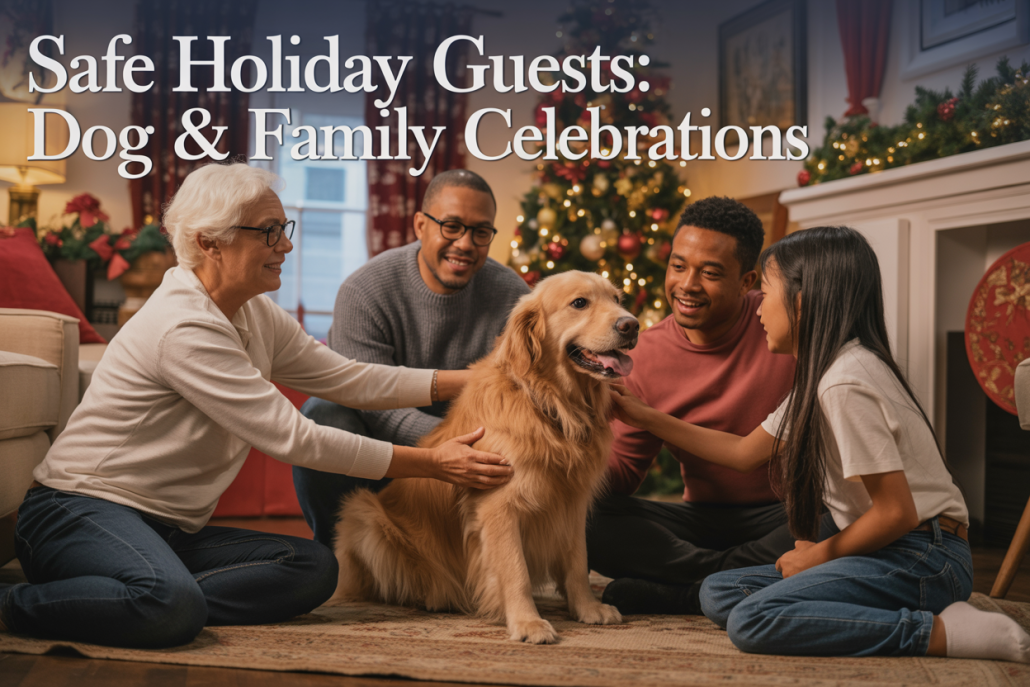
Safe Holiday Guests: How to Introduce Your Dog to Family Celebrations
Holiday celebrations bring joy to your home, but they can overwhelm your furry family member. This guide is for dog owners who want to include their pets in festivities while keeping everyone safe and stress-free.
The holidays don’t have to mean chaos for your dog. With thoughtful planning and the right strategies, you can create dog-friendly celebrations that work for both two-legged and four-legged family members.
We’ll walk you through preparing your dog for the holiday rush before guests arrive, so they feel confident when the doorbell starts ringing. You’ll learn how to set up safe spaces where your dog can retreat when the party gets too loud or crowded.
We’ll also cover managing interactions between your dog and guests, including kids who might not know how to approach pets safely. Finally, you’ll discover how to handle holiday food hazards and spot stress signals that tell you when your dog needs a break from the celebration.
Your dog can be part of the holiday magic without the mayhem.
Prepare Your Dog Before the Holiday Rush
Start socialization training weeks in advance
Holiday dog preparation begins long before your first guest arrives. Dogs need time to adjust to new experiences, so starting socialization training at least 4-6 weeks before your celebration gives your furry friend the best chance of success. Begin by exposing your dog to different types of people in controlled settings. Invite friends over for short visits, walk through busy areas where your dog can observe people of various ages and appearances, and practice calm greetings with strangers.
Focus on teaching your dog to remain calm when meeting new people. Reward quiet, polite behavior with treats and praise, while gently redirecting any instances of jumping, excessive barking, or overly excited responses. Practice having guests ignore your dog initially, allowing your pet to approach on their own terms rather than being overwhelmed by immediate attention.
Practice basic commands in distracting environments.
Your dog might know “sit” and “stay” perfectly in your quiet living room, but holiday celebrations bring noise, movement, and tempting distractions. Take your training sessions to increasingly challenging environments – practice commands at the local park, near playgrounds, or during family barbecues. This builds your dog’s ability to listen and respond even when exciting things are happening around them.
Work on essential commands like “place” or “go to bed,” which direct your dog to a specific spot. This becomes invaluable during busy moments when you need your pet to settle in their designated area. Practice the “leave it” command extensively, as curious dogs often encounter dropped food or interesting items during parties that could be harmful.
Gradually expose your dog to holiday sounds and decorations.
Holiday celebrations bring unique sensory experiences that can trigger anxiety in dogs during the holidays. Start playing recorded sounds of laughter, music, and conversation at low volumes while engaging your dog in positive activities, such as feeding or playing. Gradually increase the volume over several weeks, always pairing these sounds with good experiences.
Introduce holiday decorations gradually, allowing your dog to explore and become accustomed to new sights and textures. Some dogs find twinkling lights, moving decorations, or unfamiliar scents overwhelming. Set up decorations piece by piece, rewarding calm behavior and removing anything that causes excessive stress or poses safety risks.
Establish consistent routines to reduce anxiety.
Dogs thrive on predictability, and maintaining their regular schedule becomes even more critical during potentially stressful holiday events. Keep feeding times, walk schedules, and bedtime routines as consistent as possible, even when preparing for or hosting celebrations.
Create a pre-party routine that signals to your dog that something special is happening, but that they’re safe and cared for. This might include a longer walk, some focused training time, or extra playtime to help burn off energy. Consistent routines provide emotional security and help your dog feel grounded when their environment becomes busier and more stimulating than usual.
Create a Safe Space for Your Dog During Celebrations
Designate a Quiet Retreat Room Away from Festivities
Setting up a dedicated safe space for your dog during holiday gatherings is one of the smartest moves you can make to manage holiday pet stress. Pick a bedroom, home office, or any room that’s naturally separated from the main party area. This quiet zone becomes your dog’s personal sanctuary where they can decompress when the festivities become overwhelming.
The location matters more than you might think. Choose a room that guests won’t accidentally wander into, and make sure it’s far enough from the action that your pup won’t feel compelled to guard or monitor what’s happening. A spare bedroom works perfectly, but even a walk-in closet can serve as an effective retreat if that’s what you have available.
Stock the Space with Familiar Toys and Comfort Items
Fill this retreat with everything that makes your dog feel secure and at home. Their favorite blanket, that squeaky toy they’ve had forever, and maybe their go-to chew bone should all find a place in this room. These familiar scents and textures work like canine comfort food, helping to reduce anxiety when the house fills with unfamiliar voices and energy.
Don’t go overboard with new toys or treats for the occasion. Stick with the tried-and-true favorites your dog already associates with relaxation and safety. A worn-out stuffed animal often beats an expensive new toy when it comes to providing genuine comfort during stressful situations.
Install Baby Gates to Control Access and Movement
Baby gates are game-changers for creating dog-safe spaces during celebrations. They allow your dog to see what’s happening while maintaining physical boundaries that prevent unwanted interactions with guests. Your pup can retreat to their safe zone whenever they want, but guests can’t accidentally corner them or overwhelm them with attention.
Position gates strategically to create a clear path between your dog’s safe room and outdoor access for bathroom breaks. This setup gives you complete control over when and how your dog interacts with visitors, making the whole experience less stressful for everyone involved.
Provide Background Noise to Mask Party Sounds
Holiday parties come with a soundtrack of laughter, clinking glasses, and animated conversations that can spike dog anxiety during holidays. Combat this sensory overload by playing calming music, white noise, or even familiar TV shows in your dog’s retreat room. The consistent background sound helps muffle the unpredictable party noises that might trigger stress responses.
Classical music or specially designed dog relaxation playlists work well, but don’t overthink it. Even a quietly running fan can provide enough ambient noise to take the edge off sudden bursts of party laughter or the ringing of the doorbell repeatedly.
Set Up Feeding and Water Stations in the Safe Zone
Your dog’s retreat should be completely self-sufficient, which means fresh water and their regular feeding setup need to be readily available. This prevents the need to venture into party chaos to meet basic needs. Keep their regular food bowls in the safe space, and consider adding an extra water bowl to ensure they stay properly hydrated.
Having food and water easily accessible also means you can stick to regular meal schedules even during the holiday excitement. This consistency helps maintain your dog’s routine and provides additional comfort during an otherwise disrupted day.
Manage Guest Interactions with Your Dog
Brief guests on proper dog greeting etiquette before arrival
Getting ahead of potential issues begins with educating your guests before they arrive. Send a quick text or make a brief call to let visitors know what to expect and how to interact safely with your dog. Share basic guidelines, such as allowing your dog to approach them first rather than rushing toward your pet, avoiding direct eye contact initially, and keeping your voice calm and movements slow.
Explain your dog’s specific personality traits and preferences. If your dog gets overwhelmed easily, let guests know they should ignore your pet until they’ve settled in. For dogs who love attention, please warn guests that jumping or excessive excitement may occur initially. This preparation helps manage dogs around visitors effectively and reduces stress for everyone involved.
Consider creating a simple “house rules” message you can share via text that covers the basics: no feeding from plates, ask before petting, and respect your dog’s space if they retreat to their designated safe area. This proactive approach to introducing dogs to guests sets clear expectations and prevents well-meaning visitors from accidentally creating stressful situations.
Supervise all interactions between children and your pet.
Children often approach dogs differently than adults, making supervision absolutely critical during holiday celebrations. Young visitors might move quickly, speak loudly, or try to hug your dog – all behaviors that can trigger anxiety or defensive responses even in typically friendly pets. Position yourself where you can easily intervene and redirect interactions that appear to be headed in the wrong direction.
Teach children the proper way to pet a dog by demonstrating gentle strokes along the back or chest, avoiding sensitive areas such as the face, ears, or tail. Show them how to read your dog’s body language – if your pet moves away, pants heavily, or shows other stress signals, it’s time for a break from interaction.
Create engaging alternatives when direct interaction isn’t appropriate. Children can help with dog-related tasks, such as filling water bowls or tossing toys, giving them a way to participate while maintaining safe boundaries. Never leave young children alone with your dog, regardless of how well-behaved both typically are. Holiday excitement can change standard behavior patterns, making constant supervision essential for preventing incidents and ensuring everyone enjoys the celebration.
Establish clear boundaries for feeding and petting.
Setting firm rules about feeding helps prevent dangerous situations and maintains your dog’s routine during holiday chaos. Many traditional holiday foods pose serious health risks to dogs, including chocolate, grapes, onions, and foods high in fat that can trigger pancreatitis. Make it crystal clear that only you or designated family members can offer treats to your dog, and provide a list of safe alternatives if guests want to share something special.
Create a designated “no dog zone” around food preparation and dining areas to prevent begging behaviors and accidental food drops that could harm your pet. Use baby gates or closed doors to maintain these boundaries without constantly having to redirect your dog or remind guests about the rules.
Establish petting guidelines that protect both your dog and your guests. Some dogs become overstimulated with too much attention, while others might resource guard their favorite family members during stressful times. Designate specific times for guest interaction with your pet, allowing for breaks where your dog can decompress in their safe space. This structured approach to dog holiday safety helps prevent overwhelming situations while still allowing your pet to participate in family celebrations in a controlled, positive way.
Handle Holiday Food Hazards and Safety Concerns
Educate Guests About Toxic Foods Dogs Cannot Eat
Holiday gatherings often feature delicious spreads that can pose a danger to your furry friend. Before guests arrive, send a quick text or email highlighting the most dangerous foods for dogs. Chocolate tops the list, especially dark chocolate and baking chocolate, which contain higher levels of theobromine that dogs can’t process. Grapes and raisins, often found in holiday dishes and desserts, can cause kidney failure even in small amounts.
Onions and garlic, commonly used in holiday cooking, can damage dogs’ red blood cells and lead to anemia. Xylitol, an artificial sweetener found in sugar-free gums, candies, and baked goods, causes rapid insulin release and potentially fatal drops in blood sugar. Macadamia nuts can trigger weakness and vomiting, while cooked bones become brittle and can splinter, causing internal injuries.
Create a simple handout or post a list on your refrigerator where guests can easily reference it. Include less obvious dangers, such as coffee grounds, alcohol residue in glasses, and unbaked bread dough containing yeast. When guests understand these risks, they become your allies in maintaining dog holiday safety throughout the celebration.
Secure Garbage Cans and Food Preparation Areas
Transform your kitchen into a fortress against curious canines by securing all potential food sources. Replace regular garbage cans with ones featuring tight-fitting lids or childproof locks. Dogs possess incredible scavenging abilities and can detect enticing smells from discarded items such as turkey bones, chocolate wrappers, or other hazardous substances.
Cover all countertops and food preparation areas when stepping away, even for a brief moment. Use large cutting boards or clean kitchen towels to create barriers over cooling dishes. Move small appliances, such as stand mixers, with bowls containing chocolate batter or cookie dough, to higher shelves or behind closed cabinet doors.
Install baby gates to block access to the kitchen during busy cooking periods. This prevents dogs from sneaking in to sample dropped ingredients or getting underfoot while you’re carrying hot dishes. Consider using a slow cooker or warming tray in a separate room if you need to keep food warm but out of reach of paws.
Store ingredients like chocolate chips, nuts, and baking supplies in sealed containers placed well above dog reach. Even the most well-behaved dogs can become opportunistic when surrounded by amazing holiday smells and the excitement of party preparations.
Create a Designated Dog-Free Dining Zone
Establishing clear boundaries around dining areas protects both your dog and your guests from awkward encounters involving begging or food snatching. Use baby gates, exercise pens, or simply close doors to create physical barriers between your dog and the main eating areas. This approach works particularly well for dogs who haven’t mastered the “leave it” command or become overly excited around food.
Set up this zone before guests arrive, allowing your dog to adjust to the new boundaries. Place their favorite bed, toys, and fresh water in an adjacent room where they can still hear the celebration but can’t access dropped food or bother diners. Consider using a long tether attached to a sturdy piece of furniture if gates aren’t practical for your space.
Train family members and guests to avoid feeding your dog from the table, even if those puppy dog eyes are hard to resist. Explain that maintaining these boundaries prevents begging behaviors and protects your dog from accidentally consuming harmful foods. Many guests appreciate clear guidelines rather than having to guess what’s appropriate.
For dogs with separation anxiety, position their safe space where they can still see family members but remain physically separated from food areas. This compromise often reduces stress while maintaining necessary safety protocols during your dog-friendly celebrations.
Monitor for Dropped Food and Immediate Cleanup Protocols
Holiday parties create prime opportunities for food to be dropped, making vigilant monitoring essential for pet safety during these events. Designate specific family members as “floor patrol” throughout the event, equipped with paper towels and a small handheld vacuum for quick cleanups. Rotate this responsibility every hour to ensure consistent coverage without burdening any single person.
Position yourself strategically near high-traffic areas, such as the kitchen entrance, buffet table, and main seating areas, where spills are most likely to occur. Keep cleaning supplies readily accessible in these zones. Consider setting up small cleanup stations with napkins, wet wipes, and small trash bags tucked discreetly under side tables or in decorative baskets.
Train guests to alert you immediately when they drop food, rather than attempting to clean up on their own. Many people are unaware that even small crumbs of chocolate cake or a single grape can pose significant health risks. Create a simple phrase, such as “food down,” that signals everyone to pause while you assess and clean up the situation appropriately.
Implement a buddy system where each guest pairs with someone to watch for dropped items during conversations. This social approach makes monitoring feel less formal while ensuring multiple sets of eyes stay alert. After each course or significant food service period, conduct a quick sweep of all areas where your dog has access, checking under furniture and in corners where items might roll unnoticed.
Recognize and Address Dog Stress Signals During Events
Identify early warning signs of canine anxiety.
Dogs communicate their discomfort through subtle body language that often goes unnoticed during busy holiday celebrations. Watch for excessive panting when your dog hasn’t been active, drooling more than usual, or trembling that isn’t related to cold temperatures. Your dog’s ears might pin back against their head, and their tail may tuck between their legs or hang lower than usual.
Pacing or restlessness signals growing anxiety, especially when your dog can’t seem to settle in their usual spots. Some dogs become clingy and follow you around constantly, while others might hide under furniture or seek out quiet corners. Excessive shedding during holiday pet stress is common, and you might notice more fur on your clothes or furniture than typical.
Behavioral changes, such as loss of appetite, refusing treats they usually love, or having accidents indoors, all point to mounting stress. Dogs experiencing holiday anxiety might also exhibit destructive behaviors, such as chewing, scratching at doors, or digging at carpets.
Implement calming techniques when stress levels rise
Once you spot these warning signs, act quickly to help your dog feel more secure. Create physical distance between your dog and the source of stress by gently guiding them to their designated safe space. Use a calm, reassuring voice and avoid making a big fuss, which can actually increase anxiety.
Thunder shirts or anxiety wraps provide gentle, constant pressure that many dogs find soothing during overwhelming situations. These compression garments work similarly to swaddling a baby and can significantly reduce stress levels during dog-friendly celebrations.
Distraction techniques work well for mild anxiety. Offer puzzle toys, long-lasting chews, or practice basic commands with high-value treats. This redirects their focus and gives them something positive to concentrate on instead of the chaos around them.
Consider natural calming aids, such as pheromone diffusers or calming treats containing ingredients like chamomile or L-theanine. These take time to work, so introduce them before guests arrive rather than waiting until stress peaks.
Know when to remove your dog from overwhelming situations
Some situations require immediate intervention to prevent your dog’s stress from escalating to dangerous levels. If your dog shows signs of aggression, such as growling, snapping, or raised hackles, remove them immediately from the situation. Don’t wait to see if things improve – protecting both your dog and your guests is the priority.
Persistent hiding, uncontrollable shaking, or complete shutdown behavior (where your dog becomes completely unresponsive) indicates severe overwhelm. These dogs need quiet time away from all stimulation to decompress properly.
Managing dogs around visitors becomes impossible when your pet exhibits repetitive behaviors, such as excessive barking, spinning in circles, or attempting to escape. These behaviors indicate that your dog has reached its limit and can’t cope with the current environment.
Trust your instincts about your dog’s comfort level. You know your pet better than anyone, and if something feels off, it probably is. Removing your dog from stressful situations isn’t giving up – it’s responsible pet ownership that prevents negative associations with holiday gatherings and keeps everyone safe and happy.
Holiday celebrations can be magical times for families, but they require some extra planning when your furry family member is part of the mix. By preparing your dog ahead of time, setting up a quiet retreat space, and managing how guests interact with your pet, you’re setting everyone up for success. Don’t forget to keep those tempting holiday treats out of reach and watch for signs that your dog might be feeling overwhelmed.
Your dog doesn’t need to be the life of the party to be part of your holiday joy. Sometimes the best gift you can give your four-legged friend is the option to join in when they’re comfortable and retreat when they need a break. Start implementing these strategies before your next gathering, and you’ll create holidays that are truly enjoyable for every member of your family – including the one with the wagging tail.
Want to see real progress in your dog’s obedience and confidence? Begin with our comprehensive Basic Dog Training in Carlsbad, CA, to build strong communication and reliable responses. For more personalized results, try our Private Dog Training in Carlsbad, CA, with one-on-one guidance from our expert trainers. If you’re looking for an immersive experience, our Board & Train in Carlsbad, CA, provides intensive daily training and lasting results. Please explore our complete approach to Dog Training and experience professional Dog Training in Carlsbad that creates happier, more obedient companions.

