
Professional Dog Training vs Daycare Socialization: Choosing the Right Path for Your Rescue Dog
Understanding Your Rescue Dog’s Unique Behavioral Needs
Bringing a rescue dog home is a noble act, but it often feels like trying to solve a puzzle with half the pieces missing. You look at those soulful eyes and wonder what they’ve been through before they reached your living room. Is that flinch because of a past injury, or is it just a quirk?
Every rescue comes with a “silent suitcase” of experiences that influences how they interact with the world around them. Before you decide between structured learning or group play, you have to look closely at what your specific dog is trying to tell you through their body language and daily reactions.
The transition period for a shelter dog is rarely a straight line. Many owners expect a few days of adjustment, but the reality of “decompression” can take weeks or even months. During this time, you aren’t just a pet owner; you are an observer trying to decipher a foreign language. Understanding these behavioral foundations is the first step toward making an informed choice about their future growth. Are they ready for the high energy of a playgroup, or do they need the focused environment of dog training to build their confidence first? Let’s break down how to read the signs your new companion is giving you.
Assessing Unknown History and Trauma Responses
Most rescue dogs arrive with a “biography: unknown” tag. While the shelter might have some notes, they only see a fraction of the dog’s true personality in a high-stress kennel environment. Trauma doesn’t always look like shaking or hiding.
Sometimes it looks like hyper-vigilance, where the dog can’t seem to settle down, or “shutting down,” where they appear perfectly calm but are actually frozen in fear. Recognizing these deep-seated responses is vital because pushing a traumatized dog into a social setting too fast can lead to significant setbacks in their emotional recovery.
You might notice specific triggers like a raised hand, a loud truck, or even the sound of a vacuum cleaner. These aren’t just annoyances to a rescue dog; they can be perceived threats that trigger a “fight or flight” response. If your dog has a history of neglect, they might struggle with resource guarding or severe separation anxiety. Because of these complexities, learning the benefits early on helps create a predictable structure that makes a nervous dog feel safe. Structure is the antidote to the chaos they may have experienced in the past.
It is important to remember that a dog’s past shapes their brain chemistry. A rescue that spent years on the street survived by being suspicious and reactive. You cannot simply “love” that survival instinct away in a weekend.
It requires consistent, positive reinforcement and a deep understanding of canine psychology. When you start to see these patterns, you can better judge if your dog needs a quiet environment with a professional or if they have the resilience to handle a busier environment.
Recognizing Fear-Based Behaviors vs. Socialization Gaps
There is a massive difference between a dog who doesn’t know how to play and a dog who is terrified of other dogs. Distinguishing between a lack of social skills and genuine fear-based reactivity is one of the most difficult tasks for a new rescue owner. A dog with a “socialization gap” might be awkward, overly pushy, or just confused by social cues.
They might bark too much or jump on others simply because they haven’t been taught better. These dogs often thrive when they are around well-balanced peers who can teach them the “rules” of being a dog.
On the other hand, fear-based behavior is rooted in an internal sense of danger. If your dog growls when another dog approaches or lunges on the leash, they aren’t necessarily being “mean.” They are trying to create distance to feel safe. Dropping a fearful dog into a daycare setting can be disastrous, as it forces them into a small space with the very thing they fear most. This often leads to “flooding,” where the dog’s nervous system becomes overwhelmed, potentially making their reactivity much worse. Identifying these nuances helps you decide if you should focus on 5 essential commands in a private setting first.
Watch for the small signs. Is their tail tucked? Are they licking their lips or showing the whites of their eyes?
These “calming signals” are often silent screams for help. If your dog is constantly scanning the room for exits rather than engaging with toys, they are likely dealing with fear rather than just a lack of experience. In contrast, a dog who is just socially awkward will usually relax once they realize no one is going to hurt them.
Knowing which one you are dealing with will prevent you from making a costly mistake in their early socialization.
Age and Breed Considerations for Rescued Animals
The age of your rescue dog significantly dictates how you should approach their education and social life. A puppy under six months is in a critical window where every positive experience acts as a building block for their adult personality. For these younger rescues, finding top 10 reasons can provide the varied social exposure they need to prevent future fear issues. However, if you’ve rescued a senior dog, their social battery might be much shorter. They might prefer a calm walk over a chaotic wrestling match with three Labradors.
Breed instincts also play a huge role that many owners overlook. A rescued Border Collie might feel the need to “herd” other dogs at a park, which can be interpreted as aggression by others. A Terrier might have a high prey drive that makes them focus more on small movements than on playing nicely.
You have to work with the genetics that are already hard-wired into your dog. You wouldn’t expect a retired racing Greyhound to suddenly want to play fetch for three hours, just as you shouldn’t expect a livestock guardian breed to be immediately trusting of strangers entering your home.
Understanding these biological predispositions allows you to set the dog up for success. If you have a working breed, they might need the mental stimulation of specialized dog training more than they need a room full of other dogs. They need a “job” to do to feel fulfilled. If your rescue is a “mutt” of unknown origins, look at their physical traits. Do they have the long legs of a runner or the sturdy chest of a fetcher? Matching their activities to their physical and mental makeup ensures they stay engaged rather than frustrated.
Setting Realistic Timeline Expectations for Progress
Patience isn’t just a virtue when it comes to rescue dogs; it’s a requirement. We often talk about the “3-3-3 rule” in the rescue world: three days to decompress, three weeks to learn your routine, and three months to finally feel at home. But even this is just a guideline.
Some dogs may take a year before they fully wag their tail when you come through the door. Pushing for results too quickly is the fastest way to break the trust you’ve worked so hard to build. You shouldn’t expect a dog who was recently in a high-kill shelter to master a perfect heel within a week.
Small wins are what matter most. Maybe today they didn’t bark at the delivery person, or maybe they finally took a treat from your hand while outdoors. These milestones are huge.
If you are working on social skills, success might just mean your dog stood calmly ten feet away from another dog without reacting. Realistic expectations keep you from getting frustrated and project a sense of calm that your dog will pick up on. Dogs are mirrors of our emotions; if you are stressed about their progress, they will be stressed too.
And remember, your dog’s progress will likely be messy. You will have great days followed by days where it feels like they’ve forgotten everything you’ve taught them. That is normal.
The goal isn’t a “perfect” dog, but a happy, confident one. By setting slow, achievable goals, you give your rescue dog the space they need to grow at their own pace. Whether that involves professional help or social groups, the most important thing is that you are moving at a speed your dog can handle without feeling overwhelmed.
Professional Dog Training: Structured Learning for Complex Issues
One-on-One Attention for Severe Behavioral Problems
Rescue dogs often arrive with baggage that isn’t easily unpacked in a group setting. When you’re dealing with issues like resource guarding, severe separation anxiety, or leash reactivity, a crowded daycare environment can actually do more harm than good. These behaviors require a focused environment where the trainer can observe your dog’s specific triggers without the chaos of fifteen other dogs running around.
Choosing dog training allows a professional to get to the root cause of the problem, whether it’s fear-based or simply a lack of prior boundaries. You can’t expect a dog struggling with trauma to learn how to relax when they feel constantly on guard. Individual sessions provide the safety needed for your dog to actually absorb new information rather than just surviving the day.
Working in a controlled setting means you can stop bad habits before they become permanent fixtures in your home. Many owners find that common training mistakes often stem from trying to fix too many things at once. Focused attention ensures you’re tackling the most dangerous or disruptive behaviors first, giving your rescue dog a clear path to success.
Customized Training Plans for Rescue-Specific Challenges
No two rescues are the same because their histories are vastly different. One dog might have spent years on the streets, while another may have been surrendered due to a change in the owner’s living situation. A cookie-cutter approach to socialization rarely works for these animals because their needs are so diverse and specific.
Professional trainers create blueprints tailored to your dog’s unique personality and history. If your dog is nervous around men or terrified of loud noises, the plan will reflect that. This customization is vital when introducing another pet to your household, as the power dynamics can be fragile. A tailored plan ensures the transition is smooth for everyone involved.
By following a specific roadmap, you avoid the frustration of “hit or miss” training methods. You’ll have clear milestones to hit and a professional to guide you when progress feels slow. This structured approach builds confidence in both you and your dog, which is the most important element for long-term stability in a rescue home.
Building Foundation Skills Before Group Interactions
Dumping a dog into a daycare “playgroup” without basic manners is a recipe for disaster. Think of it like sending a child to a high-speed debate club before they’ve learned to speak. Basics like “sit,” “stay,” and a reliable recall are not just tricks; they are essential safety tools that allow you to manage your dog in public spaces.
Establishing these core behavioral skills creates a language between you and your dog. When your rescue dog understands what you’re asking of them, their anxiety levels naturally drop. They no longer have to guess what the “right” move is in a social situation because you’ve already practiced those scenarios in a quiet environment.
Once these skills are locked in, the transition to daycare or the dog park becomes much safer. You’ll be able to call your dog away from a potential conflict or ask them to settle down when they get overstimulated. This foundational work is the invisible safety net that keeps your dog, and other dogs, safe during interaction.
Working with Certified Trainers Who Understand Rescue Dogs
There is a massive difference between a hobbyist and a professional who specializes in rescue rehabilitation. Experienced trainers understand the nuances of dog body language that the average person might miss. They can spot the subtle lip lick or the stiffening of the tail that signals a dog is about to reach their breaking point.
When you use professional dog training services, you’re paying for an expert eye. These trainers have seen it all, from extreme shut-down cases to highly dominant personalities. They know when to push a dog to try something new and, more importantly, when to back off to prevent a setback.
Trusting your rescue dog with someone who respects their journey is essential for building a lasting bond. These professionals don’t just train the dog; they coach you on how to be the leader your dog needs. This partnership ensures that the work done during the session continues at home, turning your rescue into a well-adjusted member of the family.
Ultimately, professional training provides the structure that daycare simply cannot offer. While daycare is great for burning energy, it doesn’t teach a dog how to make good choices. By investing in professional guidance early on, you are setting your rescue dog up for a lifetime of confidence and freedom.
Daycare Socialization: Real-World Practice in Controlled Settings
Supervised Group Play for Confidence Building
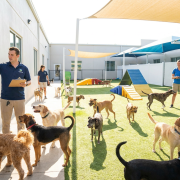
Rescuing a dog often feels like solving a complex puzzle where a few pieces are missing. You might see glimpses of a playful spirit, but it is frequently buried under layers of uncertainty or past trauma. This is where the structured environment of a facility like doggy day camp becomes a private classroom for social growth. It is not just a room full of dogs running wild. It is a carefully managed space where every interaction is observed by experts who understand canine body language.
Building confidence in a rescue dog requires a delicate balance of push and pull. If you throw them into a chaotic park, they might shut down or lash out. But in a supervised setting, your dog learns that they can exist in a space with others without being threatened.
They start to realize that a sniff is just a greeting and a wagging tail is not an invitation for a fight. This slow realization is the foundation of a stable pet.
Many owners worry that their dog is “too shy” for this type of environment. Actually, the opposite is often true because shy dogs thrive on the predictable structure we provide. When they see other dogs engaging in healthy play, they begin to mirror those behaviors.
It is a form of social learning that humans simply cannot replicate on our own. Over time, that hunched posture and tucked tail start to disappear, replaced by a more upright, curious stance.
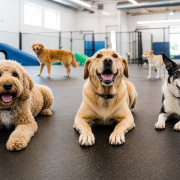
Specific playgroups are divided by size and temperament to ensure nobody feels overwhelmed. A smaller dog should not have to worry about being trampled by a Great Dane, and an older rescue should not be pestered by a high-energy puppy. By matching energy levels, we create a safe zone where confidence can grow naturally. You will likely notice this change at home too, as your dog becomes less reactive to noises or strangers during your daily walks.
Exposure to Various Dog Personalities and Play Styles
Every dog has a unique way of communicating, and a rescue dog needs to learn the “local dialects” of the canine world. Some dogs are vocal players who growl and bark when they are happy, while others are “wrestlers” who prefer physical contact. If a rescue dog has only ever known one type of interaction, they might misinterpret a play-bow for a threat. This is why having access to a diverse group of peers is vital for their long-term social health.
Exposure is the best teacher when it comes to refining these social skills. In a daycare setting, your dog encounters the “fun police,” the “social butterfly,” and the “laid-back observer” all in one afternoon. Understanding how to interact with each personality type helps prevent future conflicts. For instance, they learn that if a senior dog turns their head away, it means they want to be left alone. Recognizing those subtle cues is a core part of effective dog training and general manners.
We often see rescue dogs enter the facility with a very “all or nothing” approach to socialization. They are either overly intense or completely withdrawn because they lack the experience to gauge a situation. By witnessing different play styles, they learn to adjust their own intensity.
It is similar to a human learning the difference between a formal business meeting and a casual backyard barbecue. They become more adaptable and less likely to be surprised by another dog’s behavior on the street.
This variety also helps reduce the “novelty” factor that often causes dogs to act out. When a dog has seen it all, a barking dog behind a fence or a stray in the neighborhood becomes less of a trigger. They have been there, done that, and seen every personality under the sun. This mental library of experiences is what makes a dog truly socialized rather than just “tolerant” of others nearby.
Staff-Guided Corrections and Positive Reinforcement
The secret ingredient to a successful daycare experience is the human intervention behind the scenes. While dogs learn a lot from each other, they still need a referee to ensure things stay productive. Our staff members are trained to spot tension before it turns into a growl.
By using subtle corrections, we can redirect a dog’s attention before they make a mistake. This proactive approach prevents bad habits from forming or being reinforced during play.
When you look into dog training. what, you find that timing is everything. A correction delivered too late is confusing, while a reward given at the right second builds a lasting bond. In a daycare setting, we use positive reinforcement to reward good choices. If a dog decides to walk away from a tense interaction instead of snapping, they get verbal praise or a treat. This teaches them that “de-escalation” is a winning strategy.
Many pet parents feel overwhelmed trying to handle these corrections themselves. It can be stressful to manage a leash while trying to read another dog’s intentions. Having a professional handle the initial “social calibration” takes the pressure off you.
We provide a neutral ground where the dog does not feel the need to protect their owner. This allows them to focus entirely on their own behavior and the feedback they receive from the staff and their peers.
These corrections are never harsh; they are simply signals to help the dog regain focus. It might be a gentle body block or a verbal command to break their stare. These small moments are actually significant learning opportunities.
By receiving consistent feedback throughout the day, the dog develops a clearer understanding of what is expected of them in a social setting. They learn that following the “rules” of the group leads to a much more fun and rewarding day.
Gradual Integration Approaches for Anxious Dogs
We never want to flood an anxious rescue dog with too much stimulation all at once. Pushing a nervous dog too fast can cause a setback that takes weeks to fix. Instead, we use a tiered approach to integration that respects the dog’s personal boundaries.
This might start with “parallel play,” where the dog stays in a separate area but can see and smell the others. This allows them to acclimate to the environment without feeling physically crowded.
Once the dog shows signs of relaxation, such as sniffing the air or sitting calmly, we move to the next stage. This might involve a one-on-one introduction with a very calm, older dog who is known for being a good “mentor.” These “neutral” dogs are great at ignoring anxious behavior, which actually helps the nervous dog calm down. There is no pressure to interact, so the rescue dog can move at their own pace. If they want to hide behind a staff member for a while, that is perfectly okay.
If your dog struggles with the transition to a facility, in home dog can be a great precursor to daycare. It helps establish basic commands in a familiar place before adding the complexity of other dogs. Once they have that foundation, they feel more secure in new environments. We then gradually increase their time in the playgroup, starting with thirty minutes and working up to a full day as their comfort grows.
Success is measured in small victories. Maybe on day one, they stood by the gate, but by day five, they are sniffing a toy in the middle of the room. These incremental steps ensure that the socialization is “sticky” and permanent.
We take detailed notes on every dog’s progress because every rescue has a different timeline. By tailoring the integration to their specific needs, we ensure that daycare is a highlight of their week rather than a source of stress.
Evaluating Your Dog’s Readiness for Each Approach
Basic Obedience Prerequisites for Daycare Success
Many owners assume that daycare is the place where a dog learns how to behave. In reality, a chaotic group setting is the worst classroom for a rescue dog that lacks a solid foundation. You should ensure your dog understands basic commands like sit, stay, and come before they ever step into a play yard.
If your dog cannot focus on you when there are distractions, they will likely struggle when surrounded by ten other high energy pups. High-quality dog training provides the impulse control necessary for a dog to listen even when they are excited. Without these skills, your dog might become the one who bothers others or ignores staff members when things get tense.
Think of basic obedience as the safety net for social interactions. A dog that can “leave it” on command is a dog that can stay out of trouble during a play session. If your rescue dog is still struggling with the basics, focusing on a structured program is much more effective than hoping they pick up good habits by osmosis in a daycare environment.
Establishing these boundaries early on helps build confidence. When a dog knows what is expected of them, they feel less anxious in new environments. Before booking a spot, spend a few weeks refining their recall and focus outdoors. This preparation ensures that their first day at doggie daycare is a positive experience rather than an overwhelming one.
Warning Signs That Professional Training Should Come First
Rescue dogs often carry baggage that isn’t immediately obvious. If your dog freezes up when they see another canine or lunges at the end of their leash, they aren’t ready for a group setting. These behaviors are often rooted in fear or overstimulation rather than true aggression, but they still require expert intervention.
Redirecting this energy requires specific techniques that a daycare attendant simply doesn’t have the time to implement during a busy shift. Specialized dog training focuses on desensitization and counter-conditioning. This process helps your dog form new, positive associations with the things that currently trigger their stress or reactive behavior.
Another red flag is resource guarding. If your dog snaps when another animal gets close to their food, water, or a favorite ball, a daycare environment can become dangerous very quickly. Group play involves shared toys and high-value attention from staff, which are prime environments for guarding issues to flare up. Professional trainers can work on these specific triggers in a controlled space.
Some dogs have such high anxiety that they cannot settle down even after hours of play. If your pet returns from a trial day more stressed than when they arrived, it’s a sign they need a slower pace. Enrolling in a board & train program can offer the immersive structure they need to reset their baseline. This allows them to learn how to relax before trying to navigate complex social hierarchies again.
Health and Vaccination Requirements for Group Settings
Safety in a dog facility isn’t just about behavior; it’s about physical health. Most reputable centers require a full suite of vaccinations before your dog can join the pack. This usually includes Rabies, Distemper/Parvo (DHPP), and Bordetella. Because rescue dogs often have unknown medical histories, you’ll need to coordinate with your vet to ensure all shots are up to date.
Wait times are an important factor to consider after a rescue dog receives their shots. It takes time for the immune system to fully respond to a vaccine. Most facilities require a waiting period of seven to ten days after the final dose before the dog can enter the facility. This protects your dog from picking up illnesses while their system is busy processing the new antibodies.
Flea and tick prevention is another non-negotiable requirement for group play. In a shared environment, one unprotected dog can cause a headache for everyone else. Make sure your rescue is on a monthly preventative recommended by a professional. This keeps the environment clean and ensures your dog doesn’t bring home unwanted pests after a fun day of socializing.
Don’t forget about the Canine Influenza vaccine, which is becoming a standard requirement in many regions. Since rescue dogs may have spent time in crowded shelters, they might be more susceptible to respiratory issues. Double-checking these medical requirements early prevents a frustrated trip back home because of missing paperwork. A healthy dog is a happy player, and these rules exist to protect your investment in their well-being.
Temperament Testing and Behavioral Assessments
Before any reputable facility allows a dog into group play, they perform a temperament test. This isn’t a “pass or fail” exam in the traditional sense, but rather an observation of how your dog reacts to new stimuli. Staff members will watch how the dog enters the building, how they greet a neutral human, and eventually, how they interact with a “helper” dog.
If your rescue dog is extremely shy, the assessors might recommend starting with smaller playgroups or one-on-one sessions. They look for subtle body language cues like tucked tails, lip licking, or stiff posture. These signs tell the staff that the dog is uncomfortable long before a growl or snap happens. Recognizing these “quiet” signals is a hallmark of a professional facility.
Sometimes, a dog is perfectly friendly but simply too rough in their play style. They might barrel into other dogs without reading the “stop” signals being sent their way. In these cases, the assessment might conclude that the dog needs more work on social cues before they can join the main group. This is where professional guidance can bridge the gap between a high-energy rescue and a polite playmate.
Assessments are also an ongoing process. A dog’s behavior can change as they get more comfortable with their new family. A rescue that was shut down and quiet during the first week might become more assertive or vocal three months later. Regular check-ins with the training staff ensure that the environment remains the right fit for your dog’s evolving personality and needs.
Creating an Integrated Approach for Maximum Success
Combining Professional Training with Supervised Socialization
You shouldn’t feel like you have to choose only one path for your rescue dog. Most veterans understand that a mission is successful when multiple units work together, and your dog’s development operates much the same way. While specialized dog training provides the discipline and reliable communication your dog needs, daycare offers the controlled environment to test those skills around real-world distractions.
Starting with an animal behavioral consultation allows you to see exactly where your rescue sits on the spectrum of reactivity versus social readiness. This initial assessment ensures you aren’t throwing a nervous dog into the deep end of a daycare pool before they have the goggles to see underwater. You want to build a foundation of focus first, ensuring your dog looks to you for guidance when things get loud or chaotic.
And when you combine these two Worlds, you get a well-rounded companion who can handle the quiet of your living room and the excitement of a dog park. The structure of formal lessons prevents the “wild” behavior often seen in dogs who only experience daycare without boundaries. But the daycare environment prevents the “robotic” and stiff behavior of dogs who never get to practice being a dog in a social setting. It is about balance, and your rescue needs both to thrive in a busy household.
Timing the Transition from Training to Daycare
Knowing when to move from one-on-one sessions into a group daycare setting is more of an art than a science. You’ll want to see your dog consistently responding to commands like “sit,” “stay,” and “leave it” in low-distraction environments first. If they can’t listen to you in the backyard while a squirrel is running along the fence, they definitely won’t listen when ten other dogs are wrestling nearby. Success in basic obedience dog is usually the green light you need to schedule that first daycare trial.
But don’t rush the process just because you want your dog to have friends immediately. Rescue dogs often carry baggage that requires months of decompression, and pushing them into a high-energy daycare too soon can lead to setbacks. Watch for signs of overstimulation, such as excessive panting, tail tucking, or snapping at air. These are signals that your dog isn’t ready for the transition yet, and that more specialized dog training is required to build their confidence.
We recommend a “slow-burn” approach where you start with short daycare sessions, perhaps just two or three hours at a time. This allows the dog to acclimate to the scents and sounds without the fatigue that leads to crankiness. Over time, you can increase the duration as their social battery grows stronger. Consistency is key here, so try to keep the transition schedule predictable for your dog’s peace of mind.
Maintaining Consistency Between Training Methods
The biggest hurdle for many rescue owners is “training drift,” which happens when the rules change depending on who is holding the leash. If you use certain hand signals or vocal cues during your dog training sessions at home, those must be communicated to the daycare staff. Most professional facilities are happy to support your efforts, but they can’t reinforce what they don’t know exists. Providing a list of “active commands” helps the staff keep your dog on the right track during their stay.
But consistency also applies to how you handle your dog during the drop-off and pick-up transition. If you allow them to pull you through the door in a state of high excitement, you’re undermining the calm work you did in basic obedience dog earlier that morning. Treat every interaction at the daycare facility as a mini-lesson. It might take an extra five minutes to get through the door calmly, but that patience pays off in the long run.
Consider the following points to keep your methods aligned:
- Share your dog’s specific “release words” with the daycare team.
- Update the staff on any new triggers identified during an animal behavioral consultation session.
- Use the same leash and collar setup for both training and daycare visits.
- Stick to a routine that mimics your home structure as closely as possible.
Building Long-Term Support Networks for Your Rescue
Raising a rescue dog is a marathon, not a sprint, and you’re going to need a “pit crew” to help you along the way. Your support network should include your professional trainer, daycare providers, and even fellow rescue owners who understand the unique challenges you face. Veterans often find that the community aspect of dog training is just as beneficial for the human as it is for the dog. Having people to talk to when you hit a plateau in your dog’s progress can be the difference between sticking with it and giving up.
And remember that your dog’s needs will evolve as they age and settle into their new life with you. A dog that needed intensive basic obedience dog this year might only need occasional “tune-up” sessions next year. Staying connected with your training facility ensures you have a professional eye on your dog’s behavior across their entire lifespan. They can spot subtle changes in temperament that you might miss because you see the dog every single day.
So, view these external resources as an extension of your own family. By investing in professional guidance and social outlets early on, you are creating a safety net for your dog. This integrated approach doesn’t just make life easier; it ensures that your rescue remains a happy, stable, and permanent member of your household. You’ve given them a second chance at a home, now give them the tools to truly belong there through consistent dog training and social support.
Making the Right Choice for Your Rescue Dog’s Future
Budget Considerations and Cost-Benefit Analysis
Investing in your rescue dog is a long-term commitment that impacts your daily peace of mind. When you look at the price tag of private Dog Training, it might feel like a significant upfront hit to your wallet. You are paying for specialized knowledge and a customized plan tailored to your dog’s specific trauma or behavioral history.
Daycare costs usually function as a subscription or a recurring weekly expense. While the daily rate seems low, those costs add up over a year of attendance. You need to weigh the value of a tired dog against the value of a well-behaved dog that can handle any environment.
Many owners find that front-loading their budget into dog training actually saves money over time. A dog that learns proper impulse control is less likely to destroy furniture or require expensive emergency vet visits due to leash-pulling accidents. Think of training as a permanent skill set and daycare as a lifestyle convenience.
If your budget is tight, consider a hybrid approach where you prioritize a few professional sessions first. Once your rescue has a solid foundation, you can use daycare as a supplemental tool for physical exercise. This ensures you aren’t just paying for supervision, but rather investing in a dog that is a joy to live with for the next decade.
Finding Quality Providers in Your Local Area
Don’t just pick the facility with the prettiest Instagram feed or the one closest to your house. Rescue dogs often carry emotional baggage that requires a nuanced touch from a professional. You want to look for providers who have specific experience with shelter pulls and nervous animals.
Ask potential trainers about their philosophy regarding “balanced” versus “positive-only” methods to see how they align with your dog’s needs. A good trainer should be able to explain the “why” behind every correction or reward they use during dog training sessions. They should also be willing to provide references from other rescue owners.
For daycare, tour the facility without an appointment if they allow it, or look for those that offer webcams. You want to see how the staff interacts with the dogs when they think no one is watching. Are the play groups sorted by size and temperament, or is it a free-for-all in a paved parking lot?
Check online reviews, but read between the lines of the five-star ratings. Look for mentions of staff-to-dog ratios and how they handle scuffles between animals. A facility that brags about having 50 dogs in one room is likely a place where your rescue dog will feel overwhelmed rather than socialized.
Red Flags to Avoid in Training and Daycare Facilities
Trust your gut when walking into a facility because your rescue dog is relying on you to be their advocate. One major red flag in a daycare setting is a lack of structured downtime. Dogs that play for eight hours straight become overstimulated and cortisol-spiked, which leads to aggression and exhaustion.
In the world of professional dog training, avoid any professional who guarantees results in a specific number of days. Behavior is fluid, especially with rescues, and rigid timelines often lead to shortcuts that break a dog’s spirit. If a trainer refuses to let you watch their process, grab the leash and walk away immediately.
Another warning sign is a facility that smells strongly of bleach or, conversely, overwhelming waste. Neither “hospital-grade” chemicals masking poor ventilation nor filth are healthy for your pet’s respiratory system. Hygiene reflects the overall management’s attention to detail and care for the animals in their charge.
Watch out for staff members who seem afraid of the dogs or use excessive physical force to manage group dynamics. If the “play” looks more like bullying and the staff isn’t intervening, your dog is learning bad habits. You want an environment where safety is the priority over sheer volume of clients.
Measuring Progress and Adjusting Your Approach
Success isn’t always a straight line, and you should track small wins to stay motivated. Is your rescue dog recovering faster after seeing a trigger on a walk? That is a direct result of consistent dog training and effort from both you and your trainer.
In a daycare setting, ask for daily report cards that go beyond “he had a great day.” You want to know if he spent time alone, how he greeted new arrivals, and if he showed signs of stress like excessive panting. If your dog comes home and hides under the bed, the daycare environment might be too intense for their current social level.
Be prepared to pivot your strategy if you don’t see improvement after a few months. Sometimes a dog needs to step back from daycare to focus on intensive one-on-one dog training before they are ready for a group setting again. There is no shame in pausing a program that isn’t working for your specific animal.
Your rescue dog is a unique individual with a history you may never fully know. By staying observant and adjusting your tools as they grow, you ensure their transition into your home is permanent and happy. Ready to start the transformation? Contact Hot Dog on a Leash today to find the perfect professional path for your companion.