
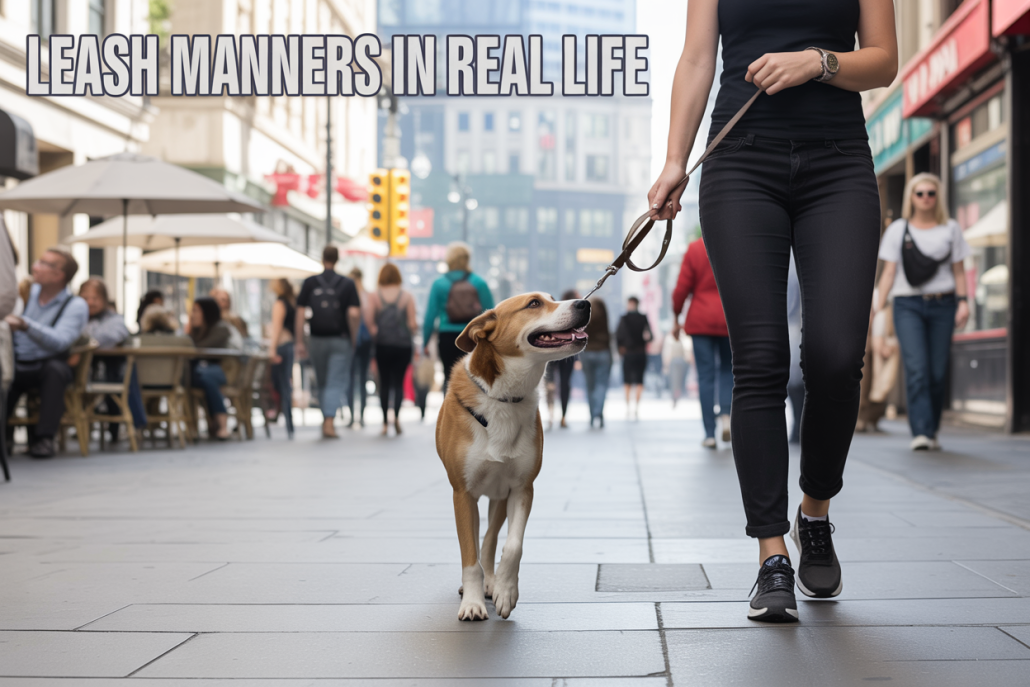
Leash Manners in Real Life: Training for Sidewalks, Cafes, and Crowds
Your dog might be perfect at home, but the moment you hit the sidewalk, chaos breaks loose. Leash training that works in real-world situations requires skills beyond basic commands.
This guide is for dog owners who want to enjoy stress-free walks through busy streets, peaceful coffee dates, and confident navigation through crowds. Whether you have a pulling puppy or an anxious rescue, these practical leash training tips will transform your public outings.
We’ll start with mastering essential leash manners before you leave your front door, then dive into walking your dog in public spaces like crowded sidewalks, where distractions multiply. You’ll also learn proven strategies for restaurant etiquette for dogs so you can actually enjoy that outdoor brunch, plus techniques for managing dog behavior in crowds when things get overwhelming.
Stop dreading walks and start looking forward to adventures with your well-mannered companion.
Master Basic Leash Skills Before Venturing Out
Establish proper leash tension and walking position
Getting your leash training foundation right starts with mastering the basics at home and in your yard. Your dog should walk beside you with a loose leash – think of it as a gentle curve rather than a tight rope. The sweet spot is when your dog’s shoulder aligns with your leg, creating a natural partnership that makes urban dog walking skills second nature.
Start by holding the leash about 18 inches from your dog’s collar, keeping your arm relaxed at your side. Many dog owners make the mistake of gripping too tightly or holding the leash too short, which actually encourages pulling. When your dog pulls ahead, stop immediately and wait for them to return to position. Reward them when they do – this simple technique is one of the most effective leash-pulling solutions.
Practice the “heel” position in your backyard first. Use treats and positive reinforcement to teach your dog that walking beside you pays off. The key is consistency – every family member needs to enforce the same rules, or your dog will get confused about what’s expected.
Teach your dog to focus on you instead of distractions
Building your dog’s attention skills is crucial for a successful walking dog in public scenarios. Dogs naturally want to investigate every smell, sound, and movement around them, but teaching focus transforms chaotic walks into enjoyable experiences.
Start with the “watch me” command in a quiet space. Hold a treat near your face and say “watch me” or “focus.” When your dog makes eye contact, immediately reward them. Practice this until your dog can maintain eye contact for several seconds, even with mild distractions nearby.
Gradually increase the difficulty by practicing near windows where your dog can see activity outside, or in your front yard where there are more sights and sounds. The goal is to build your dog’s ability to check in with you regularly, especially when something interesting catches their attention.
Use high-value treats during training – something your dog absolutely loves and doesn’t get at other times. This makes you more interesting than whatever else is happening around you. Remember, you’re competing with squirrels, other dogs, and fascinating smells, so make it worth your dog’s while to pay attention to you.
Practice the “stop and wait” command for sudden situations
Real-world walking presents unexpected challenges – a cyclist speeding by, a dropped ice cream cone, or another dog appearing suddenly. The “stop and wait” command serves as your safety net in these moments, making it an essential part of your leash-training toolkit.
Teaching this command starts with getting your dog comfortable with sudden stops. While walking, randomly stop and give your “wait” cue. Your dog should stop immediately and look to you for the next instruction. Don’t move forward until your dog is calm and focused on you.
Practice emergency stops by having family members create unexpected situations – someone can jog past, drop keys, or open an umbrella nearby while you work on the command. Start with mild distractions and build up to more challenging scenarios.
The beauty of this command lies in its versatility. Whether you need to avoid a spilled coffee on the sidewalk or give space to a nervous dog passing by, your dog will automatically pause and wait for your guidance. This level of dog behavior in crowds control gives you confidence to handle whatever city life throws your way.
Make sure to practice on different surfaces too – concrete, grass, gravel – so your dog learns that “wait” means the same thing regardless of where you are. This preparation pays off when you’re navigating busy restaurant patios or crowded farmers’ markets.
Navigate Busy Sidewalks Like a Pro
Train Your Dog to Walk on the Correct Side for Foot Traffic
Teaching your dog to consistently walk on your right side creates a predictable pattern for navigating sidewalks safely. Most pedestrian traffic flows naturally, so keeping your dog away from the main flow prevents tangled leashes and awkward encounters. Start practicing this positioning in quiet areas before transitioning to busier streets.
Begin leash training with clear positioning cues. Hold treats at your right hip and reward your dog every few steps for staying in the correct position. Use a consistent verbal cue, such as “side” or “place,” to reinforce the behavior. Practice direction changes and stops while maintaining this positioning – your dog should naturally adjust to stay on your right regardless of which way you turn.
Your leash-handling technique makes a significant difference in maintaining control. Keep about 18 inches of slack in the leash, allowing your dog freedom to move while maintaining clear boundaries. When your dog starts drifting toward the street or into foot traffic, gently guide them back with slight leash pressure and immediately reward the correction.
Teach Polite Passing Techniques Around Pedestrians
Successful sidewalk training for dogs requires mastering the art of polite passing. When approaching other pedestrians, teach your dog a “wait” or “slow” command to signal they should slow their pace and stay closer to your side. This prevents your dog from wandering into other people’s spaces or creating obstacles.
Practice the “excuse me” maneuver in controlled environments first. When you see pedestrians approaching, guide your dog slightly behind you and keep walking at a steady pace. Avoid sudden stops or changes in direction that might confuse both your dog and the people around you. If space is tight, step into a doorway or against a building wall, positioning your dog between you and the wall.
Reward calm behavior around strangers consistently. Many dogs get excited or anxious when passing people, especially in narrow spaces. Carry high-value treats and reward your dog immediately when they pass someone without pulling, jumping, or showing excessive interest. This positive reinforcement builds confidence and creates positive associations with crowded sidewalks.
Handle Unexpected Obstacles and Street Furniture
Urban environments present constant challenges – construction barriers, outdoor dining setups, street vendors, and temporary signs. Teaching your dog to navigate these obstacles calmly prevents leash-pulling from becoming a necessary emergency measure. Start by practicing around predictable obstacles such as benches, trash cans, and lampposts.
Use the “around” command to direct your dog past obstacles smoothly. When approaching a bench or sign, give the command and guide your dog around the object while maintaining your walking pace. Reward successful navigation with praise or treats. This command becomes invaluable when dealing with unexpected construction zones or crowded vendor areas.
Street furniture often attracts your dog’s attention for sniffing or marking. Establish clear rules on when stopping is acceptable and when you must keep moving. In busy areas, discourage lengthy sniffing sessions that block pedestrian flow. Save detailed exploration for quieter streets or designated dog areas where your dog can investigate safely.
Manage Reactions to Joggers, Cyclists, and Scooters
Moving targets like joggers, cyclists, and scooters can trigger strong reactions in dogs – from excitement and chase instincts to fear and defensive behavior. Teaching your dog to remain calm around fast-moving objects requires patience and consistent training techniques in public spaces.
Start desensitization training in areas where you can control the distance from moving objects. When you spot a jogger approaching, redirect your dog’s attention to you with treats or a favorite toy. Practice the “look” command to break their focus on the moving target. Gradually decrease the distance as your dog becomes more comfortable ignoring runners and cyclists.
Create a routine for handling these encounters. When you see a cyclist approaching, move your dog to your right side (away from the bike lane), maintain a steady walking pace, and keep your dog engaged with you until the cyclist passes. Avoid tensing up on the leash, as dogs can sense your anxiety and become more reactive. Stay relaxed and confident – your energy directly influences your dog’s response to urban dog walking skills challenges.
Emergency situations require quick thinking. If your dog suddenly lunges toward a cyclist or jogger, don’t panic or yank the leash harshly. Instead, use a firm “leave it” command and immediately redirect their attention back to you. Practice these scenarios regularly so both you and your dog can handle unexpected situations smoothly.
Create Calm Cafe and Restaurant Experiences
Master the “Settle” Command for Outdoor Dining
Teaching your dog to settle transforms chaotic restaurant visits into peaceful experiences. Start practicing this essential skill at home by choosing a specific mat or blanket as your dog’s designated “place.” Use the “settle” command while guiding them to lie down on this spot, and reward calm behavior with treats and praise.
Once your dog reliably settles indoors, graduate to your backyard or a quiet outdoor space. Practice during meal times when food aromas are present, as this mirrors real restaurant conditions. The goal is to create a mental switch where your dog understands that “settle” means relaxation time, not play or exploration time.
Restaurant environments test your dog’s impulse control like nothing else. Food smells, dropped crumbs, and exciting sounds create major distractions. Counter these by bringing high-value treats that outcompete the restaurant’s temptations. Keep training sessions short but frequent – even five minutes of daily practice builds the muscle memory needed for successful outings.
Position Your Dog Properly Under Tables and Chairs
Strategic positioning helps prevent accidents and creates a comfortable dining experience for everyone. Guide your dog to lie parallel to your chair, never extending into walkways where servers navigate. Their head should face away from foot traffic, reducing the urge to greet every passerby.
Avoid positioning your dog near table legs where they might get tangled or accidentally kicked. Instead, create a small buffer zone using their leash length. Keep the leash short enough to maintain control but long enough for comfortable positioning. Many experienced dog owners loop the leash around their chair leg or place their foot on it for added security.
Consider the restaurant layout when choosing your spot. Corner tables or outdoor seating with barriers offer natural boundaries that help anxious dogs feel secure. Avoid high-traffic areas near kitchen doors or bathrooms where constant movement might overstimulate your pet.
Prevent Begging Behaviors Around Food and Strangers
Begging behaviors embarrass owners and annoy fellow diners, but they’re entirely preventable with consistent training. Never feed your dog from your plate or allow others to do so, no matter how cute their pleading eyes appear. Each bite from your meal reinforces begging as a successful strategy.
Bring your dog’s own special treats or a puzzle toy filled with their favorite snacks. This gives them something appropriate to focus on while you eat. Timing matters – offer their treats before they start showing interest in your food, creating a positive association with staying calm during meals.
Train the “leave it” command extensively before attempting restaurant visits. Practice with increasingly tempting scenarios at home, starting with their regular kibble and progressing to aromatic human food. Your dog needs rock-solid impulse control when that dropped French fry lands inches from their nose.
Handle Servers, Other Diners, and Curious Children
Restaurant staff appreciate dogs who don’t interfere with their workflow. Brief your server about your dog’s presence and ask them to avoid direct interaction unless invited. Many servers feel obligated to pet dogs, but this can overstimulate the dog and disrupt its settled state.
Politely redirect well-meaning strangers who approach your dog without permission. A simple “Sorry, we’re training” usually works perfectly. Children pose unique challenges because they often approach quickly and unpredictably. Position yourself to intercept curious kids and explain that your dog is working on being calm.
Create physical boundaries using your body language and positioning. Angle your chair to create a subtle barrier between your dog and neighboring tables. Keep conversations with other diners brief if your dog gets excited by social interactions.
Practice Quick Exits When Situations Become Overwhelming
Even well-trained dogs have off days, and recognizing when to leave prevents negative experiences from undoing months of progress. Watch for early stress signals like excessive panting, whining, or inability to settle. Don’t wait for full-blown anxiety or reactive behaviors to develop.
Prepare exit strategies before ordering. Know where the nearest exit is and keep your belongings organized for quick departure. Many restaurants understand when pet parents need to leave suddenly – most would prefer this over dealing with a disruptive dog.
Practice “emergency exits” during training sessions at home. Use a specific cue, such as “time to go,” and immediately reward your dog for moving toward you and the door. This creates positive associations with leaving, making real emergencies less stressful for both of you.
Have a backup plan for partially consumed meals. Many restaurants will box up your food for takeout, allowing you to salvage the dining experience even if your original plans change. Remember that every outing is a learning opportunity, whether it ends in success or requires an early departure.
Conquer Crowded Spaces with Confidence
Prepare your dog for varying noise levels and energy.
Crowded spaces can trigger a sensory overload for your dog, which can quickly overwhelm even the most well-trained pup. Before introducing your dog to busy environments, gradually expose them to different sound levels at home. Play recordings of crowd noise, street sounds, and bustling activity while practicing basic leash training commands. Start at low volumes and slowly increase the intensity as your dog remains calm and focused on you.
Energy levels in crowds fluctuate wildly – from quiet morning shoppers to excited festival-goers. Your dog picks up on this collective energy faster than you might realize. Practice leash training in environments with varying energy levels, starting with quiet parks during off-peak hours and progressing to busier locations. Watch for signs of overstimulation, such as excessive panting, pulling, or fixation on sounds and movement.
Maintain control during sudden crowd movement.s
Crowds move unpredictably, and your dog needs to trust your guidance when people suddenly surge in different directions. Keep your leash at a comfortable length – not so tight that it creates tension, but short enough to maintain immediate control. Position yourself between your dog and the heaviest foot traffic when possible.
Practice “emergency stops” during your regular walks. Randomly stop walking and have your dog sit immediately beside you. This creates muscle memory for those moments when crowds suddenly shift direction or when you need to pause quickly. Your dog should learn to mirror your movements rather than react to the crowd’s energy.
Train the “close” command where your dog moves to your left side and stays there regardless of distractions. This positioning gives you maximum control and keeps your dog safely away from most foot traffic.
Navigate through groups without pulling or tangling
Moving through crowds requires strategic planning and clear communication with your dog. Scout your path ahead and choose the route with the most space rather than the fastest one. Your dog’s behavior in crowds improves dramatically when you’re not rushing or feeling stressed about your route.
Keep treats readily accessible in a pocket or treat pouch. Reward your dog for maintaining position and ignoring distractions as you weave through groups. The “follow” command works wonders here – teach your dog to focus on your legs and follow your movement rather than getting distracted by interesting smells or sounds around them.
When approaching a group, slow your pace and use verbal cues like “easy” or “steady” to signal a change in walking speed. This prevents sudden pulling when your dog gets excited or nervous about navigating around people.
Keep your dog calm around excited children and other dogs
Children’s unpredictable movements and high-pitched voices can trigger even calm dogs to pull or become overly excited. Teach your dog the “leave it” command specifically for social situations. When children approach asking to pet your dog, you need complete control over the interaction.
Practice the “settle” command in your leash training routine. Your dog should be able to lie down and stay calm even when exciting things happen nearby. This skill becomes crucial when other dogs pass by or when children are playing loudly nearby.
Create positive associations with children’s voices and movements by having family members or friends with kids help during training sessions. Start with calm interactions and gradually increase the energy level as your dog learns to maintain composure. Remember that walking a dog in public spaces means accepting that not every interaction will be perfect, but your dog should always remain under your control.
Handle Real-World Emergencies and Unexpected Situations
Train Emergency Recall Commands for Safety
Emergency recall commands can save your dog’s life in dangerous situations. Start teaching this command in a quiet, enclosed space using an ultra-high-value treat your dog rarely gets – think freeze-dried liver or small pieces of chicken. Choose a unique word like “EMERGENCY” or “COME NOW” that you’ll never use casually.
Practice by calling your dog from short distances while they’re mildly distracted, immediately rewarding with jackpot treats and enthusiastic praise when they respond. Gradually increase distance and distractions. The key is making the emergency recall the most rewarding experience possible – even better than chasing that squirrel.
Test your training regularly in safe, fenced areas. If your dog doesn’t respond immediately during practice, go back to easier scenarios. This command should have a 100% success rate before you trust it in real emergencies. Remember, you might only get one chance to use this command when it truly matters.
Manage Your Dog During Construction, Sirens, and Loud Noises
Urban environments throw curveballs that can turn your well-mannered walker into a panicked puller. When approaching construction zones, cross the street early if possible, maintaining a calm demeanor. Dogs pick up on your tension, so stay relaxed and confident.
For sudden loud noises like sirens or jackhammers, don’t comfort your dog with soothing words – this can reinforce fearful behavior. Instead, keep walking normally and redirect their attention with treats or a simple command like “look at me.” Practice this technique with recorded sounds at home, starting at low volumes and gradually increasing while rewarding calm behavior.
Create positive associations by having amazing treats ready whenever you encounter these situations. If your dog shows extreme fear, don’t force them to “tough it out.” Identify alternative routes until you can begin systematic desensitization training. Building confidence takes time, and pushing too hard too fast can create lasting fears.
Deal with Off-Leash Dogs Approaching in Public Spaces
Off-leash dogs pose one of the most challenging leash-training scenarios. Your first priority is creating space between your leashed dog and the approaching dog. Don’t panic – dogs sense anxiety, and it can escalate the situation.
Move your dog behind you and face the approaching dog. Use a firm, confident voice to say “NO” or “STAY BACK” to the loose dog while calling loudly for the owner. Avoid running, which can trigger chase behavior. If you have treats, throw them away from your dog to redirect the approaching dog’s attention.
Keep your leash loose if possible – tension can make your dog feel trapped and more likely to react defensively. If the dogs seem friendly and the owner appears, ask before allowing interaction. Many well-socialized dogs can greet positively, but leash tension significantly changes the dynamic.
Train your dog to “leave it” and to focus on you rather than other dogs. Practice this skill regularly during walks by rewarding your dog for ignoring other dogs at a distance. The stronger this foundation, the easier it becomes to manage unexpected encounters.
Practice Recovery Techniques When Training Breaks Down
Even the best-trained dogs have off days, and your leash training will occasionally fall apart. When your dog starts pulling, jumping, or acting out, avoid the temptation to get frustrated or fight the leash. Instead, stop moving completely until they calm down, then redirect with a simple command they know well.
The “reset” technique works wonders: take a few steps backward, call your dog’s attention with their name, and start fresh with a basic command like “sit.” Reward them immediately for compliance, then continue your walk. This breaks the pattern of unwanted behavior and reminds your dog of your expectations.
Sometimes the environment is simply too stimulating for your current training level. Know when to cut your losses and head home. A short, successful walk is better than a long, stressful battle that reinforces bad habits.
Keep emergency supplies in your pocket: high-value treats for redirecting attention and familiar commands your dog knows reliably. Recovery isn’t about punishment – it’s about getting back on track quickly and ending on a positive note.
Teaching your dog proper leash manners takes time and patience, but the payoff is huge. You’ll go from dreading walks to actually enjoying them, and your dog will become the well-behaved companion you always wanted. Remember that every dog learns at their own pace, so don’t get discouraged if progress feels slow at first.
Start with basic skills at home, then gradually move into busier environments. Practice makes perfect, and the more real-world situations you expose your dog to, the more confident you’ll both become. Your future self will thank you when you can effortlessly stroll through the farmer’s market or sit peacefully at your favorite outdoor cafe with your perfectly behaved pup by your side.
Looking to improve your dog’s obedience and focus through expert guidance? Start with our Basic Dog Training in Carlsbad, CA, to teach reliable commands and strengthen communication. For a more tailored experience, our Private Dog Training in Carlsbad, CA, provides customized sessions tailored to your dog’s unique temperament. If you prefer faster, more immersive results, our Board & Train in Carlsbad, CA delivers intensive, hands-on training led by experienced professionals. Visit our homepage to discover our complete Dog Training programs and experience the highest-quality Dog Training in Carlsbad for lasting results.

