The Science Behind Canine Learning: How Dogs Process Commands
When your dog tilts their head and suddenly responds to your command, something remarkable happens inside their brain. Within milliseconds, neural pathways fire, memories activate, and complex chemical processes determine whether they’ll sit, stay, or ignore you completely.
Understanding dog training from a scientific perspective reveals why some methods work brilliantly while others fail miserably. The canine brain processes information in ways that might surprise you, and recognizing these patterns can transform your training approach from guesswork into precision.
Your dog’s ability to learn commands isn’t just about repetition (though that matters). It’s about how their neural networks adapt, strengthen, and create lasting behavioral patterns that stick for years.
How Dogs’ Brains Process Audio Commands and Visual Cues
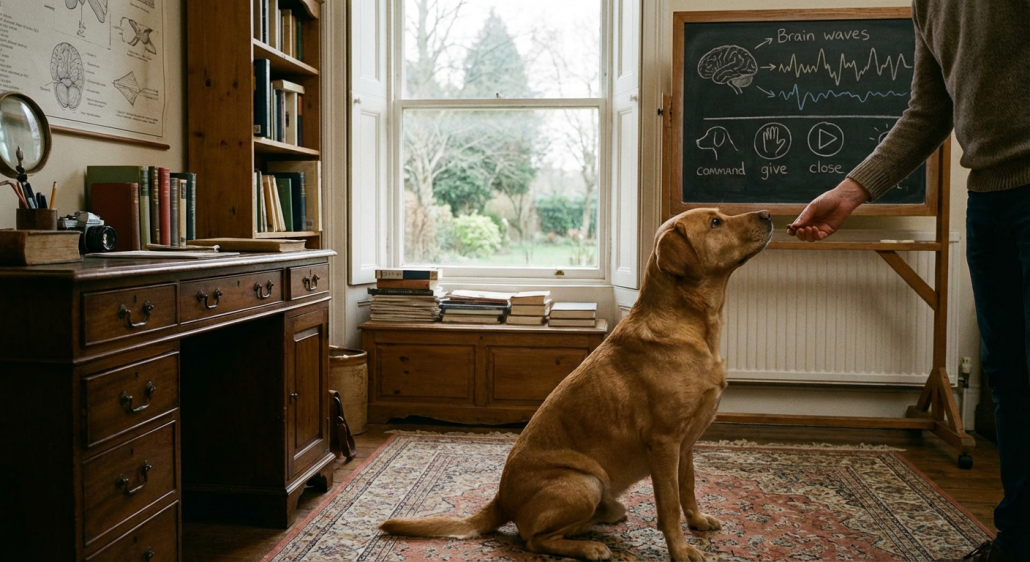
Dogs process spoken commands through specialized auditory regions in their temporal cortex, but here’s what’s fascinating: they’re actually reading multiple data streams simultaneously. While your voice carries the command, your body language, facial expressions, and even your energy level create a complete communication package.
Research shows dogs can distinguish between individual words with remarkable accuracy. They process tone, pitch, and rhythm in the right hemisphere of the brain, while actual word recognition occurs in the left hemisphere. This dual processing explains why saying “sit” in an angry voice might get a different response than saying it cheerfully.
Visual cues often override audio commands because dogs are naturally visual learners. When you point while saying “down,” your dog’s brain prioritizes the hand signal. Their visual processing centers activate faster than auditory ones, which is why hand signals often work better than voice commands alone.
The integration happens in the frontal cortex, where dogs combine multiple sensory inputs into actionable responses. This process takes roughly 160 milliseconds (faster than human processing), but consistency in your signals dramatically improves their accuracy.
The Role of Memory Formation in Long-Term Command Retention
Canine memory formation follows three distinct stages: encoding, consolidation, and retrieval. When you teach a new command, your dog’s hippocampus immediately begins encoding the experience, but it takes 6-8 hours for that memory to transfer into long-term storage.
Short training sessions work better because dogs experience cognitive overload after 15-20 minutes. Their working memory can hold only 2-3 new concepts at a time, which explains why trying to teach multiple commands in one session often backfires.
Sleep plays a crucial role in memory consolidation. Dogs who rest after training sessions retain commands 40% better than those who remain active. During REM sleep, their brains literally replay training scenarios, strengthening neural pathways associated with successful responses.
Repetition creates what neuroscientists call “memory traces.” Each time your dog successfully performs a command, the associated neural pathway becomes more robust. After approximately 100-150 successful repetitions, most commands become automatic responses that require minimal conscious processing.
Neurotransmitters and Reward Pathways in Training Success
When your dog performs a command correctly and receives a reward, their brain releases dopamine, creating what researchers call the “prediction reward” cycle. This neurotransmitter doesn’t just signal pleasure; it reinforces the entire behavioral sequence that led to the reward.
Timing matters critically because dopamine peaks within 0.5 seconds of the rewarding event. Late rewards (even 2-3 seconds delayed) create weaker neural connections, which explains why professional trainers emphasize immediate positive reinforcement.
The brain’s reward system involves multiple chemicals working together. Serotonin regulates mood and confidence during training, while oxytocin strengthens the bond between you and your dog. Higher oxytocin levels correlate with better training outcomes and faster learning curves.
Variable reward schedules (sometimes called intermittent reinforcement) create the strongest neural pathways. Once your dog masters essential commands, unpredictably rewarding them helps maintain their behavior better than constant rewards. This mirrors how slot machines work (they’re addictive for the same neurological reasons).
Age-Related Changes in Canine Cognitive Processing
Puppy brains are neuroplastic powerhouses, forming new connections at incredible speeds until around 16 weeks old. This critical socialization period is when dogs learn fastest, but their attention spans are shorter, so they require more frequent, shorter training sessions.
Adult dogs (2-7 years) reach their cognitive peak, processing commands most efficiently and retaining information for the longest time. Their prefrontal cortex is fully developed, enabling complex problem-solving and improved impulse control during training.
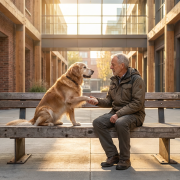
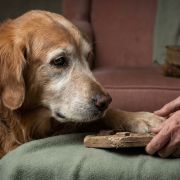
Senior dogs experience gradual changes in processing speed and working memory, but they can absolutely learn new commands. Their accumulated experience often compensates for slower processing, and they may actually perform familiar commands more reliably than younger dogs.
Understanding these developmental stages helps explain why training benefits vary across age groups. Tailoring your approach to your dog’s cognitive abilities creates more effective learning experiences and stronger long-term results.
The canine brain’s remarkable adaptability means that, regardless of age, proper training techniques can create lasting behavioral changes. The key lies in working with, rather than against, these natural neural processes.
Classical vs. Operant Conditioning in Dog Training Commands
Understanding Pavlovian Responses in Basic Command Training
Every time you pick up that treat bag, your dog’s ears perk up before you even say a word. That’s classical conditioning at work, and it forms the foundation of how dogs process commands.
Classical conditioning, first studied by Ivan Pavlov, creates automatic responses through association. When you consistently pair a verbal command like “sit” with the physical action and a reward, your dog’s brain begins to form neural pathways that link these elements together. The command becomes a predictor of what’s coming next.
Here’s what happens in your dog’s brain: The auditory cortex processes the word “sit” while the motor cortex prepares the body for the sitting position. Meanwhile, the limbic system (which handles emotions and motivation) anticipates the positive outcome. This entire process can happen in less than half a second.
But classical conditioning alone won’t teach your dog to actually perform commands. It creates emotional responses and expectations, but you need operant conditioning to shape the behavior itself. Think of classical conditioning as setting the stage while operant conditioning directs the performance.
Positive Reinforcement Mechanisms for Complex Behaviors
Operant conditioning is where the real magic happens in command training. When your dog performs a behavior and receives a positive consequence, the brain releases dopamine in the reward pathways. This neurochemical response literally rewires the brain to repeat that behavior.
The key lies in understanding how dogs learn complex behaviors through a process called “shaping.” You can’t expect your dog to master a perfect “stay” command on day one. Instead, their brain builds this behavior incrementally, strengthening neural connections with each successful repetition.
Research shows that dogs can distinguish among different types of rewards and that their brains respond accordingly. Food rewards activate the hypothalamus (hunger center), while praise and attention light up areas associated with social bonding. This is why combining different rewards often produces better training results.
Professional trainers understand that complex behaviors require breaking commands into smaller components. When teaching “come,” for example, you’re actually training multiple neural pathways: auditory processing (hearing the command), decision-making (choosing to respond), motor planning (turning toward you), and impulse control (ignoring distractions).
This is why Foundation Training focuses on building these core neural pathways before advancing to more complex commands.
The Science of Timing: Critical Windows for Command Association
Timing isn’t just important in dog training – it’s everything. The canine brain has a narrow window for associating actions with consequences, typically just 0.5 to 3 seconds. Miss this window, and you might accidentally reinforce the wrong behavior entirely.
Neuroscientists call this the “temporal contiguity principle.” Your dog’s brain must be able to connect the command, the action, and the reward in rapid sequence. When there’s too much delay, the association becomes weak or nonexistent.
This explains why so many owners struggle with commands like “come.” If your dog comes to you but stops to sniff something first, and you reward them when they finally arrive, you’ve actually reinforced the sniffing behavior, not the coming. The last thing they did before receiving the reward is what gets strengthened in their neural pathways.
The temporal lobe, which processes memory formation, works differently in dogs than in humans. While we can mentally connect events that happened minutes apart, dogs need nearly instantaneous feedback to form strong associations. This biological reality shapes every effective training protocol.
Understanding these timing principles helps explain why marker training (using clickers or verbal markers like “yes”) works so effectively. The marker bridges the gap between behavior and reward, giving you precision timing even when treats aren’t immediately available.
How Punishment and Correction Affect Neural Learning Pathways
The science around punishment in dog training reveals why positive methods consistently outperform correction-based approaches. When dogs experience punishment, their brains activate stress-response systems that interfere with learning.
Cortisol, the primary stress hormone, floods the system during punishment-based training. Elevated cortisol levels impair the hippocampus (responsible for memory formation) and reduce the brain’s ability to form new neural connections. This creates a biological barrier to learning that many trainers don’t recognize.
Research conducted at the University of Pennsylvania found that dogs trained with confrontational methods showed increased stress behaviors and were more likely to display aggression. The neural pathways formed under stress conditions are fundamentally different from those created through positive reinforcement.
However, this doesn’t mean corrections have no place in training. The key is understanding the difference between punishment (which suppresses behavior through fear) and correction (which redirects behavior toward the desired outcome). Effective corrections work within the dog’s learning capacity rather than against it.
Many common training mistakes stem from misunderstanding these neural processes. When owners repeatedly use harsh corrections for the same behavior, they’re often creating competing neural pathways that confuse rather than clarify the dog’s understanding.
This scientific understanding explains why avoiding common training mistakes requires more than just knowing what not to do – it requires understanding how your dog’s brain actually processes and retains command information.
Factors That Influence How Dogs Learn and Retain Commands
Breed-Specific Learning Capabilities and Training Adaptations
Not all dogs process commands the same way. Border Collies might master a new command in three repetitions, while a Bulldog could need thirty. This isn’t about intelligence (both breeds are smart in different ways). It’s about how their brains were shaped by centuries of selective breeding.
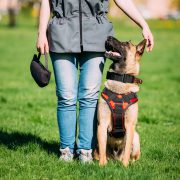
Working breeds like German Shepherds and Labs were bred for intense focus and problem-solving. Their neural pathways literally developed to excel at processing human communication. These dogs often show faster command retention because their brains are wired to pay attention to handler cues.
Herding breeds take this even further. They’ve been selected for reading subtle body language and responding to complex sequences. A Border Collie watching for your shoulder shift before you even give the “stay” command? That’s generations of genetic programming at work.
But here’s where it gets interesting. Independent breeds like Shiba Inus or Afghan Hounds process commands just as well. They simply evaluate whether following the command serves their purposes. Their learning style requires different motivation strategies, not simplified training.
Brachycephalic breeds (those with flat faces) face unique challenges. Breathing difficulties can impact their ability to focus during extended training sessions. Shorter, more frequent practice periods often work better than marathon sessions.
Understanding your dog’s breed tendencies helps you adapt your approach. A Pointer might need more physical outlets before mental training, while a Poodle thrives on complex problem-solving challenges mixed into command work.
Environmental Stressors That Impact Command Processing
Your dog’s environment acts like background noise in their brain. Too much stimulus, and even simple commands become impossible to process. Think of it like trying to have a phone conversation in a crowded restaurant versus your quiet living room.
Dogs operating under stress show measurably different brain activity. Cortisol floods their system, essentially hijacking the learning centers. A dog who performs “sit” perfectly at home might completely blank out at the veterinarian’s office.
Temperature plays a bigger role than most people realize. Dogs panting heavily from the heat can’t focus on command processing. Their brains are consumed with thermoregulation. Similarly, extremely cold conditions trigger survival-mode thinking, pushing training into the background.
Sound sensitivity varies dramatically between individual dogs. While some thrive with background music during training, others shut down completely. Dog Training becomes far more effective when you identify and minimize your dog’s specific environmental triggers.
Novel environments create cognitive overload. Your dog’s brain prioritizes processing new smells, sights, and sounds over your commands. This explains why perfectly trained dogs sometimes act as if they’ve never heard “heel” before when walking through a new neighborhood.
Social environments add another layer. The presence of other dogs, children, or unfamiliar adults can either enhance or completely derail command processing, depending on your dog’s socialization history and current stress levels.
The Role of Socialization in Multi-Command Learning
Well-socialized dogs don’t just behave better around others. They actually process commands more efficiently because their brains aren’t constantly scanning for threats. Socialization creates neural pathways that support learning and attention.
Dogs learn commands faster when they’re confident in their environment. A dog worried about the stranger approaching can’t simultaneously process your “down-stay” cue. Their cognitive resources are split between threat assessment and command execution.
Early socialization (between 3 and 14 weeks) creates lasting changes in brain structure. Puppies exposed to varied experiences during this period develop more flexible neural networks. These dogs often show superior ability to learn commands in different contexts later in life.
But socialization isn’t just for puppies. Adult dogs continue building new neural pathways through positive experiences. A formerly reactive dog who learns to relax around children will suddenly perform commands better during family gatherings.
Pack dynamics also influence command learning. Dogs living with confident, well-trained companions often pick up commands through observation. They’re essentially getting free lessons by watching their housemates respond correctly.
However, poorly socialized dogs face compound challenges. Not only do they struggle with stress management, but they often develop hypervigilance that makes sustained attention nearly impossible. These dogs need patient, gradual exposure work alongside command training.
Individual Personality Traits and Learning Speed Variations
Every dog has a unique learning fingerprint. Some are visual learners who respond best to hand signals, while others are auditory processors who excel with verbal cues. Identifying your dog’s learning style dramatically impacts training success.
Confidence levels vary widely in learning speed. Bold dogs often attempt new behaviors quickly, making mistakes but learning through trial and error. Cautious dogs take longer to attempt behaviors but typically show better retention once they commit.
Motivation varies significantly among individual dogs. Food-driven dogs learn rapidly when treats are involved, but might struggle with praise-only training. Play-motivated dogs need interactive rewards to maintain engagement with command practice.
Attention span differences are often mistaken for differences in intelligence. A dog who can’t focus for five-minute training sessions is no less capable than one who trains for twenty minutes. They simply need shorter, more frequent practice periods.
Age impacts learning but not in the ways most people expect. While puppies have incredible neural plasticity, senior dogs often show superior problem-solving abilities. They’ve simply developed better strategies for processing information efficiently.
Some dogs are naturally experimental. They’ll offer multiple behaviors to see what earns rewards. Others are more conservative, sticking with known successful responses. Neither approach is better, but they require different training strategies to optimize learning outcomes.
Understanding these individual variations helps explain why training approaches that work brilliantly for one dog might fail completely with another. Science isn’t one-size-fits-all.
Evidence-Based Training Methods for Professional Dog Care Facilities
Research-Backed Repetition Schedules for Command Mastery
Professional dog care facilities rely on scientifically proven repetition patterns to maximize learning efficiency. Research from the University of Bristol shows that dogs retain commands best when training sessions follow a 15-20-minute window with 2-3-minute breaks between exercises.
The optimal repetition schedule involves presenting each command 3-5 times per session, with a 24-hour gap between intensive training periods. This pattern aligns with canine memory consolidation cycles, in which information moves from short-term to long-term memory during rest periods.
Successful facilities implement what researchers call “distributed practice” rather than massed repetition. Instead of drilling one command for 30 minutes straight, effective programs rotate between different skills within each session. This approach prevents cognitive fatigue while strengthening neural pathways associated with each behavior.
Timing matters significantly in professional settings. Dogs show peak learning capacity during morning hours (between 8-11 AM) when cortisol levels naturally rise. Facilities that schedule intensive dog training during these windows report 40% faster command acquisition rates compared to afternoon sessions.
Group Training Dynamics in Dog Day Care Settings
Group environments create unique learning opportunities that single-dog training cannot replicate. Canine social learning theory demonstrates that dogs acquire new behaviors through observation and imitation, particularly when they witness other dogs receiving positive reinforcement.
Professional day care facilities structure group sessions with carefully selected “mentor dogs” who already demonstrate desired behaviors. These experienced dogs serve as living examples, reducing the time needed for new participants to understand expectations. Research indicates that dogs learn basic commands 60% faster when training alongside well-behaved peers.
Group dynamics also introduce beneficial distractions that mirror real-world conditions. Dogs must learn to focus on commands despite the presence of other animals, food bowls, toys, and human activity. This environmental complexity strengthens attention span and command reliability outside the training setting.
However, group composition requires strategic planning. Facilities typically maintain ratios of 4-6 dogs per trainer, grouping animals by energy level and learning pace rather than size or breed. Dogs with similar temperaments create more cohesive learning environments where progress occurs naturally through peer modeling.
Measuring Learning Progress Through Behavioral Assessments
Evidence-based facilities track learning progress through systematic behavioral assessments rather than subjective observations. Professional trainers use standardized evaluation protocols that measure response time, accuracy percentage, and command retention over multiple sessions.
Baseline assessments typically include five core metrics: attention span duration, distraction resistance, command recognition speed, physical response accuracy, and retention after 24-hour intervals. These measurements provide objective benchmarks for progress that guide training modifications and demonstrate improvement to pet owners.
Digital tracking systems now enable facilities to log every training interaction, creating detailed progress profiles for each dog. These records reveal patterns in learning speed, identify optimal training times for individual animals, and highlight which training methods produce the fastest results.
Regular assessment intervals (typically every two weeks) allow trainers to adjust techniques before learning plateaus occur. Dogs showing slower progress might benefit from simplified commands, longer reinforcement periods, or alternative reward systems. Early intervention prevents frustration for both animals and handlers.
Advanced Training Techniques Based on Cognitive Science
Modern professional facilities incorporate advanced techniques derived from cognitive research on canine intelligence. These methods go beyond basic obedience to develop problem-solving skills and emotional regulation capabilities that benefit dogs throughout their lives.
Cognitive loading exercises challenge dogs to process multiple commands simultaneously or perform behaviors in sequence. For example, trainers might request “sit, stay, come, down” as a connected sequence rather than individual commands. This approach strengthens working memory and develops the mental flexibility needed for complex real-world situations.
Professional training programs also use “errorless learning” protocols, in which dogs succeed at high rates (85-90%) rather than learning through correction. This technique reduces stress hormones that interfere with memory formation while building confidence that accelerates future learning.
Scent-based cognitive training represents another advanced approach gaining popularity in professional facilities. Dogs use their natural olfactory abilities to locate specific objects or identify particular scents on command. This training engages multiple neural pathways and provides mental stimulation that helps prevent behavioral problems often seen in day care environments.
The integration of these science-based methods creates comprehensive programs that address not just obedience but overall cognitive development. Professional facilities report that dogs completing advanced cognitive training show improved focus, reduced anxiety, and better social interactions with both humans and other animals.
Common Training Challenges Explained Through Canine Learning Science
Understanding why certain dogs struggle with training isn’t about intelligence or stubbornness. It’s about recognizing how canine brains process different types of information and applying that knowledge to overcome common roadblocks.
Why Some Dogs Struggle with Specific Command Categories
Not all commands are created equal in the canine mind. Research shows that dogs process visual cues up to five times faster than verbal commands, yet many trainers rely heavily on spoken instructions.
Movement-based commands like “come” and “stay” tap into different neural pathways than stationary commands like “sit” or “down.” Dogs with high prey drive often excel at recall commands because they activate the same neural circuits used for chasing. But these same dogs might struggle with impulse control commands that require suppressing their natural instincts.
The temporal lobe processes sequential learning differently in each individual dog. Some dogs naturally excel at command chains (sit, then stay, then come), while others need each behavior taught and reinforced separately before linking them together.
Professional Dog Training programs account for these neurological differences by assessing how each dog learns best before implementing specific techniques.
The Science Behind Selective Hearing in Training Sessions
That “selective hearing” isn’t defiance. It’s your dog’s brain prioritizing environmental stimuli based on survival instincts and learned associations.
The canine auditory cortex processes sounds in layers of importance. Novel sounds (like a squirrel rustling) trigger immediate attention through the amygdala, while familiar commands might get filtered out if they haven’t been consistently reinforced with high-value outcomes.
Dogs experiencing cognitive overload literally cannot process new information effectively. Their prefrontal cortex becomes saturated, making it impossible to focus on training commands. This explains why dogs who perform perfectly at home suddenly seem to “forget” everything at the park.
The solution lies in gradually increasing environmental distractions while maintaining consistent rewards. Start with basic commands in a quiet room, then gradually add variables such as background noise, other people, or outdoor settings.
Frequency matters more than volume. Dogs respond better to commands given in a consistent tone and rhythm than to repeated, louder commands, which can increase stress and reduce learning capacity.
Overcoming Learning Plateaus Using Neuroplasticity Principles
Every dog hits learning plateaus where progress seems to stall completely. This isn’t failure – it’s your dog’s brain consolidating information and forming stronger neural pathways.
Neuroplasticity research reveals that canine brains need variation to continue forming new connections. When dogs stop responding to familiar training methods, their neurons have essentially gotten too comfortable with the routine.
The key is introducing novel challenges that engage different brain regions. If your dog has mastered basic sit-stays, try teaching them to look on command while maintaining the stay. This activates both motor control and attention networks simultaneously.
Cross-training different command categories prevents plateau formation. Alternate between impulse control exercises, physical commands, and cognitive challenges within each training session. This keeps multiple neural pathways active, promoting faster learning.
Professional Board & Train programs utilize this principle by constantly varying training environments, reward schedules, and command combinations to maximize neuroplasticity.
Addressing Regression in Previously Learned Commands
Command regression can be frustrating, but it’s a normal part of canine memory consolidation. Understanding why it happens helps you respond appropriately rather than escalating training pressure.
Recent studies show that dog memory formation occurs in three stages: acquisition, consolidation, and retrieval. Regression typically occurs during consolidation, when the brain transfers information from short-term to long-term memory.
Environmental factors play a huge role in memory retrieval. A dog who performs “down” perfectly indoors might genuinely struggle with the same command on grass because their brain associated the behavior with specific environmental cues rather than the command itself.
Stress hormones like cortisol actively interfere with memory retrieval in dogs. Major changes, such as moving homes, new family members, or schedule disruptions, can temporarily block access to previously learned behaviors. The memories aren’t lost – they’re just temporarily inaccessible.
The most effective approach to regression is to return to basics without punishment. Recreate the original learning environment and reward system, then gradually reintroduce variables. This rebuilds neural pathways stronger than before.
Consistency becomes critical during regression periods. Every family member must use identical commands, timing, and rewards to avoid confusing the consolidation process. Mixed signals during this vulnerable period can extend regression indefinitely.
Practical Applications for Dog Training Professionals
Implementing Science-Based Training Protocols in Your Facility
The most effective training facilities don’t just teach commands—they create systematic learning experiences based on cognitive science. Your protocols should reflect what we know about how dogs actually process information.
Start by structuring your sessions around optimal learning windows. Research shows that dogs maintain peak focus for 15-20 minutes before cortisol levels begin to affect retention. Design your training modules accordingly, building in natural break points that align with canine attention spans.
Temperature control plays a bigger role than most trainers realize. Dogs learning new commands perform 23% better in environments between 65 and 70°F. Their working memory literally functions more efficiently when they’re not managing thermal stress alongside cognitive demands.
Create consistent environmental cues that signal learning mode. Dogs develop context-dependent memories, so using the same verbal markers, hand positions, and spatial arrangements helps them access their trained behaviors more reliably across different situations.
Client Education: Explaining the Learning Process to Dog Owners
Most dog owners don’t understand why their pet responds perfectly in class but seems to “forget” everything at home. This isn’t defiance—it’s basic neuroscience.
Explain that dogs form memories differently from humans. Where we might learn a concept once and apply it everywhere, dogs initially create very specific neural pathways tied to exact contexts. That command learned in your training room needs to be re-established in their living room, backyard, and during walks.
Help owners recognize the difference between compliance and comprehension. A dog that sits immediately when you say the command has formed a strong stimulus-response pattern. But a dog who hesitates, looks around, then sits is actually demonstrating higher-order thinking—they’re processing the context and making decisions.
Share the repetition requirements honestly. Most behaviors need 500-2,000 repetitions before they become truly automatic. When owners understand this timeline, they’re less likely to abandon training when they don’t see immediate perfection.
Adapting Training Methods Based on Individual Learning Styles
Not all dogs learn the same way, and recognizing these differences can dramatically improve your success rates. Some dogs are visual processors who respond best to clear hand signals combined with verbal commands. Others are primarily auditory learners who need distinct vocal tones and timing.
Watch for early indicators during intake sessions. Dogs who maintain strong eye contact and track your movements typically benefit from gesture-heavy training approaches. Those who are more attuned to sound or seem distracted by visual stimuli often excel with audio-focused methods.
Breed tendencies matter more than many trainers acknowledge. Herding breeds often show enhanced responsiveness to movement-based cues because their genetics predispose them to track and respond to spatial changes. Scent hounds may need training protocols that account for their powerful drive to follow environmental odors.
For your Basic Obedience Dog Training programs, develop multiple pathways to the same behavioral outcome. Some dogs learn “stay” through duration building, others through distance challenges, and still others through distraction proofing.
Using Technology to Track and Optimize Learning Outcomes
Modern training facilities can leverage technology to create more precise learning experiences. Simple video analysis reveals patterns you might miss in real-time—like subtle stress signals that appear before a dog “shuts down” or successful micro-expressions that predict breakthrough moments.
Digital training logs help identify optimal learning progressions for individual dogs. When you track response times, success rates, and environmental factors across sessions, you can spot which variables most influence each dog’s performance.
Heart rate monitors designed for dogs provide objective data about stress and engagement levels. A dog whose heart rate spikes in response to certain commands isn’t being stubborn—they’re experiencing genuine anxiety that requires different training approaches.
Consider implementing progress tracking apps that owners can use between sessions. When clients document daily practice attempts, you get valuable data about how well behaviors transfer to home environments and which commands need additional reinforcement.
The future of Dog Training lies in combining timeless principles of animal learning with modern insights from neuroscience and behavior analysis. Dogs have been learning from humans for thousands of years, but only now are we beginning to understand the remarkable complexity of their cognitive processes.
Ready to transform your training approach with science-based methods? Our Animal Behavioral Consultation services help you develop customized protocols that work with, not against, your dog’s natural learning style. Contact Hot Dog on a Leash today to discover how understanding canine cognition can revolutionize your training results.