
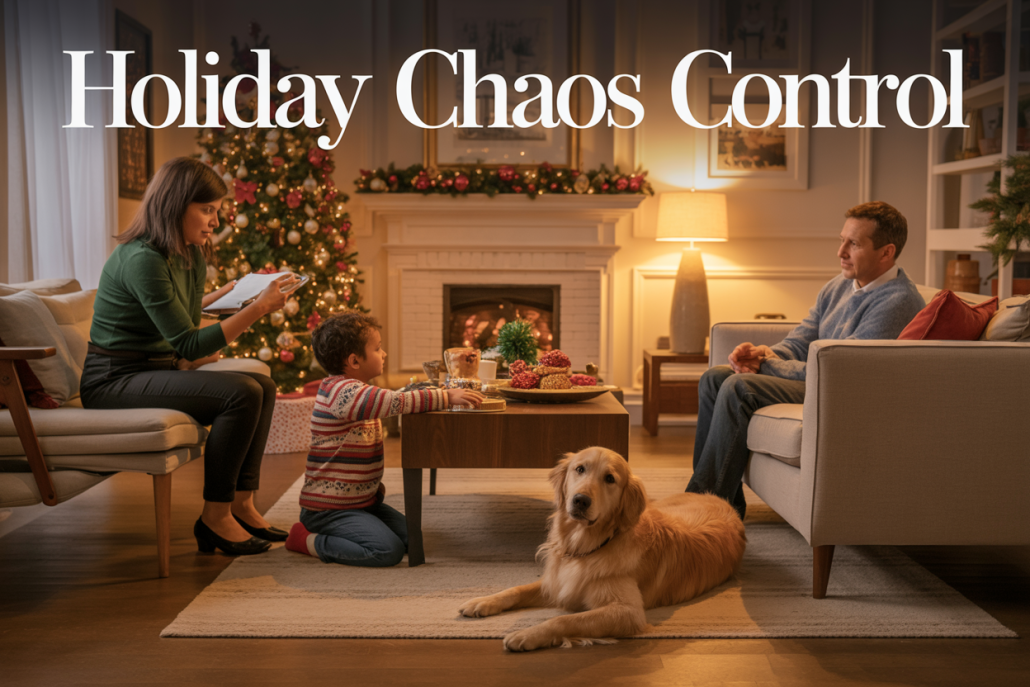
Holiday Chaos Control, Training Tips For Guests, Kids And Dogs
The holidays bring joy, laughter, and let’s be honest—complete mayhem when you mix excited kids, curious dogs, and a house full of guests. If you’re a busy parent or pet owner who wants to actually enjoy your holiday gatherings instead of playing referee all day, these holiday chaos control strategies will save your sanity.
This guide is for families juggling children and pets during holiday entertaining, offering practical training tips for guests, kids, and dogs that actually work in real-life situations.
We’ll cover pre-holiday preparation strategies to set everyone up for success before the doorbell even rings. You’ll also learn guest management techniques and holiday methods for controlling child behavior that keep both two-legged and four-legged family members calm and happy when your home fills with visitors. Finally, we’ll tackle what to do when things inevitably go sideways—because even the best-laid holiday plans sometimes need a backup strategy.
Pre-Holiday Preparation Strategies
Set Clear Expectations with All Family Members
Getting everyone on the same page before holiday guests arrive makes all the difference between chaos and calm. Start by having honest conversations with each family member about what the holidays will look like. Talk about who’s coming, when they’ll arrive, and what activities are planned. Kids especially benefit from knowing the schedule ahead of time – it helps them prepare mentally for changes to their routine.
Make sure everyone understands their role during gatherings. Older children can help with coat collection or entertain younger cousins. Adults should know who’s handling which responsibilities, from cooking to cleanup. When everyone knows what’s expected, there’s less confusion and stress when guests start arriving.
Don’t forget to discuss potential challenges upfront. If Uncle Bob tends to get political at dinner or Grandma constantly criticizes the decorations, prepare your family with strategies for handling these situations gracefully. Role-playing challenging scenarios ahead of time can help kids and adults respond appropriately when tensions arise.
Create Holiday House Rules Everyone Can Follow
Simple, clear house rules keep holiday gatherings running smoothly for guests, kids, and dogs alike. Write down three to five basic rules that everyone can understand and remember. Post them somewhere visible – the refrigerator works perfectly. Rules might include “Shoes off at the door,” “Ask before feeding the dog,” or “No phones during dinner.”
Make the rules specific to your holiday gathering needs. If you have multiple families with different parenting styles visiting, establish boundaries around discipline and treats for children. Some families might need rules about screen time, bedtime routines, or which areas of the house are off-limits to kids.
Include pet-specific rules that protect both your dogs and your guests. Rules like “Don’t open doors without checking for pets” and “No table scraps for dogs” prevent common holiday mishaps. Guest management techniques work best when everyone follows the same guidelines, creating consistency that reduces stress for both people and pets.
Designate Quiet Spaces for Overstimulated Guests and Pets
Creating retreat spaces is one of the most effective pre-holiday preparation strategies you can implement. Choose specific rooms or areas where people and pets can escape when the celebration becomes overwhelming. Make sure these spaces are clearly communicated to all guests before the gathering begins.
Set up a calm room with comfortable seating, soft lighting, and minimal noise. Stock it with books, quiet activities for children, or headphones for teens who need a break from family interactions. This space should be treated as a no-questions-asked zone where anyone can decompress without feeling guilty or antisocial.
Your dogs need their own quiet retreat, too. Please set up a comfortable area with their favorite bed, toys, and water bowl in a room away from the main action. Use baby gates to create boundaries that allow dogs to see what’s happening while staying in their safe space. Train your dog to use this area before guests arrive, making it a positive experience with treats and praise.
Consider creating separate quiet spaces for different age groups. Toddlers might need a childproofed room with soft surfaces, while older kids appreciate a space with games or craft supplies. Adults dealing with holiday stress also benefit from having somewhere peaceful to recharge during extended family gatherings.
Guest Management Training Techniques
Communicate Boundaries Before Arrival
Setting clear expectations with your guests weeks before your holiday gathering can make or break your event. Send a thoughtful message explaining your house rules, arrival times, and any specific requests. This isn’t about being controlling – it’s about creating a comfortable environment for everyone involved.
Share practical details like parking arrangements, what to bring (if anything), and whether children or pets are welcome. If you’re implementing specific holiday chaos control measures, explain them gently. For example, “We’re keeping things low-key this year with a phone-free dinner hour” or “We’ll have quiet time from 2-3 PM for the little ones to rest.”
Don’t forget to mention any dietary restrictions or allergies in your household. This prevents awkward situations where someone brings a dish that can’t be enjoyed safely. When guests know what to expect, they arrive prepared and relaxed, which sets the tone for your entire gathering.
Assign Simple Hosting Responsibilities to Willing Guests
Many guests actually appreciate having something to do rather than standing around awkwardly. Clever guest management techniques include creating a simple system that allows willing visitors to contribute meaningfully without overwhelming them or you.
Ask specific people to handle particular tasks based on their strengths. Your aunt, who loves organizing, could manage the coat closet, while your friend, who’s excellent with kids, might lead a simple craft activity. Someone might enjoy being the unofficial photographer, capturing memories while staying engaged.
Create a casual “job board” or text people beforehand with gentle requests. “Would you mind helping kids wash their hands before dinner?” or “Could you keep an eye on the appetizer table and let me know when we need refills?” These small responsibilities
Child Behavior Control During Holiday Gatherings
Establish Age-Appropriate Holiday Expectations
Setting realistic expectations for children during holiday gatherings is the foundation of successful child behavior control during holidays. Toddlers aged 2-4 need simple, concrete rules like “gentle touches only” and “use inside voices.” School-age children can handle more complex expectations, such as greeting guests politely, helping with small tasks, and sitting through family meals. Teenagers benefit from being given specific responsibilities that make them feel valued while keeping them engaged.
Before guests arrive, sit down with each child individually to discuss what the day will look like. Create a visual schedule for younger children that shows meal times, gift openings, and quiet periods. This preview helps reduce anxiety and gives kids something concrete to follow. Make sure your expectations match your child’s developmental stage – asking a three-year-old to sit quietly for two hours is setting everyone up for failure.
Create Structured Activities to Channel Excess Energy
Holiday excitement can turn children into tiny tornadoes of energy. Smart parents prepare engaging activities that work with this enthusiasm rather than against it. Set up activity stations around your home where kids can rotate every 20-30 minutes. Consider a craft table with holiday-themed coloring pages, a puzzle corner with age-appropriate challenges, and an active zone with dance music or simple games.
Outdoor activities work wonders when the weather permits. Organize a scavenger hunt in the yard, set up a simple obstacle course, or plan group games like freeze dance. Indoor alternatives include holiday-themed charades, building contests with blocks or magnetic tiles, and interactive cooking projects where children can help prepare simple snacks.
The key is having these activities ready to deploy the moment you notice energy levels rising. Don’t wait until children are already bouncing off walls – proactive engagement prevents many behavioral issues before they start.
Implement Quick Discipline Strategies for Public Spaces
Holiday gatherings often happen in spaces where your usual discipline methods might not work. Develop a toolkit of discrete, practical strategies that maintain your child’s dignity while addressing behavior issues quickly. The “whisper technique” involves getting down to your child’s level and speaking quietly about the problem – this often stops misbehavior without drawing attention from other guests.
Create a simple hand signal system with your children beforehand. A raised finger might mean “slow down,” while a flat palm means “stop what you’re doing.” This silent communication helps you guide behavior from across the room without interrupting conversations or embarrassing your child.
When more intensive intervention is needed, use the “reset” approach. Calmly remove the child from the situation for a brief, private conversation. Focus on what you want them to do rather than dwelling on what they did wrong. This method works exceptionally well for managing holiday gatherings because it’s quick and doesn’t create a scene.
Use Positive Reinforcement for Good Holiday Behavior
Catching children being good is infinitely more effective than constantly correcting bad behavior. Create a simple reward system specifically for holiday events – this could be earning special privileges, collecting stickers, or receiving small treats for displaying good manners and following family rules.
Praise specific behaviors rather than general comments. Instead of saying “good job,” try “I love how you shared your toys with your cousin” or “You used such nice manners when thanking Grandma for your gift.” This specific feedback helps children understand exactly what behaviors you want to see repeated.
Consider implementing a “holiday helper” program in which children earn points for positive contributions, such as greeting guests, helping set the table, or playing nicely with younger cousins. The immediate recognition and sense of contribution often motivate better behavior throughout the entire gathering. Make sure all adults in your family know about your reinforcement plan so everyone can consistently participate in acknowledging good behavior.
Dog Training for Holiday Success
Practice Basic Commands Before Guests Arrive
Your dog’s ability to follow basic commands becomes crucial when holiday visitors fill your home. Start reinforcing “sit,” “stay,” “down,” and “come” at least two weeks before your first gathering. Practice these commands in different rooms and with various distractions, such as music, television, or food smells, to simulate holiday conditions.
Work on the “place” command, which directs your dog to go to a specific spot, like their bed or mat, and remain there. This command proves invaluable when guests arrive or during meal preparation. Begin with short durations and gradually extend the time your dog stays in place. Reward successful attempts with treats and praise to strengthen the behavior.
The “leave it” command prevents your dog from grabbing dropped food, unwrapping presents, or investigating guest belongings. Practice with tempting items on the floor, starting with less exciting objects and progressing to holiday favorites like turkey or cookies. Don’t forget to rehearse greetings at the door – train your dog to sit and wait rather than rushing toward arriving guests.
Manage Food-Related Behaviors Around Holiday Meals
Holiday meals present the ultimate test for dog training, with rich aromas and abundant food creating irresistible temptations. Establish clear boundaries around dining areas before guests arrive. Practice feeding your dog their regular meals while you eat nearby, rewarding calm behavior and redirecting any begging attempts.
Create a routine where your dog receives a special treat or puzzle toy during human meal times. This positive distraction keeps them occupied and prevents them from fixating on table food—Kong toys stuffed with treats or frozen peanut butter work exceptionally well for longer holiday dinners.
Train family members and guests to respond consistently to begging behaviors. Everyone should ignore pleading eyes and whining, and reward your dog only when they’re lying calmly away from the table. Mixed messages from different people confuse dogs and make training ineffective.
Consider feeding your dog before guests arrive so they’re less motivated by food smells. If your dog has a history of counter-surfing, practice the “off” command and never leave food unattended on accessible surfaces during holiday chaos-control situations.
Control Jumping and Excessive Excitement with Visitors
Jumping on guests ranks among the most embarrassing dog behaviors during holiday gatherings. Start training by having family members practice proper greetings. When someone enters your home, instruct your dog to sit before receiving any attention. If they jump, the person should turn away and ignore the dog completely.
Recruit friends to help with training sessions before the actual holidays. Have them repeatedly enter and exit your home, only greeting your dog when all four paws remain on the ground. This repetition helps your dog understand that calm behavior earns attention while jumping results in being ignored.
Teach an alternative behavior, such as “touch,” in which your dog gently touches their nose to an outstretched palm for a treat. This gives excited dogs an appropriate way to interact with newcomers. Practice with people of different heights and ages, since children often elicit different responses than adults.
Keep a leash handy during gatherings so you can quickly guide your dog away from guests if they become overstimulated. Some dogs need several brief timeouts to reset their energy during longer visits.
Create Safe Spaces When Dogs Need Breaks
Even well-trained dogs can become overwhelmed during busy holiday gatherings. Designate a quiet room or area where your dog can retreat when they need downtime. This space should contain their favorite bed, toys, and fresh water, creating a positive association with the area.
Start acclimating your dog to this space before guests arrive. Practice sending them there with the “place” command and reward them for settling down calmly. Some dogs prefer crate training for their safe space, while others do better with a baby gate across a doorway that allows them to see what’s happening while staying separate.
Watch for signs that your dog needs a break: excessive panting, hiding under furniture, restless pacing, or becoming overly clingy. Proactively guide them to their safe space rather than waiting for problematic behaviors to emerge. This prevents stress-related incidents and helps your dog enjoy the holiday experience.
Communicate with guests about respecting your dog’s safe space. Children especially need clear instructions not to follow dogs into their retreat areas. A simple sign on the door can remind everyone to let sleeping dogs lie.
Handle Multiple Dogs During Large Gatherings
Managing several dogs during holiday events requires extra planning and coordination. Each dog should have mastered basic commands individually before attempting group training sessions. Practice having all dogs sit and stay simultaneously while you move around the room or open doors.
Separate feeding is essential during holidays when excitement levels run high. Feed dogs in different rooms or crates to prevent competition over food or treats. This also applies to special holiday bones or chew toys that might trigger resource guarding behaviors between dogs.
Stagger introductions when guests arrive rather than allowing all dogs to greet visitors at once. Have one person manage the dogs while another handles guest arrivals. This prevents the chaos that ensues when multiple excited dogs converge on newcomers simultaneously.
Consider rotating dogs in and out of the main gathering areas if the group becomes too stimulated. Some dogs handle crowds better than others, so don’t force shy or anxious dogs to participate in large group activities. Having multiple safe spaces allows different dogs to take breaks as needed without competing for the same retreat area.
Crisis Management When Things Go Wrong
Quick Solutions for Common Holiday Meltdowns
When holiday chaos control becomes your top priority, having a mental toolkit of rapid-response strategies can save the day. The most effective approach is to stay calm while addressing the immediate trigger. For overstimulated children, create an instant quiet zone by dimming lights and offering a favorite comfort item. Keep a “rescue box” stocked with coloring books, small toys, and snacks in an easily accessible location.
Adult meltdowns require different tactics. Redirect heated conversations by asking specific questions about holiday memories or traditions. This technique works because it forces people to shift from emotional reactions to nostalgic reflection. If someone becomes overwhelmed by hosting duties, immediately delegate specific tasks to willing guests – most people actually appreciate having a straightforward way to help.
Environmental triggers often escalate situations unnecessarily. Lower music volume, open windows for fresh air, and reduce crowding by encouraging guests to spread throughout available spaces. Create designated “phone zones” to minimize device-related conflicts and establish quiet hours for those who need mental breaks.
De-escalate Conflicts Between Family Members
Family tensions during holidays often stem from old patterns and unmet expectations. The key is intervention before conflicts reach the explosive stage. Watch for early warning signs such as sarcastic comments, eye rolling, or people avoiding certain family members.
Step in immediately when you notice tension building. Physical separation works wonders – ask one person to help in the kitchen while engaging the other in a different activity. Avoid taking sides or trying to resolve deep-seated family issues during the gathering. Your role is damage control, not family therapy.
Use the “redirect and distract” method by introducing new topics or activities that require cooperation. Start a group photo session, initiate a family game, or ask everyone to share their favorite holiday memory. These activities force people to engage positively rather than continuing negative patterns.
When direct conflicts erupt, speak in a calm, low voice and address both parties equally. Phrases like “Let’s take a break from this topic” or “How about we focus on enjoying our time together” work better than trying to referee the actual disagreement.
Handle Pet Accidents and Behavioral Incidents
Dog training for holidays becomes critical when furry family members struggle with increased activity and strangers in their territory. Most pet incidents during holiday gatherings stem from overstimulation, anxiety, or disrupted routines rather than deliberate misbehavior.
For house accidents, clean immediately using enzymatic cleaners to eliminate odors that might encourage repeat incidents. Keep cleaning supplies easily accessible and don’t make a big scene – this only increases your pet’s stress levels. Have a designated family member handle the cleanup while others continue socializing, usually.
When dogs become reactive or anxious around guests, remove them to a quiet space immediately. This isn’t punishment – it’s giving them a chance to decompress. Please set up a comfortable area with their favorite toys, water, and perhaps calming music. Some dogs do better crated during peak activity times, while others prefer being gated in a separate room where they can still observe but feel secure.
Jumping, begging, and excessive barking require consistent responses from all family members and guests—brief everyone beforehand about not feeding table scraps or encouraging attention-seeking behaviors. If your dog struggles with impulse control around food, feed them before guests arrive and consider using puzzle toys to keep them occupied.
For cats, provide vertical escape routes and quiet hiding spots. Holiday stress management tips for pets include maintaining regular feeding schedules and ensuring they have access to their usual safe spaces, even when the house is full of visitors.
Managing the holiday madness doesn’t have to feel like an impossible task. By getting your preparation done early, setting clear boundaries with guests, teaching kids what’s expected of them, and making sure your dog knows the house rules, you’ll set yourself up for smoother celebrations. The key is to start these training efforts weeks before your first guest arrives, not on the day of your big dinner.
Remember that even with the best planning, things can still go sideways during the holidays. That’s totally normal. Keep your backup plans ready, stay flexible when unexpected situations pop up, and don’t be afraid to adjust your approach on the fly. The goal isn’t perfection – it’s creating enjoyable moments with the people and pets you care about most.
Looking to create better communication and lasting obedience with your dog? Start with our results-driven Basic Dog Training in Carlsbad, CA, to build confidence and trust through structured lessons. For a customized experience, our Private Dog Training in Carlsbad, CA, focuses on your dog’s specific behavior and learning style. If you want faster, hands-on progress, our Board & Train program in Carlsbad, CA, delivers professional guidance and consistent reinforcement. Explore our full range of Dog Training programs and discover the benefits of expert Dog Training in Carlsbad that helps every dog reach their full potential.

