
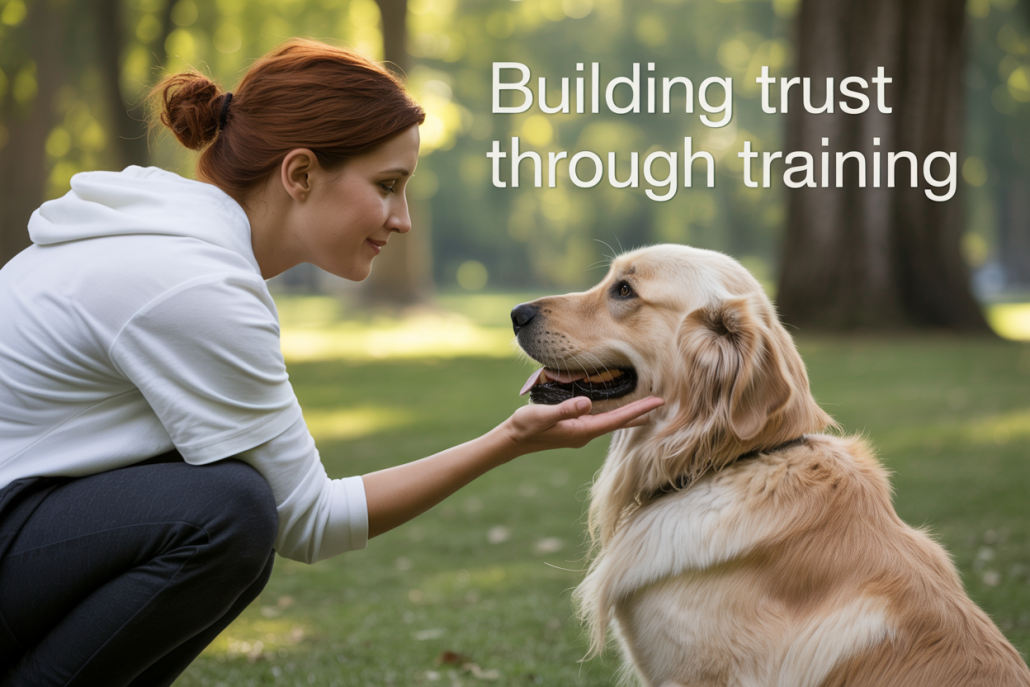
Building Trust Through Training: What Dogs Learn Beyond Commands
Training your dog goes far beyond teaching “sit” and “stay.” For dog owners who want deeper connections with their pets, dog training and trust-building create lasting bonds that transform your relationship. When you focus on building trust with dogs through training, you’re teaching life skills that boost confidence, improve communication, and strengthen mutual respect.
This approach benefits both new puppy owners and experienced dog owners facing behavioral challenges. Dogs learn to read your cues better while you discover how to communicate in ways your pet truly understands. The result? A calmer, more confident dog who looks to you as a trusted guide rather than just a treat dispenser.
We’ll explore how foundational skills lay the groundwork for mutual-respect dog training, and dive into communication techniques that go beyond basic commands. You’ll also learn how structured learning builds your dog’s social confidence and develops problem-solving abilities that make them more independent and secure.
Foundation Skills That Build Mutual Respect
Teaching impulse control through wait and stay commands
Dogs naturally act on impulse – they see something interesting and immediately want to investigate, hear a noise and rush to check it out, or spot food and dive right in. Through dog training and trust-building, you teach your dog that good things come to those who wait, creating a foundation of mutual respect that extends far beyond basic obedience.
The “wait” command becomes a powerful tool for building patience. Start with something your dog wants – their dinner bowl, a favorite toy, or the front door opening for a walk. Ask them to wait before they can have what they desire. This isn’t about dominance; it’s about teaching your dog that you’re a reliable source of good decisions. When they learn to pause and look to you for guidance, they’re essentially saying, “I trust your judgment.”
Stay commands work differently but achieve similar results. While “wait” is temporary, “stay” teaches your dog to remain in position until released. This builds confidence because your dog learns they can trust you to remember them and come back. Dogs who master stay commands often show reduced separation anxiety because they understand that being apart doesn’t mean being abandoned.
These foundation exercises establish a communication system in which your dog learns to check in with you before acting. This natural pause gives both of you time to think, reducing reactive behaviors and creating space for better choices.
Establishing clear boundaries that reduce anxiety
Boundaries aren’t restrictions – they’re safety nets that help dogs navigate the world with confidence. When dogs understand the rules of their environment, they can relax instead of constantly guessing what’s expected of them.
Physical boundaries start with simple concepts like not rushing through doorways or staying out of certain rooms. But the real magic happens when dogs internalize these limits. A dog who waits at the threshold isn’t just following rules; they’re demonstrating that they understand their place in the household structure and trust that you’ll guide them appropriately.
Emotional boundaries matter just as much. Teaching your dog when it’s appropriate to seek attention, when to be calm, and when to be excited helps them develop emotional regulation skills. Dogs who learn these boundaries actually experience less stress because they’re not constantly working to figure out what mood or energy level is appropriate for each situation.
Mutual respect dog training flourishes when boundaries are consistent but fair. Your dog learns they can predict your responses, which builds trust in your leadership. They stop testing limits because they understand the framework, freeing up mental energy for learning and building relationships rather than negotiating every interaction.
Creating predictable routines that enhance security
Routines provide the backbone of security for dogs, much like how humans feel more confident when they know what to expect. Dogs are creatures of habit who thrive on predictability, and training within consistent routines builds deep trust between you and your pet.
Morning routines that include training elements – like sitting before breakfast or practicing a quick “place” command before going outside – help dogs start each day with clear expectations. These aren’t just convenient habits; they’re daily reminders that you’re a reliable leader who follows through on promises.
Feeding schedules combined with training create positive associations with structure. When dogs know that dinner follows a successful training session, they come to see training as a pathway to good things rather than an interruption to their day. This shifts their entire attitude toward learning from compliance to genuine engagement.
Evening routines that include calm training exercises help dogs wind down while reinforcing your bond. A few minutes of gentle practice before bedtime reminds your dog that training is a normal, pleasant part of daily life, not something that only happens when they’ve done something wrong.
Developing patience through delayed gratification exercises
Patience might be the most valuable skill you can teach your dog, and it’s also one of the most trust-building. Dogs who learn to wait for good things develop confidence in their ability to earn rewards through their own actions, creating a sense of personal empowerment that strengthens your relationship.
Start with short delays and gradually increase the time. Hold your dog’s favorite treat where they can see it, ask them to sit, and wait just a second before rewarding. Slowly extend that pause. Your dog learns that the waiting period isn’t punishment – it’s just part of how good things happen. This understanding transfers to other areas of life, creating a dog who can handle frustration and uncertainty with grace.
Trust-based dog training techniques shine in these exercises because your dog must believe that you will follow through on your promises. Each time you actually give the treat after the wait, you’re making a deposit in your relationship’s trust account. Dogs who experience consistent follow-through learn to trust the process, even when it requires patience.
Advanced patience exercises might include waiting while you prepare their meal, staying calm when visitors arrive, or holding a down-stay while exciting things happen around them. These skills translate into real-world confidence, creating dogs who can handle change and challenge without falling apart or seeking constant reassurance from you.
Communication Skills That Strengthen Your Bond
Reading and responding to your dog’s body language
The secret to building trust with dogs through training starts with becoming fluent in their silent language. Dogs constantly communicate through their body posture, facial expressions, and energy levels, but many owners miss these crucial signals. When you learn to spot the subtle differences between a relaxed pant and a stressed one, or recognize when your dog’s tail position shows uncertainty rather than excitement, you create the foundation for genuine understanding.
Monitor your dog’s ear position during training sessions. Forward-facing ears often indicate focus and engagement, while pinned-back ears might signal anxiety or overstimulation. A dog who repeatedly licks their lips when no food is present may be showing stress and telling you to slow down or take a break. These moments of recognition show your dog that you’re listening, which builds the mutual respect that makes all future training more effective.
The magic happens when you respond appropriately to what you observe. If your dog shows calming signals, such as yawning or looking away, during a training session, give them space to decompress. This responsiveness teaches your dog that their communication matters, creating a feedback loop that strengthens your connection and makes them more willing to engage with you.
Teaching your dog to understand human emotional cues
Dogs naturally pick up on human emotions, but structured learning can sharpen this ability into a powerful communication tool. Start by being consistent with your emotional expressions during training. Use a genuinely happy voice and relaxed body language when your dog succeeds, and maintain calm energy when correcting unwanted behaviors. Your dog will learn to read these patterns and adjust their responses accordingly.
Practice deliberately showing different emotional states while training basic commands. A calm, confident posture when asking for a sit creates different energy than an excited, playful stance when calling your dog to come. Over time, your dog learns that your emotional cues provide valuable information about what’s expected and how they should respond. This creates a sophisticated communication system that goes far beyond simple command-and-reward interactions.
The real breakthrough comes when your dog starts checking in with your emotional state before making decisions. A well-trained dog will look to their owner’s face and body language when encountering something new, using human emotional cues as guidance. This behavior demonstrates deep trust and creates opportunities for your dog to make good choices independently while remaining connected to you.
Establishing consistent verbal and physical signals
Consistency in your signals creates a reliable language that both you and your dog can depend on. Choose specific words for each command and stick with them – switching between “down” and “lie down” confuses the learning process and slows progress. Your physical cues should be equally predictable. If you use a hand signal for “stay,” make sure it looks the same every time, regardless of whether you’re standing, sitting, or feeling rushed.
Family members need to use identical signals to avoid mixed messages. When everyone in the household uses different words or gestures for the same behavior, your dog has to work much harder to understand what’s wanted. Create a simple reference sheet for your chosen commands and signals, and ensure everyone practices using them consistently. This unified approach speeds up learning and reduces frustration for both you and your dog.
The timing of your signals matters just as much as their consistency. Give your verbal command first, then provide any physical cue immediately if needed. This sequence helps your dog understand that the word is the primary signal, while your body language provides supporting information. Once this pattern is established, you can gradually fade physical cues when appropriate, creating a more sophisticated communication system that works even at a distance.
Social Confidence Through Structured Learning
Building courage in new environments and situations
Dogs who lack confidence often struggle with everyday experiences that more assured pets handle easily. By building your dog’s social confidence, you can help them approach new places and situations with curiosity rather than fear. Start by gradually exposing your dog to different environments, beginning with less challenging spaces and progressing to busier locations.
The key lies in creating positive associations with unfamiliar territory. When your dog encounters a new park, shopping center, or friend’s home, pair the experience with something they love – treats, play, or your calm presence. This approach transforms potentially scary moments into opportunities for growth and trust-based dog training techniques.
Watch your dog’s body language carefully during these exposures. Signs of stress, such as panting, trembling, or attempts to hide, indicate the need to slow down and provide more support. Success happens when your dog begins to explore new spaces independently, tail wagging and ears forward, showing they’ve learned that different doesn’t mean dangerous.
Developing appropriate responses to other dogs and people
Social skills don’t develop naturally for every dog. Some become overly excited around other dogs, while others might show fear or aggression toward strangers. Building trust with dogs through training includes teaching them how to read social cues and respond appropriately in various social settings.
Practice controlled greetings with both familiar and new people. Teach your dog to sit and wait for permission before approaching a new person. This simple behavior prevents jumping and creates a calm foundation for positive interactions. When meeting other dogs, start with well-socialized, calm dogs at a distance that doesn’t trigger reactive behavior.
Role-playing different scenarios helps tremendously. Have family members act as strangers, practice walking past other dogs on leash, and simulate common social situations your dog will encounter. The goal isn’t to make your dog love everyone they meet, but to help them remain calm and confident regardless of who’s around.
Overcoming fear-based behaviors through positive experiences
Fear-based reactions often stem from negative past experiences or limited early socialization. Dogs may cower at loud noises, hide from certain people, or become reactive when trapped. Dog training and trust-building focus on replacing fearful responses with confident, appropriate behaviors.
Counter-conditioning works by changing your dog’s emotional response to specific triggers. If your dog fears men with beards, start by having them see such a person at a comfortable distance while receiving high-value treats. Gradually decrease the distance as your dog shows relaxation and positive anticipation rather than fear.
Never force a fearful dog into scary situations. Instead, let them set the pace while you provide consistent support and positive reinforcement for brave behavior. Small victories build upon each other, creating a foundation of confidence that extends far beyond the original fear trigger.
Creating calm energy in stressful situations
Dogs pick up on human emotions incredibly well, often mirroring our stress levels during challenging moments. Teaching your dog to maintain calm energy during stressful situations benefits both of you and strengthens your mutual respect dog training relationship.
Practice relaxation exercises regularly, not just during stressful times. Teach your dog to settle on command, lie down, and stay calm during exciting events around them. Use the “place” command to give your dog a specific spot where they can retreat and feel safe during overwhelming moments.
Your own energy matters enormously. Dogs respond to confident, calm leadership during uncertain situations. When you remain steady and assured, your dog learns they can trust your judgment and relax into your guidance. This creates a powerful cycle where your dog’s increasing confidence reinforces your own calm leadership, building an unshakeable bond of trust and communication.
Problem-Solving Abilities That Boost Independence
Encouraging decision-making through puzzle training
Puzzle training transforms your dog from a passive follower into an active thinker. When you present your dog with food puzzles, treat-dispensing toys, or hide-and-seek games, you’re essentially saying, “Figure this out yourself.” This type of development of canine problem-solving skills goes far beyond basic obedience commands.
Start with simple puzzles where your dog can succeed quickly, then gradually increase complexity. A sliding puzzle toy that reveals treats when manipulated correctly teaches your dog that their actions have direct consequences. Watch as they experiment with different approaches and learn that persistence pays off. This builds genuine confidence because they’re discovering solutions independently rather than waiting for your guidance.
The beauty of puzzle training lies in how it mirrors real-world scenarios. Dogs who regularly engage in problem-solving activities become more resourceful when facing new situations. They develop the mental flexibility to try different approaches when their first attempt doesn’t work.
Teaching adaptability when routines change
Dogs thrive on routine, but life rarely stays the same. Teaching adaptability through trust-based dog training techniques prepares your dog for inevitable changes without causing stress or anxiety.
Practice small routine variations regularly. If you always walk the same path, occasionally take a different route. If dinner is at exactly 6 PM, sometimes feed at 5:30 or 6:15. These minor adjustments help your dog understand that change doesn’t mean danger.
Create positive associations with unexpected situations. When you need to rearrange furniture, involve your dog in exploring the new layout. Let them sniff around and investigate at their own pace. This builds their confidence in handling environmental changes.
Training sessions become opportunities to practice adaptability. Instead of always training in your living room, move sessions to different locations. Practice commands in the backyard, garage, or local park. This teaches your dog that their training applies everywhere, not just in familiar settings.
Building resilience through graduated challenges
Resilience grows through manageable challenges that gradually increase in difficulty. Think of it like strength training for your dog’s emotional and mental muscles. Building trust with dogs through training requires you to be their supportive coach, not their rescuer.
Design challenges that stretch your dog’s abilities without overwhelming them. If they’re learning to navigate obstacles, start with low jumps they can easily clear, then slowly raise the height. If they’re working on staying calm around distractions, begin with mild distractions before introducing more exciting stimuli.
The keyword here is “graduated.” Jumping from easy tasks to extremely difficult ones breaks trust and creates anxiety. Your dog needs to experience success at each level before moving forward. This approach builds genuine confidence because they’ve earned their progress through repeated victories.
Watch for signs that indicate when your dog is ready for the next challenge level. Confident body language, eager participation, and quick problem-solving all signal readiness to advance. If they seem stressed or frustrated, step back to an easier level until they regain confidence.
Fostering curiosity while maintaining safety awareness
Curiosity drives learning, but safety keeps your dog alive. Balancing these two needs requires thoughtful training that encourages exploration within safe boundaries.
Teach your dog to check in with you before investigating new things. This doesn’t mean stopping their natural curiosity; rather, it means creating a communication system. When they encounter something unfamiliar, they should look to you for guidance about whether it’s safe to explore.
Create controlled exploration opportunities. Set up “investigation stations” in your yard with different textures, sounds, or smells for your dog to examine. Guide them through these experiences, praising their careful approach to new stimuli. This builds their investigative skills while reinforcing that checking with you leads to positive outcomes.
Practice the “wait” command before allowing exploration. Whether approaching a new dog, investigating an interesting smell, or entering a new environment, teach your dog that pausing for permission doesn’t kill the fun – it ensures the exploration can happen safely.
Developing emotional regulation during frustrating moments
Frustration tolerance is perhaps the most valuable life skill you can teach your dog. Dog training beyond basic commands includes helping dogs manage disappointment, confusion, and setbacks without losing composure.
Design training sessions that include intentional moments of mild frustration followed by breakthrough success. Hide treats in increasingly challenging spots, but always ensure they eventually find them. This teaches that frustration is temporary and persistence leads to reward.
Model calm behavior during your dog’s moments of frustration. When they’re struggling with a puzzle or can’t quite master a new skill, maintain your own emotional equilibrium. Dogs read our energy constantly, and your calm presence teaches them that frustration isn’t cause for panic.
Teach your dog specific calming behaviors to use when overwhelmed. A simple “settle” command that means “take a breath and try again” gives them a tool for an emotional reset. Practice this in low-stress situations so it’s available when they need it most.
Recognize the difference between productive struggle and overwhelming stress. Productive struggle involves focused effort with occasional breaks, while overwhelming stress shows in panting, pacing, or complete shutdown. Learning to read these signs helps you provide support when needed while allowing independence when appropriate.
Leadership Recognition That Creates Security
Understanding the difference between dominance and guidance
Many dog owners get caught up in outdated ideas about “being the alpha” or showing dominance over their pets. This old-school thinking can actually damage the trust you’re trying to build. Real leadership in dog training trust building isn’t about intimidation or force – it’s about becoming a reliable guide your dog can count on.
Think of it like being a good friend who always has your back. You don’t need to boss your friends around to earn their respect. Instead, you show up consistently, make good decisions, and help them navigate tricky situations. Dogs respond to this same kind of steady, supportive leadership.
When you guide rather than dominate, your dog learns to look to you for direction because you’ve proven yourself trustworthy. They follow your lead, not out of fear, but because experience has taught them you make sound decisions and keep them safe. This creates a partnership in which your dog cooperates rather than feeling forced to comply.
Building trust through consistent follow-through
Trust-based dog training techniques hinge on one simple principle: do what you say you’ll do. Dogs are incredibly good at reading patterns, and they quickly learn whether you’re someone who follows through or just makes empty promises.
When you tell your dog to sit and then reward them every single time they comply, you’re building a foundation of reliability. When you set a boundary – like not allowing jumping on furniture – and you consistently enforce it with gentle redirection, your dog learns your words have meaning.
The magic happens in those small moments throughout the day. If you promise a walk after they calm down, ensure the walk happens. If you say “wait” at the door, don’t let them rush past you even when you’re running late. These tiny acts of consistency add up to create a dog who trusts your guidance because you’ve proven yourself reliable time and time again.
Establishing yourself as a reliable protector and provider
Dogs feel most secure when they know someone capable is handling the big decisions. This doesn’t mean micromanaging their every move – it means taking charge of what matters for their safety and well-being.
You become a protector by reading situations your dog might find overwhelming and stepping in to help. When a reactive dog approaches the park, you calmly create distance. When your anxious pup seems stressed by visitors, you give them a quiet space to retreat. These actions show your dog that you’re paying attention and that you can handle challenging situations.
As a provider, you control access to resources – food, toys, attention, and freedom. This isn’t about being stingy; it’s about being intentional. Your dog learns that good things come through you, which naturally positions you as someone worth listening to. When they understand you’re the source of everything they value, cooperation becomes their pathway to getting what they want.
Training your dog goes way beyond teaching them to sit or stay on command. The real magic happens when you build that deep connection based on trust and mutual respect. Through structured learning, your dog develops social confidence, learns to solve problems independently, and recognizes you as a reliable leader who provides security and guidance.
The foundation skills, communication techniques, and leadership recognition you establish during training sessions create a bond that lasts a lifetime. Your dog doesn’t just learn what you want them to do – they learn to trust your judgment and feel secure in your partnership. Start focusing on these deeper aspects of training today, and you’ll discover that the commands are just the beginning of something much more meaningful between you and your four-legged friend.
Want to strengthen your dog’s obedience and improve everyday behavior? Begin with our trusted Basic Dog Training in Carlsbad, CA, to teach essential commands and boost focus. For a more personalized experience, our Private Dog Training in Carlsbad, CA, offers one-on-one instruction designed around your dog’s personality and learning style. Looking for immersive, professional results? Our Board & Train in Carlsbad, CA program provides consistent, hands-on coaching for lasting improvement. Discover our complete approach to Dog Training and see why our Dog Training in Carlsbad is trusted by dog owners throughout Southern California.

