Modified Leash Training Techniques for Dogs with Reduced Mobility
Understanding Mobility Challenges in Leash Training
Common mobility issues that affect leash responsiveness
When your senior dog hits the leash, their response time and willingness to cooperate might look completely different than it did five years ago. That’s not stubbornness or selective hearing. It’s often a direct result of physical changes happening in their body.
Arthritis tops the list of mobility culprits. This progressive joint condition makes walking painful, especially in the hips, elbows, and knees. A dog experiencing arthritic pain doesn’t move with the same snap and responsiveness.
They become hesitant, stiff, and understandably reluctant to follow directional cues that require quick pivoting or sudden weight shifts. You might notice your dog favoring one leg, moving more slowly on cold mornings, or simply refusing to walk certain routes they once loved.
Muscle atrophy compounds the problem. As dogs age, they naturally lose muscle mass and strength. Without adequate muscle support, their joints destabilize further.
This creates a vicious cycle where reduced mobility leads to less exercise, which accelerates muscle loss. When you’re working on leash training with a mobility-impaired dog, you’re dealing with an animal that literally has fewer resources to execute the movements you’re asking for.
Neurological issues also play a major role. Conditions like degenerative myelopathy (DM) progressively affect the spinal cord, leading to weakness, loss of coordination, and eventually rear-end paralysis. A dog with spinal issues can’t respond to a leash correction the same way. Their hind legs might not track properly, or they might lack the proprioceptive awareness needed to understand where their body is in space.
Vision and hearing decline too. When your dog can’t see clearly or hear your verbal cues combined with leash signals, their leash responsiveness naturally suffers. They’re not being difficult—they’re working with sensory information that’s increasingly unreliable.
How physical limitations change training expectations and timelines
Here’s what many dog owners don’t realize: leash training a mobility-impaired dog requires fundamentally different expectations than training a healthy young adult. The timeline stretches longer, the goals shift, and the definition of success changes entirely.
A young, healthy dog might master loose-leash walking in weeks. A senior dog with arthritis? Plan for months. Their nervous system processes information more slowly. Their body needs more time to physically adjust to new movement patterns. Fatigue sets in faster. Pain interrupts learning sequences.
You’ll need to reassess what “success” actually means. Instead of aiming for a perfectly controlled heel at a brisk pace, your realistic goal might be a dog that walks calmly beside you for 10 minutes without pulling, even if that pace is significantly slower. That’s not lowering your standards—that’s being honest about what’s achievable and humane.
Training sessions must become shorter and more frequent. Instead of one 30-minute training block, you’re looking at three to four 10-minute sessions spread throughout the day. This prevents exhaustion and pain flare-ups while still providing consistent reinforcement. The brain learns better with spaced repetition anyway, so this approach actually aligns with how dogs process information.
Recovery time between sessions matters in ways it doesn’t with younger dogs. A mobility-impaired dog might need a full day of rest after a longer walk or training session. Pushing through that fatigue doesn’t build better leash skills—it just creates pain and negative associations with the leash itself.
Assessing your dog’s specific mobility needs before starting training
Before you modify any leash training techniques, you need baseline data on exactly what your dog can and can’t do. This assessment is foundational work that saves you months of frustration.
Start with a veterinary evaluation. Have your vet specifically assess joint range of motion, muscle condition scoring, and any signs of neurological decline. Ask about pain levels and movement restrictions. Understanding the specific diagnosis—is it arthritis, IVDD, DM, or something else?—shapes your entire training approach.
Observe your dog’s natural movement patterns. How far can they walk before showing signs of discomfort (limping, slower pace, reluctance)? How quickly do they recover?
When during the day is pain worst (typically mornings before movement helps)? Note which surfaces they prefer (softer ground versus concrete). Document their response to directional changes and whether they favor certain turns over others.
Assess their sensory capabilities. Have them respond to verbal cues from different distances and while distracted. Check their reaction to leash pressure—do they understand the communication, or does it seem confusing? Understanding whether the problem is physical inability versus training gaps is critical.
Test their motivation levels. High-value treats, toys, or praise work differently with senior dogs. What actually incentivizes your individual dog?
Some mobility-impaired dogs maintain strong food drive while others lose interest. Finding what genuinely motivates your dog makes training exponentially more effective. When you’re working within physical limitations, that motivation becomes your leverage.
Consider consulting a trainer experienced with senior dogs or mobility challenges. Professional in-home dog training assessments give you an objective perspective on what’s realistic for your specific situation. This investment upfront prevents months of training approaches that don’t align with your dog’s actual capabilities.
Equipment Modifications for Enhanced Comfort and Control
Choosing harnesses designed for balance and joint support
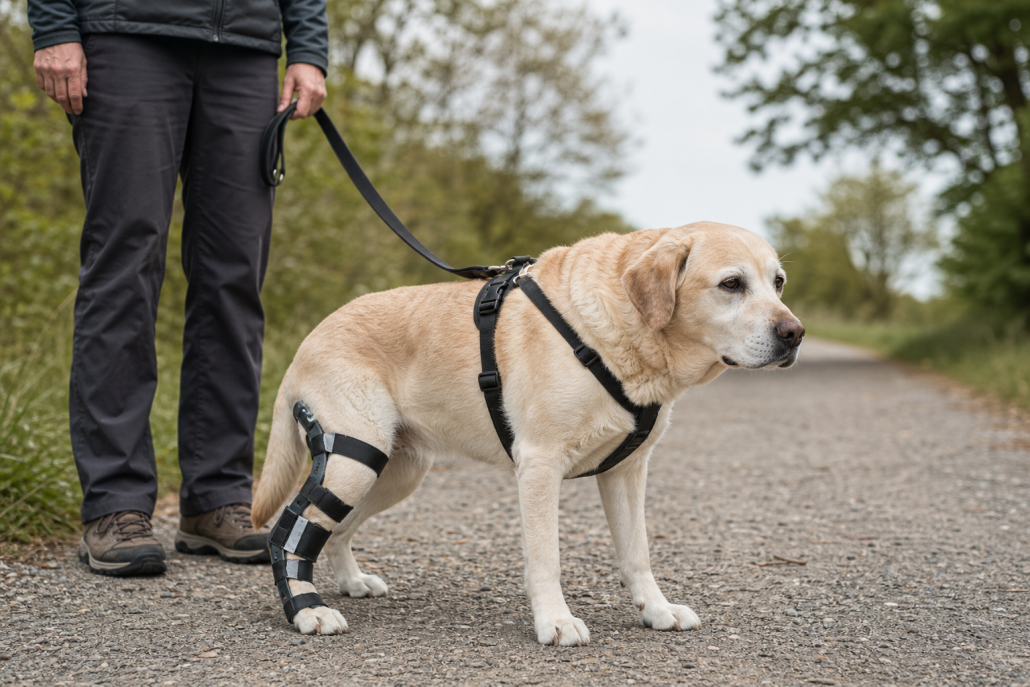
The right harness can be the difference between a comfortable walk and a painful struggle for a dog with reduced mobility. Unlike standard collars that put pressure on the neck and throat, a properly designed harness distributes weight across the chest and shoulders, reducing strain on arthritic joints and compromised spines.
Look for harnesses with padded chest plates and wide straps. These features spread force more evenly across your dog’s body, which is crucial when your senior companion needs extra stability. Back-clip harnesses (where the leash attaches at the shoulder blade area) are particularly valuable because they naturally slow down your dog’s forward momentum without creating uncomfortable pulling sensations.
Consider harnesses with additional support features like side handles. These handles give you better control during transitions like getting in and out of vehicles or navigating stairs, without needing to pull on the leash itself. If your dog struggles with balance, a no-pull harness with a front-clip attachment can redirect forward movement gently, preventing them from lurching ahead and potentially injuring themselves.
The material matters too. Breathable mesh backing prevents skin irritation during warmer months, and neoprene padding protects bony areas that might be more sensitive in older dogs. Make sure the harness fits snugly without restricting movement or causing chafing. A poorly fitting harness creates more problems than it solves, so take time to adjust it correctly before your walks.
Leash length and weight considerations for mobility-impaired dogs
Your leash choice is just as important as your harness. Heavy leashes pull down on your dog’s neck and shoulders, adding unnecessary strain to already compromised joints. Lightweight options like those made from biothane or thin nylon are significantly easier on your dog’s body while still providing adequate control.
Length is equally critical when working with dogs experiencing reduced mobility. A standard six-foot leash works well for most situations, but consider a shorter four-foot leash for dogs with severe balance issues. The reduced length gives you faster reaction time and better control if your dog stumbles or needs support. On the flip side, if your dog tires easily, a longer leash (eight to ten feet) allows them to move at their own pace without feeling rushed.
Avoid retractable leashes entirely. These devices provide inconsistent tension and don’t give you the immediate control you need when your dog’s mobility is compromised. A slip or sudden movement could be catastrophic for a senior dog or one recovering from injury. Fixed-length leashes with comfortable handles and adjustable length options offer the best combination of safety and flexibility.
The handle itself should be ergonomic and padded. You’ll be holding this leash for extended periods, often needing to support some of your dog’s weight during walks. A grip that’s too thin or unpadded can cause hand fatigue and reduce your ability to provide gentle guidance when your dog needs it most.
Assistive devices that complement traditional leash training
Beyond harnesses and leashes, several assistive devices can dramatically improve your dog’s comfort during leash work. Mobility slings (essentially fabric slings that go under the rear legs or belly) allow you to partially support your dog’s weight during walks, reducing stress on joints and muscles. These are particularly helpful for dogs recovering from surgery or those with severe arthritis.
Wheeled carts or doggy strollers aren’t just for tiny breeds. Larger dogs with severe mobility issues benefit from these devices, especially on longer outings. Your dog can walk when they’re able, then rest in the cart without having to end the outing entirely. This keeps them mentally stimulated and socially engaged while protecting their physical health.
Traction aids like boots with rubber soles or toe grips help dogs with balance problems maintain footing on slippery surfaces. Many owners overlook this simple solution, but improved traction reduces anxiety and prevents the slipping that can lead to falls. Understanding these modifications through understanding canine body helps you recognize when your dog feels insecure on certain surfaces.
Ramps and portable steps eliminate the jumping that damages aging joints. Rather than forcing your dog to leap into vehicles or climb stairs, these tools preserve joint integrity and make your dog more willing to cooperate with leash training activities. When combined with proper leash work through effective dog training methods, these devices make the entire experience safer and more enjoyable for both handler and canine.
Foundational Training Techniques for Limited Mobility
Starting with stationary commands and ground-level engagement
When a dog has reduced mobility, the foundation of leash training shifts dramatically. Your starting point isn’t walking. It’s creating confidence in stillness. Dogs with mobility challenges often feel anxious about movement itself, so teaching them to relax while attached to a leash (without going anywhere) is step one.
Begin in a comfortable, familiar space like your living room or backyard. Have your dog sit or lie down on their own terms, then clip the leash to their collar without applying any tension or expectation. Just let them exist with the leash present. This desensitizes them to the equipment and removes the mental trigger that a leash means “time to move.” Most dogs take 3 to 5 sessions to genuinely settle with this setup, though patience here pays huge dividends later.
Ground-level engagement means keeping all training interactions at or below your dog’s eye level. If your dog struggles with mobility, they’re already managing discomfort or weakness. Asking them to look up at you adds unnecessary strain. Sit beside them, kneel down, or lie on the floor during these foundational sessions. Using the science behind means your dog learns better when there’s zero physical stress involved.
Teach simple commands like “stay” or “easy” while stationary. Reward heavily for compliance. This builds their understanding that cooperation brings positive outcomes, and it costs them zero physical effort. You’re essentially creating a bank account of trust before you ask anything demanding of their body.
Building positive associations without demanding excessive movement
Here’s where many handlers go wrong: they assume leash training requires movement. It doesn’t. Your mobility-impaired dog can learn impeccable leash skills while moving just five or ten feet at a time.
Create positive associations by pairing the leash with things your dog loves. Before you ever expect them to walk, let them wear the leash during their favorite activities. Some dogs get excited about meal time, so clip the leash on right before feeding. Others perk up during play sessions with a favorite toy. The leash becomes a predictor of good things, not a harbinger of physical demand.
When you do begin moving, keep it micro. Literally three to five steps. Reward instantly. If your dog takes two steps and stops, that’s success, not failure. For dogs with compromised mobility, stopping is often a wise choice (their body telling you they need rest). Celebrating every micro-movement keeps motivation high without overextending their physical capacity.
Understanding age-appropriate training techniques applies even to younger dogs with mobility issues. Both groups benefit from frequent, short sessions with generous rest periods between efforts. A 10-minute session with three separate one-minute walking intervals beats a single five-minute walk every time because it prevents fatigue while maintaining engagement.
Vary your environment slightly but never overwhelm. Move from your living room to the hallway. Then to a quiet front porch. Your dog learns that leash work happens in different spots, but always under controlled, low-pressure conditions.
Using treats and rewards positioned to minimize strain on affected areas
Treat placement is underrated in leash training generally, but it becomes critical with mobility-challenged dogs. Never hold treats at your chest height or above their head. This forces them to stretch, arch their spine, or reach upward, all of which stress compromised joints and muscles.
Keep treats at ground level or just slightly above. If your dog’s mobility issue is rear-leg weakness, present treats to their front. If front-leg issues are present, lower treats near their back legs so they shift weight appropriately. You’re essentially using reward placement to guide their body into positions that feel sustainable.
High-value rewards (small pieces of cheese, chicken, or commercial treats your dog absolutely loses their mind over) should be reserved for the hardest asks. A simple sit might earn a basic kibble piece, but taking three steps forward earns premium protein. This teaches prioritization and keeps motivation levels appropriate to the effort required.
Exploring physical limitations reveals how crucial reward timing is too. Deliver the treat within one second of the desired behavior so your dog makes the mental connection. Delayed rewards confuse mobility-impaired dogs who are already processing physical discomfort.
Consider using a treat pouch positioned low and close to your body. This eliminates fumbling and keeps your hands stable, which means the leash stays consistent and your dog feels secure throughout the interaction. Consistency in leash pressure paired with strategically placed rewards creates a training experience that feels manageable, even enjoyable, for dogs working through mobility challenges.
Progressive Training Stages and Realistic Milestones
Setting achievable goals based on your dog’s physical condition
Before you even clip that leash to your dog’s collar, you need honest conversations with yourself about what’s realistic. If your senior dog struggles with arthritis or your rescued pup has limited mobility, the goal isn’t to replicate leash training from your younger years. It’s something different entirely, and that’s actually better.
Start by evaluating where your dog currently stands. Can they walk 50 feet without limping? Do they tire after five minutes? Can they navigate turns comfortably? These baseline observations matter far more than any generic training timeline. Document what you’re seeing now. This becomes your starting point.
Set milestones that make sense for your specific dog, not some imaginary perfect leash-trained canine. Maybe your milestone is “walk to the mailbox without stopping to rest.” Perhaps it’s “maintain focus for a three-minute training session without compensation pain behaviors.” These aren’t failures of training (they’re absolutely victories). Break things down into smaller achievable steps. If your dog can’t walk for 20 minutes, trying to force it creates frustration for everyone involved.
Consider using a training journal. Track what worked, what didn’t, and how your dog responded physically and emotionally. Over time, patterns emerge. You’ll notice your dog handles mornings better than afternoons, or shorter frequent sessions yield better results than one long attempt. This data becomes invaluable when adjusting your approach.
Adapting pace and distance to match your dog’s capabilities
Reduced mobility demands intentional pacing. Walking speed matters more than you’d think. Most handlers move at their own comfortable pace and expect dogs to adapt, but mobility-impaired dogs need you to match their rhythm instead. Watch how your dog moves naturally without pressure. That speed is your baseline.
Start with distances you know your dog can handle comfortably, then add just 10 to 15 feet more per session (if your dog tolerates it well). This gradual progression prevents overwhelming their system and keeps motivation high. Your dog stays engaged when success feels achievable rather than exhausting.
Terrain matters significantly. Flat surfaces suit most mobility-limited dogs better than hills, uneven ground, or rough pavement. If you’re working with cognitive changes alongside physical adjustments. Your dog’s mental energy depletes faster when their body works harder, so shorter distances combined with lighter cognitive demands keeps everything balanced.
Schedule training during your dog’s peak hours. Many mobility-limited dogs have windows where they move better (often morning or early afternoon). Work within those windows consistently. You’re not fighting against fatigue and stiffness; you’re partnering with your dog’s actual capabilities.
Recognizing signs of fatigue and discomfort during sessions
Your dog can’t tell you when they’re hurting or exhausted. You become their advocate by learning their specific signals. Heavy panting that seems excessive for the activity level? Reluctance to continue despite positive reinforcement? Limping that worsens as the session progresses? These are stop signs, not obstacles to push through.
Behavioral changes often announce discomfort before physical lameness appears. Your dog might start pulling toward home more insistently, or lag further behind than usual. Some dogs become less food-motivated when uncomfortable, making training rewards less effective. Others show increased anxiety or distraction. Every dog communicates differently.
Physical indicators include trembling, shifting weight unevenly, whining, or tucking their tail. Optimizing senior dog requires stopping before these signs intensify. It’s not quitting early; it’s respecting your dog’s actual capacity in that moment.
Build rest breaks into your training structure intentionally. Don’t wait for collapse. Every 3 to 5 minutes of activity, pause.
Let your dog shake it out, sniff around, or simply stand quietly. These micro-breaks dramatically extend how long your dog can participate productively. When your dog finishes training feeling good rather than depleted, they’ll approach the next session with genuine enthusiasm.
Track patterns around fatigue too. Does your dog tire faster on humid days? After vet appointments? When it’s been several days since the last session? Understanding these variables helps you calibrate intensity and duration proactively, keeping every leash training experience positive and sustainable.
Managing Real-World Scenarios with Reduced Mobility
Navigating crowded environments safely with limited movement capacity
Taking your mobility-impaired dog into crowded spaces requires a different tactical approach than typical leash training. Parks during peak hours, busy sidewalks, and dog day care facilities present unique challenges when your dog can’t move quickly or pivot sharply to avoid obstacles and other dogs.
Start by scouting locations during quieter times. Visit your preferred walking routes early in the morning or late afternoon when foot traffic is minimal. This lets your dog build confidence without the sensory overload and physical demands of crowds. Once your dog handles these calmer versions comfortably, you can gradually introduce slightly busier periods.
Use a shorter leash (4 to 5 feet maximum) in crowded settings to keep your dog closer and prevent them from being pulled off balance by other dogs or startled by unexpected encounters. Position yourself as a physical barrier between your dog and the main flow of traffic. Walk slightly ahead and to the side, creating a protective zone. This positioning reduces the likelihood of collisions and gives your dog less ground to cover if they need to adjust their position quickly.
Practice the “heel” command extensively before tackling crowded environments. Your dog needs reliable, responsive leash manners to stay safe when space is tight. Keep sessions short and frequent, rewarding compliance generously. Your mobility-impaired dog may tire faster in chaotic settings, so plan shorter outings and build duration gradually.
Communicate with other dog owners and handlers. A simple heads-up about your dog’s mobility limitations can prevent conflicts and help others give your dog appropriate space. Most dog owners respond well when they understand the situation, especially in professional settings like dog day care where staff are trained to accommodate special needs.
Handling unexpected situations without relying on quick reflexes
Even with careful planning, unpredictable moments happen. A child might run toward your dog, another dog might approach, or your dog might stumble. Because your dog can’t rely on quick reflexes or rapid directional changes, you need contingency strategies built into every outing.
Teach a reliable “emergency halt” command separate from standard “sit” cues. This is a distinct word (like “freeze” or “stop”) that means your dog stops moving immediately and stays in place regardless of what’s happening around them. Practice this during calm training sessions so your dog responds instinctively under stress. Use extremely high-value rewards (small pieces of cheese, chicken, or their favorite treat) to reinforce the behavior until it’s rock-solid.
Create exit strategies for your walking routes. Know where you can step aside, find shelter, or retreat if a situation becomes overwhelming. Identifying these safe zones ahead of time means you’re not scrambling when tension arises. A quiet storefront, a bench off the main path, or a nearby parking area can serve as a reset point where your dog can regain composure.
Stay mentally engaged throughout every walk. Don’t rely on your phone or distractions. Watch your dog’s body language constantly, observe other dogs and people approaching from a distance, and anticipate potential conflicts before they develop. Early intervention prevents the need for your dog to react quickly, which they simply can’t do reliably.
If your dog becomes frightened or overwhelmed, resist the urge to rush them to safety. Sudden movements can exacerbate anxiety and cause physical strain. Instead, calmly encourage gradual movement toward your exit point using treats and a soothing voice. Your composure directly influences your dog’s emotional response.
Building confidence in mobility-impaired dogs during outdoor outings
Confidence is foundational to successful outdoor leash training, and it takes deliberate cultivation in dogs with physical limitations. Many mobility-impaired dogs experience learned helplessness or anxiety about their reduced capabilities, which compounds training challenges.
Celebrate small victories enthusiastically. When your dog walks a few extra steps without hesitation, completes a successful turn, or navigates a minor obstacle, reward generously and offer verbal praise. These moments build self-assurance and reinforce that they can trust their body and your leadership. Confidence grows incrementally through repeated positive experiences.
Incorporate leash training principles to prevent frustration-based behaviors. A dog frustrated by their limitations may lunge or pull unpredictably, which feels like failure to them and to you. Redirect that frustration into controlled, achievable activities that showcase their capabilities instead of highlighting their constraints.
Maintain realistic expectations that grow with your dog’s actual progress. At the heart of effective dog training for mobility-impaired dogs is understanding that every outing is both a training session and a confidence-building opportunity. Patience combined with consistent positive reinforcement creates lasting behavioral improvements and a dog that genuinely enjoys their time outdoors, limitations and all.
Professional Support and Long-Term Training Plans
When to involve veterinary specialists in your training approach
Here’s the reality: not every mobility issue is the same, and not every training plan works universally. Before you commit to a specific leash training strategy for your senior or mobility-impaired dog, you need baseline information from your veterinarian. They can identify underlying conditions (arthritis, hip dysplasia, neurological decline, orthopedic pain) that directly affect how your dog responds to training and what movements are genuinely safe.
A veterinary specialist becomes essential when your dog shows signs of pain during leash work, struggles with basic movements you know they previously mastered, or displays behavioral changes that seem disconnected from training itself. Physical therapists and rehabilitation veterinarians specifically can assess your dog’s range of motion, muscle strength, and weight distribution. This information shapes everything. A dog with severe hip dysplasia needs completely different leash handling than one recovering from surgery or managing early cognitive decline.
Don’t wait for problems to escalate before consulting. Scheduling a pre-training assessment with your vet gives your trainer concrete data about what’s actually possible for your dog. Some trainers work directly with veterinary professionals (they’ll tell you upfront if they do), which eliminates guesswork and creates aligned expectations about progression pace and exercise intensity.
Working with certified trainers experienced in disability-focused techniques
Not all certified trainers have experience working with mobility-impaired dogs. This matters. A trainer who specializes in high-energy obedience or agility might excel at their craft but lack the specific knowledge needed for leash training a dog with limited range of motion or pain-related behavioral changes.
Look for trainers who’ve worked with senior dogs, post-surgical cases, or dogs managing chronic conditions. Ask directly about their experience with modified leash techniques, low-impact movements, and adapting traditional commands for dogs who can’t perform them at full capacity. The best trainers for this work understand that success looks different here.
Your dog doesn’t need to sit perfectly upright if they can settle into a comfortable partial sit. They don’t need to walk in flawless heel position if they’re moving confidently alongside you at their own pace.
Certified trainers bring structure and accountability to your training plan. They can spot compensatory movements (your dog limping on one side because another hurts) that you might miss. They adjust their cues based on real-time feedback from your dog’s body language, not just obedience history. They also prevent common mistakes like pushing too hard too fast, which can set back a mobility-impaired dog weeks or months.
A good trainer becomes your partner in this process. They document progress, recalibrate expectations as your dog ages further, and provide written guidance you can reference between sessions. This matters especially for consistency, which is everything when training a dog managing physical limitations.
Creating sustainable routines that maintain skills while protecting physical health
The final piece isn’t fancy technique or cutting-edge methodology. It’s routine, consistency, and knowing when to hold steady versus when to push slightly forward. Once your dog has mastered leash training fundamentals adapted for reduced mobility, maintenance becomes the priority.
Sustainable routines mean short, frequent sessions rather than occasional long walks. Three ten-minute outings spread throughout the day accomplishes more and stresses aging joints less than one thirty-minute walk. Your dog maintains focus, experiences consistent reinforcement, and you avoid the fatigue that triggers compensatory behaviors or pain flare-ups.
Build flexibility into your plan. Some days your dog will move better than others. Weather, pain levels, medication timing, and even emotional state fluctuate.
Trainers experienced in disability-focused work build this reality into their recommendations. Instead of “walk three miles daily,” it becomes “adjust distance based on gait quality” or “end the session if you notice limping.” This responsive approach prevents injury while keeping your dog engaged and mentally stimulated.
Your dog’s leash training journey isn’t about perfection or achieving every standard command at full execution. It’s about maintaining their quality of life, protecting their physical wellbeing, and strengthening your partnership during their later years. Working with veterinary specialists and certified trainers experienced in disability-focused techniques gives you the knowledge and support to build sustainable routines.
These routines keep your dog safe, confident on leash, and bonded with you regardless of mobility challenges. Start that conversation with your vet this week, and explore trainer recommendations who understand that senior and mobility-impaired dogs deserve training approaches built specifically for their needs.