
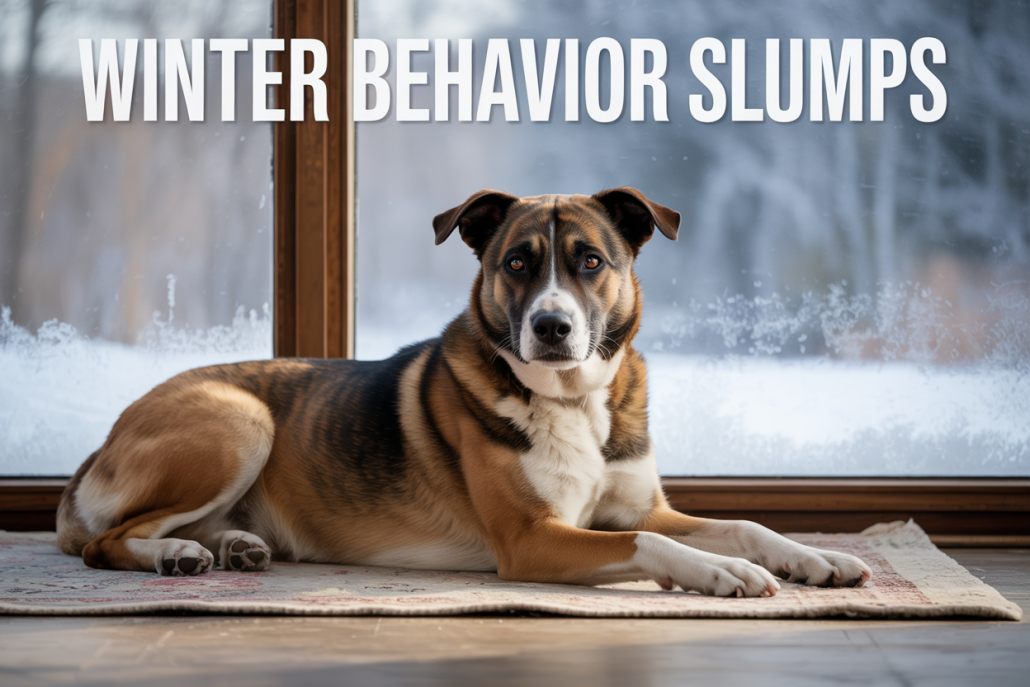
Winter Behavior Slumps: Why Dogs Act Out This Time of Year
Has your normally well-behaved dog turned into a furry tornado this winter? You’re not alone. Many dog owners notice their pets acting out more during the colder months, displaying everything from destructive chewing to excessive barking.
This guide is for dog parents who’ve watched their four-legged family members struggle with winter dog behavior problems and want practical solutions that actually work. Just like humans, our dogs experience seasonal mood changes when daylight shortens and outdoor time is limited.
We’ll explore the science behind seasonal affective disorder that dogs experience and why cold-weather dog behavior differs so dramatically from their summer selves. You’ll discover proven strategies to beat cabin fever, which dogs develop when they’re cooped up indoors, plus creative indoor dog activities that winter makes necessary. Most importantly, you’ll learn how to maintain your dog’s physical and mental health through targeted winter dog training tips that work even when it’s too cold to venture outside.
Your dog’s winter blues don’t have to derail your household harmony. Let’s dig into why this happens and what you can do about it.
Recognize Common Winter Behavioral Changes in Dogs
Increased destructive chewing and scratching
When winter hits, many dog owners notice their furniture, shoes, and household items becoming unexpected chew toys. This uptick in destructive behavior isn’t just a coincidence—it’s a direct response to winter dog behavior problems. Dogs stuck indoors for longer periods need outlets for their natural urges to chew and explore. Without adequate mental stimulation, they turn to whatever’s available: couch cushions, wooden furniture legs, or that expensive pair of boots you left by the door.
The scratching behavior often intensifies, too, with dogs clawing at doors, walls, and carpets. This behavior stems from frustration and excess energy that would normally be burned off during longer outdoor adventures. Cold-weather dog behavior changes include redirecting natural digging instincts toward indoor surfaces when dogs can’t access their favorite outdoor spots.
Excessive barking and whining
Winter months bring a noticeable increase in vocal complaints from our canine companions. Dogs experiencing seasonal depression or winter dog anxiety often express their discomfort through persistent barking at seemingly nothing, whining when looking out windows, or vocalizing their frustration with indoor confinement.
This excessive noise-making serves multiple purposes: attention-seeking when bored, expressing anxiety about weather changes, or communicating their desire to go outside despite harsh conditions. Many dogs develop what experts call “weather watching” behavior, where they bark at wind, snow, or rain sounds that seem more pronounced during winter’s quiet months.
Restlessness and pacing indoors
Watch your dog during winter evenings, and you’ll likely spot the telltale signs of cabin fever dogs: endless pacing from room to room, inability to settle in one spot, and general fidgety behavior. This restlessness reflects their body’s natural need for movement and exploration, being suppressed by indoor limitations.
Dogs may circle repeatedly, move between their favorite spots without settling, or follow family members around the house more than usual. This behavior intensifies during peak outdoor activity times—early morning and evening walks that are shortened or skipped due to weather.
Regression in-house training habits
Perhaps the most frustrating winter dog behavior change is when perfectly house-trained dogs suddenly start having accidents indoors. Several factors contribute to this regression: reluctance to go outside in harsh weather, holding their bladder longer than comfortable, and stress-induced lapses in bathroom habits.
Dogs may also develop negative associations with outdoor bathroom breaks if they’ve had uncomfortable experiences with ice, snow, or freezing temperatures. Senior dogs, in particular, struggle with this issue, as cold weather can exacerbate joint pain, making the trip outside less appealing than risking an indoor accident.
Understand the Root Causes of Winter Behavior Problems
Reduced daylight exposure affects mood regulation.
Shorter winter days disrupt your dog’s internal clock and emotional balance. Just like humans, dogs rely on sunlight to regulate their circadian rhythms and produce essential mood-stabilizing chemicals like serotonin. When those precious daylight hours shrink from around 15 hours in summer to just 9 hours in winter, your pup’s brain chemistry takes a real hit.
The lack of natural light triggers a drop in serotonin production, which explains why your normally cheerful dog might seem sluggish or depressed during the winter months. This biological response is natural but can lead to significant winter-related behavioral problems in dogs. Your dog might sleep more, show less interest in their favorite activities, or even develop anxiety they never had before.
Melatonin production also becomes disrupted when daylight exposure decreases. This hormone helps regulate sleep patterns, but without sufficient daylight, your dog’s body may produce melatonin at the wrong times, creating confusion about when to be alert and when to rest. This disruption often manifests as restlessness at night or excessive sleepiness during what should be active daytime hours.
Limited physical exercise opportunities
Winter weather creates major obstacles for maintaining your dog’s regular exercise routine. Rain, snow, ice, and freezing temperatures make long walks and outdoor play sessions much more challenging or outright impossible on some days. This dramatic reduction in physical activity becomes a primary trigger for winter dog anxiety and behavioral issues.
Dogs bred for active lifestyles suffer the most when exercise opportunities disappear. Working breeds, sporting dogs, and high-energy mixed breeds need substantial daily exercise to maintain their mental and physical health. When they can’t burn off their natural energy, that pent-up excitement has to go somewhere – usually into destructive behaviors like excessive chewing, digging at doors, or pestering family members for attention.
The cold-weather dog behavior changes you’re seeing might actually stem from your dog’s frustration at being cooped up. Dogs who normally run freely in the yard or enjoy long hiking adventures suddenly find themselves stuck indoors for days at a time. This forced inactivity creates a perfect storm for cabin fever dogs, leading to restlessness, attention-seeking behaviors, and, at times, aggression or resource guarding that wasn’t present during the warmer months.
Disrupted daily routines and schedules
Winter disrupts the consistent routines dogs rely on for emotional stability. Your morning walks may be delayed due to darkness or inclement weather. Evening activities get cut short when it’s too cold or slippery outside. Even simple things like letting your dog out into the backyard become weather-dependent decisions rather than automatic habits.
Dogs thrive on predictability, and when their daily schedule becomes unpredictable due to seasonal challenges, stress levels rise dramatically. Your dog might not understand why their usual 6 AM walk got canceled or why they’re spending more time indoors than usual. This uncertainty can trigger anxiety behaviors like excessive barking, pacing, or following you around the house more than normal.
Holiday schedules add another layer of routine disruption during the winter months. House guests, different mealtimes, travel plans, and general holiday chaos can disrupt your dog’s sense of normalcy. Even well-socialized dogs may struggle with these changes, especially when combined with other winter stressors such as reduced exercise and limited sunlight exposure.
Address Seasonal Affective Disorder in Dogs
Identify symptoms of canine depression.
Just like humans, dogs can experience seasonal depression during the winter months. The symptoms of seasonal affective disorder in dogs often mirror those of their human counterparts. Watch for noticeable changes in your dog’s appetite – they might eat significantly less or show little interest in their favorite treats. Sleep patterns typically shift as well, with affected dogs sleeping much more than usual or seeming lethargic throughout the day.
Behavioral changes become particularly apparent in social situations. Your normally friendly pup might withdraw from family activities, avoid playing with other dogs, or seem disinterested in interactions that previously brought joy. Some dogs lose enthusiasm for walks, even when the weather permits, and may appear reluctant to engage in their usual routines.
Physical symptoms can include excessive shedding, changes in grooming habits, or unusual restlessness despite appearing tired. Many dogs with winter dog behavior problems also show increased clinginess or, conversely, unusual independence from their owners.
Increase exposure to natural light sources.
Natural light plays a crucial role in regulating your dog’s circadian rhythm and mood. During shorter winter days, dogs receive significantly less sunlight, which can trigger seasonal depression. Make the most of available daylight by opening curtains and blinds wide during peak sun hours, typically between 10 AM and 3 PM.
Position your dog’s favorite resting spots near windows where they can soak up natural light. Even on overcast days, natural light provides a more beneficial spectrum than artificial indoor lighting. Consider rearranging furniture to create sunny spots where your dog can comfortably relax.
Take advantage of any mild-weather windows for outdoor time, even if it’s just sitting on a covered porch or in a sunny backyard. Every bit of natural light exposure helps combat the hormonal imbalances that contribute to seasonal mood changes.
Consider light therapy solutions
Light therapy has shown promising results in addressing seasonal affective disorder in dogs. Full-spectrum light therapy lamps designed for pets can supplement natural light during dark winter months. These specialized lamps emit light that mimics natural sunlight without harmful UV rays.
Start with short 15-20-minute exposure sessions, gradually increasing as your dog responds. Position the light source at an appropriate distance – typically 2-3 feet away – and ensure your dog can move freely rather than forcing them to stay in one spot.
Some pet owners find success with dawn simulation lights that gradually brighten to mimic a natural sunrise, helping regulate sleep-wake cycles. Always consult your veterinarian before beginning light therapy, especially if your dog has eye conditions or takes medications that increase light sensitivity. Quality light therapy devices specifically designed for animals provide safer, more effective treatment than repurposing human light boxes.
Combat Cabin Fever and Boredom
Create engaging indoor exercise routines.
Your dog doesn’t need to hibernate just because the snow’s piling up outside. Cabin fever dogs need physical outlets, and your living room can become their personal gym with the right approach. Start with basic obedience circuits – have your dog sit, stay, down, and come in rapid succession across different rooms. This gets their heart pumping while reinforcing training.
Stair climbing is highly effective for indoor dog activities in winter. Toss a toy to the top of the stairs and encourage multiple trips up and down. Just watch for slippery surfaces and take breaks if your dog seems winded. For smaller spaces, try “find the treat” games where you hide kibble around the house – your dog will zigzag through rooms hunting for rewards.
Turn hallways into agility courses using pillows as jumps, chairs as tunnels, and tape on the floor as weaving poles. Even a simple game of tug-of-war provides excellent muscle engagement and helps burn excess energy that builds up during those long winter months.
Introduce new puzzle toys and mental challenges.
Mental stimulation exhausts dogs faster than physical exercise, making puzzle toys your secret weapon against winter dog behavior problems. Rotating between treat-dispensing balls, snuffle mats, and interactive feeders keeps your dog’s brain engaged for hours.
Start with beginner-level puzzles and gradually increase difficulty. Hide treats inside cardboard boxes, wrap them in towels, or freeze Kong toys with peanut butter and kibble. These activities mimic natural foraging behaviors and satisfy your dog’s instinct to work for food.
Consider investing in electronic puzzle toys that dispense treats randomly or respond to your dog’s actions. These high-tech options provide unpredictable rewards, keeping your dog mentally sharp and preventing the listlessness that contributes to seasonal behavior changes.
Establish an interactive training session.s
Winter dog training tips focus on consistency and engagement during those cooped-up months. Short, frequent training sessions are more effective than marathon sessions. Teach new tricks like “spin,” “play dead,” or “touch” to keep your dog’s mind active and strengthen your bond.
Practice impulse-control exercises, such as “wait” before meals or “leave it” with tempting items. These skills become especially valuable when winter dog anxiety peaks and your dog needs clear boundaries and structure.
Use positive reinforcement training as playtime. Teaching your dog to balance treats on their nose or weave through your legs creates fun challenges that tire them mentally while building confidence.
Rotate toys to maintain novelty and interest.
Dogs get bored with the same old tennis ball, especially when stuck indoors for weeks. Pack away two-thirds of your dog’s toys and rotate them weekly. This simple strategy makes old favorites feel brand new again.
Introduce texture variety – rope toys, rubber balls, plush animals, and wooden chews each provide different sensory experiences. When you notice your dog losing interest in their current toy selection, it’s time to replace them.
Create “special occasion” toys that appear only on particularly rough-weather days. Your dog will start associating storms and cold snaps with exciting new play opportunities rather than boring confinement.
Maintain Consistent Exercise Despite Weather Challenges
Discover Winter-Appropriate Outdoor Activities
Winter doesn’t have to mean hibernating indoors with your dog. Cold-weather dog behavior often improves dramatically when dogs still get regular outdoor stimulation, even if sessions are shorter. Snow creates fantastic opportunities for mental and physical enrichment that many dogs absolutely love.
Snowshoeing with your dog provides excellent low-impact exercise that builds endurance without overexertion. The deeper snow forces dogs to work harder, burning more energy in less time. Many breeds, especially northern breeds like Huskies and Golden Retrievers, thrive in snowy conditions and become more energetic and engaged.
Winter hiking on well-maintained trails offers another excellent option. Dogs naturally burn more calories in cold weather as their bodies work to stay warm, making shorter hikes surprisingly effective for combating the cabin fever that dogs experience. Pack booties if your dog has sensitive paws or if salt and ice are concerns on your routes.
Playing fetch in the snow creates built-in resistance training. Dogs have to work harder to move through snow, and tracking scents becomes more challenging and mentally stimulating. Hide treats or toys in shallow snow to create impromptu treasure hunts that engage their natural foraging instincts.
Build Indoor Obstacle Courses and Games
When outdoor dog exercise in winter weather makes venturing outside impossible, transforming your home into an activity center becomes essential to prevent winter dog anxiety. Indoor dog activities in winter don’t require expensive equipment or massive space transformations.
Create obstacle courses using everyday household items. Couch cushions become jumping platforms, broomsticks balanced on chairs create limbo bars, and cardboard boxes transform into tunnels. These setups provide both physical exercise and mental challenges, tiring dogs more effectively than simple walks.
Mental stimulation games work wonders for dogs experiencing seasonal depression. Dogs commonly face this. Puzzle feeders, treat-dispensing toys, and hide-and-seek games with favorite toys engage their minds. Teaching new tricks during the winter months gives dogs something to focus on beyond the lack of outdoor adventures.
Stair climbing, when safe and appropriate for your dog’s age and health, provides intense cardiovascular exercise in minimal space. Five minutes of controlled stair work can equal a 20-minute walk in terms of physical exhaustion. Always supervise and avoid overexertion, especially with older dogs or breeds prone to joint issues.
Tug-of-war and indoor fetch with soft toys help safely release pent-up energy. Hallways are ideal for controlled fetch sessions, and the enclosed space makes the game more engaging for many dogs.
Schedule Shorter But More Frequent Activity Sessions
Breaking traditional exercise routines into multiple shorter sessions is more effective during the winter months, when dogs often struggle with seasonal behavior changes. This approach prevents the all-or-nothing mentality that leads to inactive days when weather conditions aren’t perfect.
Three 15-minute activity bursts throughout the day maintain energy levels more consistently than one 45-minute session. Morning play sessions help dogs start the day positively, midday activities break up long indoor periods, and evening games help burn remaining energy before bedtime.
This scheduling approach particularly benefits dogs exhibiting winter dog behavior problems, such as destructiveness or hyperactivity. Regular activity intervals prevent energy from building up to problematic levels. Dogs learn to anticipate these sessions, which provide structure during months when daylight and routine feel disrupted.
Mix high-energy activities with calm, focused games to create balanced sessions. Five minutes of intense play followed by five minutes of training or gentle interactive games provides both physical and mental stimulation without overwhelming your dog or your schedule.
Weather tracking becomes crucial for planning outdoor segments of these frequent sessions. Even five-minute outdoor sniff walks during brief clear periods can significantly impact your dog’s mood and behavior for hours afterward.
Implement Strategies to Reduce Anxiety and Stress
Maintain Regular Feeding and Sleeping Schedules
Consistency becomes your dog’s anchor during the winter months when everything else feels unpredictable. Dogs thrive on routine, and when winter dog behavior problems arise, sticking to regular mealtimes and sleep schedules can help reduce winter dog anxiety.
Feed your dog at the same time every day, even when daylight hours shift dramatically. This predictability helps regulate their internal clock and provides comfort during seasonal changes. Many pet owners notice their dogs become more restless or demanding when meal schedules vary, especially during winter, when other routines are already disrupted.
Sleep schedules matter just as much. Create a consistent bedtime routine that signals wind-down time. This might include a final bathroom break, some quiet time together, or gentle brushing. Dogs experiencing seasonal depression often struggle with sleep patterns, making this routine even more crucial for their mental well-being.
Create Cozy Indoor Comfort Zones
Transform specific areas of your home into dedicated comfort spaces where your dog can retreat when winter stress peaks. These zones should feel safe, warm, and exclusively theirs. Consider setting up a corner with their favorite blanket, a comfortable bed, and perhaps a piece of clothing that smells like you.
Location matters when addressing cold-weather changes in dog behavior. Choose locations away from high-traffic areas but not so isolated that they are inaccessible. Dogs need to feel connected to their family while having the option to decompress. Having a window with natural light can help combat winter blues, but ensure the area stays warm and draft-free.
Add elements that engage their senses positively. Soft textures, familiar scents, and maybe even calming background sounds can help. Some dogs benefit from elevated beds that give them a better view of their surroundings, while others prefer enclosed spaces that feel den-like and secure.
Practice Calming Techniques and Relaxation Training
Teaching your dog specific relaxation skills equips them with tools to cope with winter-related dog behavior problems independently. Start with basic “settle” commands, rewarding your dog for lying down calmly in their designated spot. Practice this daily, gradually increasing the duration of their relaxation.
Deep breathing exercises work for dogs, too. Gentle massage along their back, shoulders, and behind their ears can trigger natural relaxation responses. Pay attention to your dog’s body language – some areas might feel more soothing than others, and every dog has preferences.
Progressive muscle relaxation adapted for dogs uses gentle stretching and massage to help release physical tension. This technique is especially valuable for dogs experiencing cabin fever, as it addresses both mental and physical restlessness that builds up due to reduced outdoor activity.
Use Natural Calming Aids and Supplements
Several natural options can support your dog’s emotional balance during the challenging winter months. Lavender scents, whether from diffusers or pet-specific sprays, can help create a calming atmosphere in your dog’s comfort zones. Always ensure any aromatherapy products are specifically formulated for pets, as some essential oils can be harmful to dogs.
Calming supplements containing ingredients like L-theanine, chamomile, or melatonin can help dogs who struggle with winter-related anxiety. Consult your veterinarian before starting any supplement regimen, especially if your dog takes other medications. These supplements work best as part of a comprehensive approach rather than standalone solutions.
Thundershirts or anxiety wraps provide gentle, constant pressure that many dogs find comforting during stressful periods. Consistent pressure can help reduce cortisol levels and promote feelings of security, which is particularly useful when winter weather creates additional stress triggers, such as high winds or sudden temperature changes.
Dogs face real challenges during the winter months that can turn even the most well-behaved pups into frustrated, anxious companions. From seasonal depression to cabin fever, your dog’s winter acting out isn’t just bad behavior – it’s their way of telling you they need help adapting to shorter days, limited outdoor time, and disrupted routines. The good news is that most winter behavior problems have straightforward solutions once you understand what’s driving them.
Don’t wait for spring to address these issues. Start by creating indoor exercise alternatives, sticking to consistent routines even when the weather doesn’t cooperate, and watching for signs that your dog might be struggling with seasonal changes. A few simple adjustments to your daily routine can make the difference between a long, difficult winter and a season where both you and your dog thrive together, no matter what the weather brings.
Looking to enhance your dog’s obedience and focus? Start with our structured Basic Dog Training in Carlsbad, CA, to teach foundational commands and improve everyday behavior. For one-on-one attention, our Private Dog Training in Carlsbad, CA, delivers tailored lessons tailored to your dog’s specific needs. Want faster, long-lasting results? Our Board & Train in Carlsbad, CA, provides immersive training in a supportive environment. Learn more about our expert Dog Training programs and experience the benefits of professional Dog Training in Carlsbad that helps every dog succeed.

