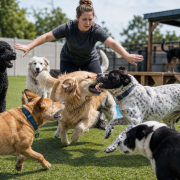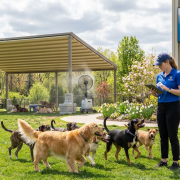

September Daycare Enrollment Why Consistent Training Prevents Behavioral Setbacks
Understanding the September Transition for Daycare Dogs
Why fall enrollment creates behavioral challenges
September hits different for dog owners. While kids are heading back to school and routines snap back into place, your dog has spent the entire summer in a completely different rhythm. If your pup has been home more, getting extra attention, and enjoying a flexible schedule, the sudden shift to daycare can feel jarring (and honestly, it can trigger some real behavioral hiccups).
The challenge isn’t just about missing you. It’s about the gap between what your dog has grown accustomed to and what daycare demands. Dogs thrive on predictability.
When that predictability vanishes overnight, stress responses follow. Your confident, well-trained dog might suddenly start pulling on the leash, display resource guarding, or act anxious around other dogs. These behavioral setbacks happen because the dog’s brain hasn’t been given time to process the transition.
Fall enrollment peaks in September specifically because families return to structured schedules. Owners who worked from home all summer suddenly need full-time care solutions. Daycares fill up fast.
And dogs who haven’t been gradually introduced to group settings or who’ve had their training consistency interrupted can struggle significantly. The combination of environmental change, handler stress (you’re probably busier too), and unfamiliar social dynamics creates a perfect storm for behavioral regression.
What many pet owners don’t realize is that inconsistent training during summer months sets the stage for these problems. If your dog’s obedience work has been sporadic, if commands have gone unreinforced, or if behavioral management slipped during vacation time, your dog enters daycare without the foundation needed to handle the pressure.
Common stress signals when dogs enter group settings
Recognizing stress in your dog is half the battle. Dogs communicate anxiety through body language long before they develop serious behavioral problems. Understanding these signals means you can intervene early and prevent minor issues from becoming major setbacks.
Some dogs display obvious signs: excessive barking, tail tucked between their back legs, avoiding eye contact, or refusing to engage with other dogs entirely. Others are subtler. Your dog might pace, yawn excessively, have dilated pupils, or display what’s called a “stress pant” (rapid, shallow breathing that isn’t related to physical activity). Some dogs become clingy or overly dependent on their handler the moment they arrive at doggie daycare, showing separation anxiety symptoms that never existed before.
Freeze responses are particularly telling. If your dog goes rigid when approached by other dogs, that’s not confidence (it’s the opposite). That’s a dog whose nervous system is overwhelmed. Resource guarding might also emerge suddenly, even in dogs who previously shared toys without issue. Under stress, dogs regress to protective behaviors.
Physical symptoms matter too. Diarrhea, loss of appetite, excessive shedding, or frequent urination can indicate daycare-related stress. Some owners don’t make the connection because they assume these are unrelated health issues. They’re not. They’re your dog’s body telling you something about their emotional state.
The critical piece? These stress signals typically appear within the first two weeks of enrollment. That window is when most behavioral setbacks occur. If you’re not paying attention to your dog’s demeanor after daycare sessions, you might miss the opportunity to address problems before they become entrenched behaviors.
The role of routine disruption in behavioral regression
Routine is your dog’s operating system. It creates certainty. It builds confidence. When you disrupt routine dramatically (like transitioning from a loose summer schedule to five days a week at daycare), your dog’s sense of control disappears.
Dogs that have maintained consistent dog training schedules throughout summer typically handle September transitions far better than those who’ve taken a break. Why? Because the dog’s brain has been regularly reinforcing learned behaviors and commands. The neural pathways stay active. When daycare stress hits, your dog has a foundation of training to fall back on.
But here’s what happens when training consistency lapses: your dog’s confidence in their ability to handle uncertainty drops. They’ve had two or three months of unpredictable feedback. Commands might get reinforced one day and ignored the next. Boundaries might shift. Suddenly, daycare (which is already overwhelming) feels like an environment where they have zero control or predictability.
Behavioral regression manifests as resource guarding, excessive jumping, or pulling on leash that seemed resolved months ago. Your dog isn’t being defiant or forgetting their training. They’re responding to inconsistency by reverting to more primal coping mechanisms. Understanding this distinction changes how you approach prevention.
Building a Foundation Before Daycare Starts
Pre-enrollment obedience skills that matter most
Before your dog walks through the daycare door in September, certain foundational commands need to be rock solid. This isn’t about teaching every trick in the book—it’s about ensuring your dog can respond reliably when it matters most in a group setting.
The “sit” command should be second nature by enrollment day. In daycare, dogs will encounter moments of excitement, frustration, and overstimulation. A dog that can sit on command gives handlers a way to interrupt potential conflicts before they escalate. It’s your dog’s reset button, and trainers depend on it heavily.
Equally critical is the “stay” command, even if it’s just for 10-15 seconds. Daycare environments involve transitions: moving from outdoor play to indoor spaces, switching play groups, or waiting during feeding times. Dogs that understand “stay” settle faster and create less chaos during these shifts.
Recall—getting your dog to come when called—might be the single most important skill before group daycare. In a facility with multiple dogs running around, handlers need to trust that your dog will respond promptly when separated from the pack. This doesn’t mean perfect recall in every scenario, but solid reliability in moderately distracting environments.
Loose leash walking rounds out the core four. Your dog needs to walk calmly without pulling, dragging, or lunging, because daycare staff will be moving your dog through hallways, to outdoor areas, and past other dogs multiple times daily. A dog that pulls constantly exhausts handlers and creates tension that other dogs pick up on.
These aren’t fancy skills. They’re survival skills for group settings. Work on them consistently for at least 4-6 weeks before enrollment, with increasing difficulty levels. Practice in different environments, around distractions, at different times of day. Your training consistency now directly prevents behavioral setbacks once daycare starts.
Assessing your dog’s readiness for group environments
Not every dog is ready for daycare at the same timeline, and that’s okay. Honest assessment before enrollment protects your dog from unnecessary stress and prevents the facility from managing preventable problems.
Start by asking: Does your dog show signs of resource guarding? This means defensive behavior around toys, food, or space. If your dog growls when you approach the food bowl or gets tense around high-value toys, daycare is going to trigger those instincts constantly. You’ll need to address this through structured training before group enrollment makes sense.
Consider your dog’s socialization history. Has your dog spent meaningful time around unfamiliar dogs in controlled settings? Or are they mostly familiar with one or two dogs they know well? The jump from limited exposure to a daycare environment with 8-15 other dogs is jarring. Using group dynamics assessment before enrollment helps determine if your dog needs gradual exposure first.
Watch for anxiety signals. Does your dog panic when you leave? Whine excessively in new spaces? Hide when strangers visit? These are red flags that your dog might struggle with the separation and novelty of daycare. Understanding separation anxiety after helps you proactively manage these tendencies.
Physical health matters too. Senior dogs, puppies under 16 weeks, or dogs with medical conditions need special consideration. Daycare is physically demanding, with constant movement and social engagement. If your dog tires easily or has aggression issues, daycare might not be appropriate until those factors are managed.
Honestly assess your dog’s temperament. Is your dog naturally curious and play-motivated, or reserved and cautious? Are they confident around novelty, or do they need time to warm up? Dogs that are naturally social and adaptable adjust faster. Dogs that are naturally anxious or territorial need extra preparation.
Creating a training baseline to measure progress
Before your dog starts daycare, document exactly where your dog stands right now. This baseline becomes your measuring stick for identifying whether daycare is going well or whether behavioral issues are emerging.
Record specific behaviors in controlled situations. How many repetitions does it take for your dog to respond to “sit”? What’s the longest reliable “stay” your dog achieves? Can your dog maintain focus during loose leash walking past another dog? Document these metrics in writing—not vaguely, but specifically.
Note your dog’s anxiety or stress signals before daycare starts. Does your dog have any destructive behaviors at home? Does your dog have specific triggers? This baseline helps you and daycare staff distinguish between normal adjustment stress and actual behavioral problems that need intervention.
Ask your vet for a health baseline too. Weight, energy level, digestive regularity—these things often change when dogs start daycare due to activity increases and dietary changes. Knowing the starting point helps you catch problems early.
Schedule a pre-enrollment consultation with the daycare director to walk through these baselines together. Quality facilities want this information and will appreciate your preparation. It sets you up for success and ensures everyone’s working from the same starting point.
Maintaining Training Continuity During Enrollment
Coordinating between home training and daycare protocols
Here’s the reality: your dog isn’t learning two separate languages when you split time between home training and daycare. They’re learning one language with two different dialects, and inconsistency between them creates confusion (and behavioral problems). The September enrollment surge means trainers and daycare staff are juggling more dogs than usual, which makes coordination even more critical.
Before your dog starts daycare, schedule a detailed conversation with the facility about their existing training protocols. What commands do they use? How do they handle jumping, leash pulling, or resource guarding? When you’re using in home dog sessions, those techniques need to align with what happens during daycare hours. If your trainer uses “sit” and daycare uses “plant,” your dog experiences training whiplash.
Provide written documentation of your dog’s current skill level and any specific behaviors you’re working on. Most reputable facilities will ask for this anyway. Include details like: which commands your dog responds to reliably, which ones are still shaky, what reward motivates them most, and any triggers or anxieties they display. This isn’t just paperwork—it’s the bridge between environments.
Visit the daycare facility and observe their training methods firsthand. Ask about their approach to reinforcement, how they structure their training blocks, and whether they use the same verbal cues and hand signals you’re using at home. You’ll often find that daycare staff have effective techniques that complement your home training (and vice versa). The goal is creating harmony, not expecting them to follow your playbook exactly.
Why consistency in commands and cues prevents setbacks
Your dog’s brain operates on pattern recognition. When you say “come” and reward them with treats at home, that neural pathway strengthens. But if daycare staff say “recall” or “here” for the same behavior, your dog has to process that as a separate instruction—even though it means the same thing. Multiply this across five or ten commands, and you’ve created cognitive overload that manifests as behavioral regression.
Studies on canine learning show that dogs learn faster and retain skills longer when commands and cues remain consistent across environments. Inconsistency doesn’t just slow learning; it actively undermines it. Your dog might perform “sit” perfectly at home but hesitate at daycare simply because the delivery changed, the environment changed, or the reinforcement timing differed.
Hand signals are equally important as verbal cues. If you’re using a palm-down gesture for “down” at home, daycare needs to use the same signal. Visual cues matter especially during high-distraction environments like doggy day camp settings where verbal commands get lost in the noise of multiple dogs playing together.
Consistency also applies to what happens after the cue. If your dog gets a high-value treat at home for responding to “stay,” but at daycare they only get verbal praise, they’ll internalize different value systems for the same behavior. This creates what trainers call “selective compliance”—your dog will perform when they know the reward is worth it and ignore the command when it isn’t.
Communicating training goals with daycare staff
Most behavioral setbacks stem from miscommunication rather than poor training. Daycare staff aren’t mind readers, and they’re managing groups of dogs simultaneously. Without clear communication about your specific training goals, they’re likely prioritizing basic management over skill building.
Have a kickoff meeting before your dog starts. Explain what you’re working on and why. Are you focusing on impulse control?
Reducing separation anxiety? Building leash manners? Priorities matter.
If your dog is struggling with resource guarding, daycare needs to know that’s your primary focus, not socializing with all the other dogs. This prevents well-meaning staff from inadvertently triggering the very behavior you’re trying to prevent.
Request weekly check-ins during the first month. A quick five-minute conversation each Friday gives you insight into how your dog’s responding and lets daycare staff ask clarifying questions about your home training. You might realize that dog training techniques working at home need minor tweaks in group settings, or vice versa. This feedback loop prevents small inconsistencies from becoming major setbacks.
Put your training goals in writing and provide copies to daycare staff. Include: current skill level, commands being reinforced, reward preferences, and any behavioral concerns. It’s professional, clear, and creates accountability on both sides. This shared communication style ensures everyone’s rowing in the same direction throughout September and beyond.
Recognizing and Addressing Behavioral Setbacks
Early warning signs of training regression
The first few weeks of September daycare enrollment can be deceptive. Your dog might seem fine on the surface, but behavioral regression often creeps in quietly. One of the earliest red flags is inconsistent command responses. Your pup nailed “sit” and “stay” at home, but suddenly they’re selective about following through at daycare pick-up time. This isn’t stubbornness; it’s stress manifesting as confusion about which rules apply where.
Watch for increased jumping, mouthing, or play-biting that wasn’t present before enrollment. Dogs under transition stress often revert to juvenile behaviors because they’re cognitively overwhelmed. Some owners notice their dogs becoming overly dependent or clingy at home after daycare, refusing to separate from their handlers for bathroom breaks or yard time. Others observe the opposite: sudden independence or aloofness that feels jarring.
Pay attention to physical stress signals too. Excessive panting, lip licking, yawning, or ear position changes indicate your dog is processing anxiety. Housetraining accidents inside the home after weeks of consistency is another major warning sign. These aren’t punishment situations; they’re indicators that your dog’s confidence in their training foundation has temporarily wobbled.
Distinguishing normal adjustment from concerning behavior
Here’s the challenge: some regression during September enrollment is completely normal. Your dog isn’t broken. They’re integrating multiple social environments, following different handlers with slightly different cues, and managing sensory input from other dogs. The key is understanding the difference between expected adjustment behaviors and behaviors that demand intervention.
Normal adjustment typically lasts 5-14 days. Your dog might be slightly reserved on pick-up days, need an extra five minutes to settle at bedtime, or show minor leash reactivity. These patterns usually resolve as your pup becomes familiar with the daycare rhythm. The behaviors are mild, context-specific, and improve with consistent routines.
Concerning behavior, by contrast, escalates or remains constant beyond the two-week window. Aggressive posturing toward other dogs (stiff body, raised hackles, direct staring), refusing food or treats during training, or defensive snapping at handlers are red flags that require immediate attention. If your dog is having behavioral changes, that’s worth documenting in detail.
Another distinction: normal regression involves one or two specific behaviors, while concerning regression is widespread. If your dog loses sit, stay, and leash manners simultaneously, that’s different from just struggling with impulse control around play groups. Regression across multiple trained commands suggests your dog isn’t just adjusting; they’re decompensating.
Intervention strategies when setbacks occur
First priority: communication with your daycare provider. Share what you’re observing at home. Many behavioral setbacks are partially corrected through daycare adjustments. Maybe your dog needs a quieter group, shorter initial sessions, or specific handler consistency. Quality daycare facilities adjust their approach; they expect this conversation in September.
Second, reinforce training at home immediately but strategically. This is where consistency matters most. Return to transitioning dogs basics: shorter training sessions, high-value rewards, and practicing commands in low-distraction environments. You’re rebuilding confidence, not punishing regression.
Avoid adding new training objectives during this phase. September isn’t the time to introduce “heel” or advanced impulse control work. Stick to fundamental commands: sit, stay, down, and reliable recall. Practice on leash in quiet spaces before expecting performance at daycare.
Consider whether daycare frequency needs adjustment. Some dogs thrive with four consistent days weekly, while others benefit from three days initially. Consistency matters more than volume. A dog attending three stable days every week shows better long-term progress than one attending four chaotic days with unpredictable pick-up times.
If behavioral setbacks persist beyond three weeks or intensify, consult your daycare’s trainers or seek professional guidance. professional dog training might be your answer. Some dogs genuinely need additional one-on-one support during major transitions.
Track everything. Document which behaviors regressed, when they appear, and what triggers them. This data helps daycare staff and trainers identify patterns you might miss. It’s the difference between guessing and actually solving the problem.
Long-Term Consistency Strategies for Success
Establishing weekend reinforcement routines
Your dog attends daycare Monday through Friday, which means weekends are your golden opportunity to reinforce what trainers are teaching during the week. This isn’t about running formal training sessions every Saturday morning (though some owners do that). Instead, think of weekends as your chance to weave training into daily life so your pup’s progress doesn’t slip backward when the structure changes.
Start by syncing with your daycare provider about which commands and behaviors they’re prioritizing. If trainers are focusing on loose-leash walking and impulse control around other dogs, spend your Saturday walks practicing those exact skills in lower-distraction environments. Your dog needs to see that the rules don’t change just because mom or dad is handling the leash instead of a trainer.
Keep weekend sessions brief but frequent. Three 10-minute practice windows spread throughout the day beats one exhausting 30-minute marathon. Morning training before breakfast, a mid-day refresher, and an evening reinforcement session maintains the neural pathways your dog is building during daycare. Dogs learn through repetition and consistency, and weekend gaps larger than two days can genuinely interrupt their progress.
One practical strategy: use high-value rewards during weekends that your dog doesn’t get during daycare. This creates anticipation and keeps training exciting. If your pup earns standard kibble treats during group sessions, reserve special chicken or cheese rewards for your solo weekend work. That contrast signals to your dog that both environments matter and offer value.
Adapting training as your dog progresses through daycare
Your dog isn’t the same learner on week four of daycare as they were on day one. Early September enrollment means by late September, you’re watching genuine behavioral progression. The whiny, uncertain pup that struggled with separation is now making friends and showing confidence. That’s excellent, but it also means your training approach needs to evolve.
Progressive training means gradually increasing difficulty as foundation skills solidify. If your dog has mastered basic sit and stay in group settings, you can now layer on more complex commands like down-stay at increased distances or heel work through distractions. Trainers at quality daycare facilities track these progressions, so ask for specific feedback on what your dog is ready for next.
Behavioral maturity also changes around the 3-4 week mark of consistent daycare. Your dog’s confidence grows, which sometimes means they’ll test boundaries differently. A dog who was perfect on-leash in week one might start pulling more confidently in week four because they’ve grown more secure. This isn’t regression; it’s your opportunity to introduce more advanced leash techniques and impulse control challenges. Using behavioral considerations when as a reference point helps you understand this evolution.
Document your dog’s specific milestones. Keep a simple log of when they mastered new skills, which environments triggered nervousness, and how their focus improved over time. This record isn’t just for your records; it helps trainers customize future sessions and prevents you from accidentally backtracking in your approach.
Building positive associations with group learning environments
Consistency isn’t just about repeating the same exercises. It’s about cementing your dog’s emotional relationship with group training settings. A dog that loves daycare learns faster and retains skills longer than one who tolerates it grimly.
Make daycare drop-off and pickup emotionally neutral to prevent anxiety cycling. Avoid long goodbyes or excessive enthusiasm when you pick your pup up. Dogs pick up on your emotional energy instantly.
If you’re stressed about leaving them, they absorb that worry. Keep arrivals and departures calm and matter-of-fact. You’re teaching your dog that daycare is a normal, safe part of their week, not an emotional event.
Actively reinforce positive group experiences at home. After particularly good daycare days (ask your trainer which days went smoothly), celebrate with an extra walk or special playtime. Your dog learns that group training equals good things. This builds intrinsic motivation for future daycare sessions.
Whether you’re working with trainers at focus dog training or another local facility, ask them to highlight what your dog did well that week. Then replicate those successful moments at home. If your dog excelled at cooperative games with other dogs on Thursday, spend Sunday practicing similar cooperative play (scaled down to just you and your pup). That repetition builds neural connections faster than any single training session could.
Long-term consistency compounds. September enrollment isn’t just about getting through the month. It’s about laying groundwork for a dog whose training sticks, whose confidence grows, and whose behavioral foundation stays rock solid through all the seasons ahead.
Creating a Support System for Ongoing Progress
Selecting trainers who understand daycare dynamics
Not all trainers are created equal, and when your dog is heading into daycare, you need someone who actually understands what that environment demands. A trainer who’s worked exclusively in one-on-one settings might not grasp the specific pressures and social complexities your pup will face around other dogs, multiple handlers, and constant stimulation shifts.
Look for trainers with hands-on daycare experience. They should be able to articulate how socialization differs from obedience, why impulse control matters more in group settings, and how to prepare your dog for the unpredictability of a pack dynamic. The best trainers have worked inside daycare environments or have strong partnerships with local facilities. They’ve seen which behaviors hold up under real-world pressure and which ones crumble when your dog gets excited or overwhelmed.
Ask potential trainers specific questions: Have they trained dogs currently in daycare? Do they understand the difference between listening to you and listening to a daycare staff member? Can they adjust their methods if your dog shows different behaviors at home versus at facility? Red flags include trainers who claim one method works for every dog or who don’t ask detailed questions about your daycare’s specific rules and culture. A trainer working in dog training or serving other local communities should know the facilities in their area and what each one prioritizes.
Regular check-ins to track behavioral consistency
Consistency tracking isn’t optional. It’s the difference between catching a small issue early and watching it snowball into a full behavioral setback. Set up a regular cadence for check-ins with both your trainer and your daycare staff, ideally at 2-week intervals during the first month of enrollment, then monthly after that.
These check-ins should address specific behaviors your dog was working on before daycare started. Is your pup still responding reliably to recall around distractions? Has anxiety resurfaced?
Is focus deteriorating? Ask your daycare staff for concrete observations, not vague reassurances. Request specific examples: “Did he respond to staff cues during social time?” or “How did he handle transitions between activity areas?” Documentation matters here.
A simple shared log (email updates, a shared note system, or a training app) keeps everyone aligned and creates a record you can review for patterns.
Don’t skip these conversations because your dog “seems fine.” Many behavioral issues develop gradually. A slight increase in jumping, a delayed response to commands, or subtle tension with certain dogs might be invisible in casual observation but become obvious when you’re tracking weekly. Trainers experienced with focus dog training and similar specialized programs understand that consistency tracking prevents minor slips from becoming major problems.
Adjusting training plans based on real-world daycare scenarios
Your pre-daycare training plan was solid, but daycare changes everything. New variables emerge: how your dog handles group feeding, responds to unfamiliar staff voices, manages space around resource-driven situations, or reacts to the noise level during peak hours. Your trainer needs to adapt the plan to address these specific scenarios rather than sticking rigidly to the original curriculum.
Real-world adjustments might include adding impulse control work around other dogs’ toys, practicing “wait” commands in stimulating environments, or conditioning your pup to reliably disengage from play when a staff member calls. If your dog thrives at daycare but seems wound up afterward, your trainer might adjust evening training sessions to include calming techniques. If anxiety emerges during drop-off, they might build confidence exercises into your at-home routine specifically designed to mirror daycare transitions.
Share detailed daycare scenarios with your trainer and ask them to role-play those situations during training sessions. They should be willing to observe a daycare session themselves (many facilities allow this) to understand your dog’s actual behavior in that context. This hands-on approach beats theoretical planning every time. Whether you’re working with a trainer providing dog training or another local area, the best trainers stay flexible and responsive to what’s actually happening in your dog’s life.
Building a support system isn’t about adding complexity to your routine; it’s about creating accountability and visibility around your dog’s progress. When your trainer, daycare staff, and you all communicate regularly and adjust plans based on real behavior, setbacks become manageable hiccups rather than sliding reversals. Your dog gets consistent messaging, refined techniques, and the confidence that comes from being truly prepared. Reach out to a qualified trainer today and establish that partnership before or immediately after daycare enrollment begins.