Understanding Canine Fear Responses to Halloween Costumes and Decorations
Recognizing Fear Responses in Your Dog During Halloween Season
Reading body language signals: stress indicators beyond barking
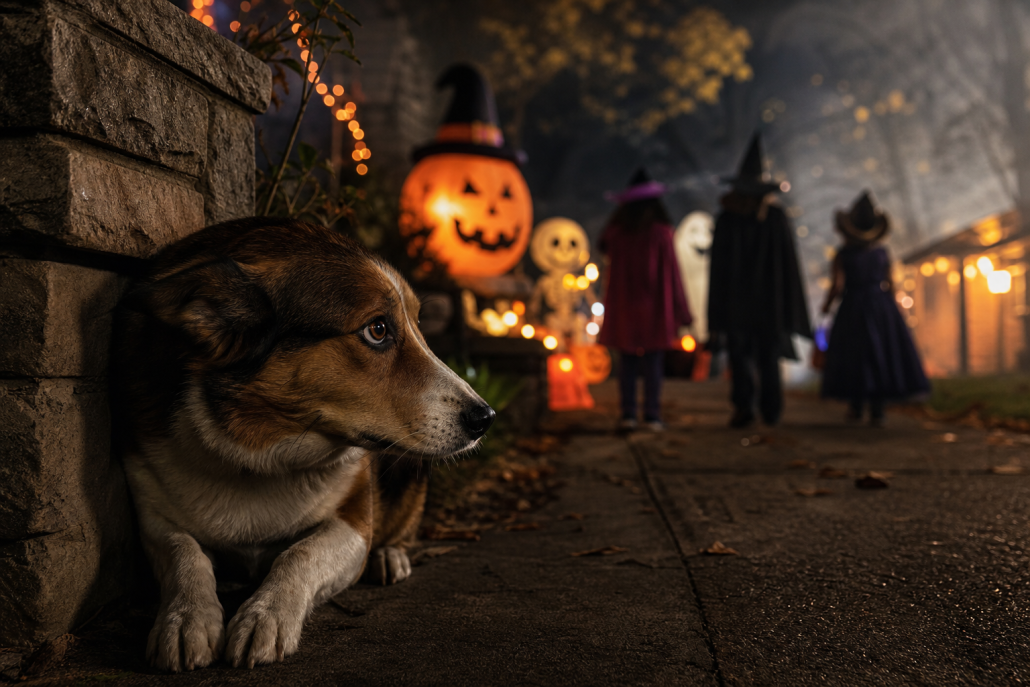
Halloween transforms neighborhoods into sensory overload zones. When your dog encounters costumed strangers, inflatable monsters, and flickering decorations, their body often tells a story that barking alone doesn’t capture. Learning to read these signals early gives you the chance to intervene before fear escalates into a full-blown anxiety response.
Your dog’s ears are one of the most telling indicators. During fear, dogs typically pull their ears back and flatten them against their head. This is distinctly different from the relaxed ear positioning during calm moments.
Simultaneously, look at tail position: a tucked tail (curled between the hind legs) signals genuine distress, while a naturally hanging or slightly raised tail indicates comfort. The difference between these positions matters tremendously when assessing whether your dog is stressed or simply curious about holiday decorations.
Whale eye, where you can see the whites of your dog’s eyes, appears when they’re processing something threatening. This happens alongside dilated pupils and increased blink rate. Your dog might also exhibit lip licking, yawning, or nose licking as calming behaviors they use to self-soothe. These aren’t signs your dog is relaxed; they’re coping mechanisms.
Body stiffness is another critical signal. A tense, rigid posture with weight shifted backward (away from the fear trigger) indicates your dog wants distance. Compare this to loose, wiggly movement with forward weight distribution, which signals confidence and engagement. Understanding canine body applies directly here, since the same principles guide how your dog communicates stress in any context.
Distinguishing between playful excitement and genuine anxiety
This distinction matters because your response depends entirely on what your dog is actually experiencing. Excited dogs have loose, bouncy movements. Their mouths are open in what appears to be a smile or play face, with soft eyes and forward-facing ears. They initiate interaction and engage readily with their environment, even if that environment includes friendly trick-or-treaters in costumes.
An anxious dog, by contrast, shows tension throughout their body. They avoid eye contact, lean away from triggers, and exhibit the calming behaviors mentioned earlier. While an excited dog might jump toward someone in a costume, an anxious dog will back away or attempt to hide. The forward momentum is completely reversed.
Here’s where context matters: a dog can be both excited and nervous simultaneously. Your usually outgoing pup might show interest in activity yet display stress signals because the stimulus is unfamiliar or too intense. This mixed state is common during Halloween, which is why recognizing stress signals becomes essential preparation. You’re essentially running a baseline before the season hits hard.
Panting, drooling, and trembling are rarely signs of excitement unless your dog was literally just running. In Halloween contexts, these typically signal genuine fear. Notice whether your dog seeks you out for reassurance (anxiety) or actively engages with decorations and visitors (excitement). The seeking behavior indicates they feel unsafe without your proximity.
How sensory sensitivity amplifies fear reactions to costumes and decorations
Dogs perceive the world differently than we do. Their sense of smell is exponentially more powerful than ours, and their hearing operates at frequencies we can’t access. Halloween decorations and costumes assault these heightened senses in ways we underestimate.
Costumes introduce unfamiliar scents, textures, and silhouettes. What looks like a fun werewolf outfit to you might smell like synthetic materials and a stranger’s body odor to your dog, triggering an instinctive “something is wrong here” response. Movement becomes unpredictable because the costume alters how the person walks and gestures. Your dog loses the familiar movement patterns they use to identify friendly humans.
Decorations contribute loud, high-pitched sounds from electronic elements. Flickering lights can trigger photosensitive responses in some dogs. Certain dogs are naturally more sensitive to sensory input, and these individuals show more pronounced fear reactions. Your senior dog or a dog with existing anxiety will likely respond more intensely than a younger, confident dog.
The combination creates perfect conditions for fear: unfamiliar stimuli, unpredictable triggers, and sensory intensity all converging simultaneously. This is why Halloween requires deliberate planning. If your dog shows these fear responses, professional support through dog training specifically designed for anxiety can make a real difference. The techniques used to address fear during the holidays apply year-round, creating lasting benefits beyond October.
Why Dogs Fear Costumes: The Science Behind the Anxiety
Altered silhouettes and unfamiliar textures triggering protective instincts
Your dog’s brain is wired to recognize familiar shapes and forms. When you slip into a Halloween costume, you’re essentially changing your silhouette in ways your dog’s visual system doesn’t compute. That tall witch hat, the bulky ghost sheet, the oversized pumpkin outfit, or flowing cape all distort what your dog knows as “normal human.” Their protective instincts kick in because, from their perspective, something has fundamentally changed about the person they trust.
Dogs rely heavily on body language and shape recognition to identify pack members and interpret intentions. A costume disrupts this entirely. Your dog might perceive the altered outline as a potential threat rather than their familiar owner.
This isn’t irrational fear, it’s their survival mechanism working exactly as evolution designed it. When the outline doesn’t match the expected pattern, their amygdala (the brain’s threat-detection center) triggers an alarm response.
Textures amplify this problem. Costumes often feature materials that feel completely foreign under your dog’s paws or against their nose if they try to investigate. Synthetic fabrics, plastic, velcro, or rubber create sensory experiences your dog has never encountered before.
If they brush against your leg and feel stiff netting instead of your normal pants, or if your hand feels suddenly rough from costume gloves, their confidence drops. They’re not being difficult, they’re processing an entirely unfamiliar tactile landscape.
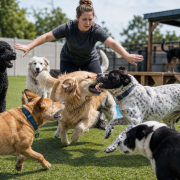
The bigger issue emerges when multiple dogs are in the house during Halloween parties. Imagine your dog already feeling unsettled by your costume, then facing other dogs in costumes too. Now they’re surrounded by several unidentifiable creatures, each sending mixed signals about whether they’re friend or foe. This layered confusion often escalates anxiety into reactive behavior.
Scent sensitivity: how costume materials mask your dog’s familiar scent
Dogs experience the world primarily through smell, and your scent is their anchor to safety and identity within your household. When you wear a costume with new materials, synthetic fabrics, and possibly artificial scents from dyes or manufacturing processes, you’ve essentially masked the olfactory signature your dog uses to recognize you.
The moment you pull on that costume, your familiar scent gets buried beneath layers of unfamiliar chemical signals. Your dog’s nose tells them something is off, even if their eyes recognize your face or voice. Some dogs will try to investigate more intensely, pushing closer and sniffing frantically to find the person they know beneath the disguise. Others withdraw or show visible stress because the chemical mismatch creates confusion and uncertainty.
This scent disruption matters more than many dog owners realize. Studies in canine neurobiology show that dogs process scent information with approximately 40 times more sensory receptors than humans. A costume that seems harmless to us registers as a complete sensory mismatch to your dog. Using scent training techniques can help prepare your dog for these changes, but prevention is always cleaner than recovery.
Polyester, acrylic, and plastic costume materials typically carry manufacturing residues, dye compounds, and storage odors. When layered together, these create a chemical profile completely foreign to your dog’s experience. Your dog isn’t being difficult when they seem anxious around costumed people, they’re literally experiencing someone chemically unrecognizable.
Movement restrictions and reduced mobility creating stress responses
Costumes restrict movement in ways that make dogs deeply uncomfortable. If your dog watches you trying to navigate stairs in a bulky costume, or sees you moving awkwardly because of restricted arms or limited leg mobility, they pick up on the behavioral change immediately. Dogs are acutely sensitive to changes in how their owners move and carry themselves.
When you can’t move naturally, your dog loses the ability to predict your actions and read your body language accurately. This uncertainty triggers anxiety. They can’t tell whether you’re about to sit down, walk toward them, or reach out to pet them because your normal movement patterns are compromised. For a dog that already feels unsettled by your appearance and scent, this movement restriction becomes the final stressor that pushes them toward fear-based responses.
Additionally, if your dog tries to jump on you or play as they normally would, a costume changes how that interaction feels. Their paw lands on something weird. They can’t get close to you the same way. The familiar comfort of your physical presence becomes complicated by unfamiliar textures and restricted responses.
Dogs thrive on predictability and routine. Halloween costumes shatter both simultaneously. If your dog has shown anxiety during past holidays or stress with basic obedience training phases, costume-related fear isn’t surprising, it’s an expected extension of their sensitivity to environmental change. Understanding these three core mechanisms helps you manage Halloween more compassionately and keep your dog’s stress levels manageable.
Halloween Decoration Safety: Creating a Secure Environment
Toxic decorations and treats: what poses real risks in your home
Halloween decorations look festive to us, but many common items sitting around your home are genuinely dangerous for dogs. The reality is that your pup doesn’t understand the difference between a decoration and something toxic, so you need to think like your dog and audit your space before guests arrive.
Artificial decorations made from plastic or foam often contain chemicals that cause intestinal blockages if ingested. Those cute little candy bowls on your porch and windowsills? They’re disaster zones.
Chocolate (especially dark chocolate), xylitol-sweetened treats, and candy wrappers pose serious health risks. Xylitol in particular can trigger rapid insulin release and cause liver damage within hours. Keep all Halloween candy in sealed containers up high, not on accessible tables.
Decorative lighting strings and extension cords create another hazard. Dogs chewing on electrical cords risk electrocution or severe mouth burns. Glow sticks and glow-in-the-dark products often contain toxic chemicals that can cause mouth irritation and vomiting. Candles (both real and scented decorative candles) pose burn risks if your dog knocks them over while panicking.
Then there’s the stuff people often overlook: dry ice used in fog machines can cause frostbite or internal injuries if a curious dog makes contact. Fake spider webs, while seemingly harmless, can entangle paws and create choking hazards. Even common decorative plants like autumn ornamental corn can cause blockages.
Your dog’s stress levels during Halloween mean they’re more likely to investigate things they’d normally ignore. That’s why preventative placement matters more than ever. Store decorations that aren’t currently displayed in closed cabinets or rooms your dog can’t access. If you’re hosting a gathering, physically separate your dog during setup and cleanup phases when hazards are most exposed.
Managing noise levels from sound-activated props and trick-or-treaters
The constant barrage of sounds on Halloween night hits differently for anxious dogs. Sound-activated props that shriek or emit random noises trigger genuine fear responses. Doorbell rings, screaming teenagers, and groups of trick-or-treaters create an overwhelming sensory environment that can escalate your dog’s anxiety significantly.
Start by identifying which sounds bother your dog most. Is it the doorbell? The high-pitched screams from props? Heavy bass music? Once you know their specific triggers, you can plan accordingly. Consider moving sound-activated decorations away from areas where your dog spends time. If a prop is in your living room, that’s probably not the best idea if your dog already shows stress responses.
The trick-or-treating hours create predictable noise patterns. If you know 6 p.m. to 8 p.m.
is peak chaos in your neighborhood, plan your dog’s day around that window. A calmer environment earlier in the day helps you recognize baseline behavior versus anxiety-driven responses. Think about using white noise machines or soft music to mask external sounds.
This isn’t a complete solution, but it reduces the sharpness of sudden loud noises.
If you’re responsible for managing properties or running a dog-focused business, preparing staff for Halloween noise challenges becomes essential. Dogs in boot camp or daycare environments benefit from quieter areas during high-stress seasonal events. Professional handlers know that managing environmental noise directly impacts behavioral management.
Establishing safe zones where your dog can retreat during festivities
Your dog needs a designated safe space where they can escape the Halloween chaos completely. This isn’t about punishment or confinement. This is about giving them control over their environment and the ability to regulate their own stress levels.
A safe zone typically works best in a quiet interior room away from doors, windows, and high-traffic areas. A bedroom or bathroom works perfectly. Stock it with familiar items: their bed, toys, water bowl, and maybe an article of your clothing that smells like you.
The goal is creating an environment that feels predictable and secure. Close blinds or curtains to reduce visual stimulation from decorations and trick-or-treaters outside.
Make the safe zone appealing before Halloween actually arrives. Spend time there with your dog, offer treats, play with toys. When Halloween night hits, your dog already has positive associations with that space. They’ll retreat there naturally rather than resisting it.
Dogs undergoing board and train programs learn structured relaxation techniques that transfer well to home environments. These skills help dogs choose calm behavior even in stimulating situations. During Halloween specifically, giving them a safe retreat option respects their emotional capacity while you handle festivities with guests.
If your dog shows persistent anxiety around holidays, professional guidance makes a real difference. Programs like basic obedience training incorporate desensitization strategies that help dogs build confidence over time.
Proven Training Techniques to Reduce Halloween-Related Fear
Desensitization protocols: gradual exposure to costumes and decorations
Desensitization is your most powerful tool for helping dogs overcome Halloween-related fear. The key is introducing your dog to triggering stimuli at their own pace, in controlled doses. Rather than forcing a costume on your anxious pup and hoping for the best, you’re building tolerance gradually over weeks (not days).
Start by leaving a costume or decoration in a neutral area of your home without any fanfare. Let your dog investigate at their own speed. They might sniff it, ignore it, or show mild curiosity. That’s perfectly fine. You’re not asking them to interact with it yet, just to exist in the same room without stress escalating. Repeat this for several days.
Once your dog seems comfortable with the item’s presence, begin handling it yourself in their presence. Put it on, take it off, move around the room. This shows them it’s not a threat. Your dog will pick up on your calm, matter-of-fact energy. If they show signs of stress (panting, avoidance, whining), back up a step and slow the process down.
Next, reward any positive behavior near the item. That curiosity sniff? Treat. That moment where they didn’t flee? Treat. This creates a new association: costumes and decorations predict good things happen.
Using high-value rewards to build positive associations with seasonal stimuli
High-value rewards are non-negotiable for fear work. We’re not talking about regular kibble or basic treats here. Your dog needs rewards that genuinely excite them. These might be small pieces of chicken, cheese, freeze-dried liver, or whatever makes your dog lose their mind.
Reserve these premium rewards exclusively for Halloween-related training. Your dog should only get them during desensitization work or when they’re near costumes and decorations. This creates a powerful association: that scary thing actually means something fantastic is about to happen.
Timing matters enormously. Deliver the reward within one second of your dog showing brave behavior near a triggering stimulus. Whether it’s approaching a decoration calmly or simply looking at a costume without panicking, mark that moment immediately with a reward. Delayed rewards lose their impact.
Vary your rewards too. Dogs get bored with the same treat. Rotate between three or four high-value options so the payoff stays fresh and exciting throughout your training timeline.
Positive reinforcement strategies during trick-or-treat preparation
Trick-or-treating creates multiple stressors for anxious dogs: strangers in costumes, commotion, environmental changes, and unfamiliar sounds. Preparing your dog requires specific positive reinforcement work targeted at these scenarios.
Practice doorbell responses well before Halloween arrives. Have a friend ring your doorbell while you reward your dog for calm behavior. Repeat dozens of times over several weeks. Your goal is that doorbell triggering a “sit and wait for reward” response, not a panic spiral.
Introduce strangers in increasingly elaborate costumes during controlled sessions. Start with someone in normal clothes, gradually add costume pieces. Reward your dog for remaining calm while costumed individuals approach. This trains their nervous system that people in unusual outfits aren’t predators.
Teach a strong “look at me” command using positive reinforcement. When your dog is nervous about seasonal stimuli, redirecting their attention to you becomes invaluable. Practice this daily in low-stress environments first.
Short training sessions: maintaining focus while respecting your dog’s stress threshold
Fear-based training demands shorter sessions than standard obedience work. Your dog’s stress threshold is lower, and their ability to retain lessons drops significantly when they’re anxious. This is neurological, not stubbornness.
Aim for three to five minute training windows, two to three times daily. That’s genuinely more effective than one long fifteen-minute session. Your dog remains focused, engaged, and their nervous system doesn’t become overwhelmed. Quality beats duration every time.
Watch for stress signals. Panting, whale eye (excessive white showing), lip licking, or disengagement means your dog has hit their threshold. Stop immediately and end on a positive note, even if they just made minimal progress. Pushing through creates negative associations with training itself.
If Halloween anxiety is severe, working with a professional trainer might be your best investment. Whether through basic dog training or specialized board and train, expert guidance ensures you’re using proven techniques correctly.
Managing Behavioral Changes on Halloween Night
Door protocols: teaching calm behavior during repeated doorbell ringing
Halloween night means one thing for your door: it’s going to get a workout. Trick-or-treaters ring that bell every few minutes, and for a fearful dog, each chime can feel like an invasion. The doorbell becomes a trigger that compounds existing anxiety about costumes and the general chaos outside.
Start by desensitizing your dog to the doorbell sound itself, well before Halloween arrives (though we’ll cover longer prep timelines later). Play recordings of doorbell sounds at low volumes during calm moments, then pair them with high-value treats. Gradually increase the volume over several sessions. This isn’t a quick fix, but it teaches your dog that the sound doesn’t predict something scary.
When guests actually arrive, establish a clear protocol. Create a designated safe space away from the entry point, ideally a room or crate where your dog can retreat without feeling the need to rush the door. Many dogs react defensively at the threshold because they’re trying to protect their territory or escape the perceived threat. Removing them from that position naturally reduces reactive behaviors.
Teach a reliable “place” or “go to bed” command that sends your dog to their safe spot before you open the door. This gives them a job (something to do with their anxiety) rather than leaving them to spiral. When your dog consistently moves to their designated area on cue, reward heavily. Consistency matters here more than perfection.
Leash training modifications for homes with frequent foot traffic
If your dog must be near the door during Halloween, leash training takes on new importance. A standard leash setup won’t cut it when there’s constant foot traffic and visual stimulation. You need board and train that specifically address high-distraction environments, but there are also immediate adjustments you can make at home.
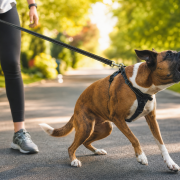
Use a shorter leash (4-6 feet maximum) rather than a standard 6-foot lead. Shorter tethers give you better control and prevent your dog from lunging or spinning in circles as people enter and exit. Consider a double-ended leash clipped to both your waist and a sturdy door anchor, keeping your hands free while maintaining constant connection to your dog.
Practice loose-leash walking in high-traffic scenarios before Halloween. Have family members or friends repeatedly walk past your dog, simulating trick-or-treaters. Start at a distance your dog can handle without reacting, then gradually decrease the distance. Use treats to reward calm behavior and attention on you, not on the people passing by.
Watch for tension in the leash itself. Dogs pick up on our nervousness, and a tight leash communicates that we’re anticipating trouble. Keep the leash slack and your energy neutral. If your dog pulls or lunges, don’t yank back (that escalates tension). Instead, stop moving, wait for slack, then continue. This teaches that forward motion only happens when they’re calm.
Preventative measures for destructive behaviors driven by anxiety
Anxious dogs often become destructive when they can’t cope with stress. On Halloween night, with all the noise, activity, and unfamiliar energy, even a normally well-behaved dog might shred the couch or dig at the door. Prevention is far easier than managing damage.
Remove access to anything destructible during peak trick-or-treating hours. This sounds obvious, but many owners leave dogs loose in spaces where stress-triggered destruction becomes inevitable. Close bedroom and bathroom doors, block off areas with baby gates, and use a crate or pen if your dog is crate-trained.
Provide appropriate outlets for anxious energy. Long-lasting chews, puzzle toys stuffed with peanut butter or frozen treats, and sniff mats all give your dog something productive to focus on besides the chaos. Mental stimulation actually reduces destructive behavior more effectively than physical exercise alone.
Consider calming supplements or anxiety wraps before Halloween hits. Thundershirts apply gentle pressure that many dogs find soothing. Supplements with L-theanine or chamomile can take the edge off without sedation. Your veterinarian can recommend options tailored to your dog’s age and health profile.
If your dog’s anxiety is severe, training at facilities like our boot camp can build confidence and coping skills. Professional intervention teaches behavioral management techniques that apply year-round, not just during Halloween season.
Preparing Your Dog for Halloween: A Month-Long Action Plan
Early-stage conditioning: introducing costumes and decorations gradually
The magic of preparing your dog for Halloween starts weeks before October 31st arrives. Think of this as a slow-motion introduction rather than a shock to the system. Your goal? Make costumes and decorations feel like normal parts of your dog’s environment, not sudden threats.
Begin by simply laying out decorations in low-stress ways. That plastic skeleton or inflatable ghost doesn’t need to go up immediately. Leave it in a corner of your living room for a few days while your dog investigates at their own pace. Let them sniff it, walk around it, and realize it’s harmless. This passive exposure removes the “what is that thing?” alarm response that often triggers fear.
For costumes, introduce fabric and textures gradually. Start with a single piece, like a hat or cape, without putting it on your dog. Let them wear it for five seconds while sitting on your lap, then remove it. Repeat this dozens of times over several weeks. Each repetition teaches your dog’s nervous system that costumes don’t signal danger.
Use high-value treats during these early sessions. If your dog hears the crinkle of a costume bag and immediately expects cheese or their favorite treat, the emotional association shifts. Instead of “oh no, something scary,” their brain learns “oh good, the treats are coming.” This positive pairing is far more effective than forcing exposure or pushing through resistance.
Consulting your veterinarian about anxiety management options
Sometimes gradual conditioning alone isn’t enough, especially if your dog has a history of serious anxiety or panic responses. This is where your veterinarian becomes an essential partner in your Halloween preparation plan. Many dog owners delay this conversation, assuming they should handle fear training independently, but that’s actually leaving valuable tools off the table.
Your vet can assess whether your dog’s Halloween anxiety is situational or part of a broader anxiety disorder. That distinction matters because it shapes the intervention strategy. They might recommend calming supplements, pheromone diffusers like Adaptil, or in some cases, anti-anxiety medication for the specific night. These options aren’t about medicating your dog into a zombie state, they’re about taking the edge off so training actually works.
Schedule this vet visit in early October, not mid-October. Your veterinarian needs time to evaluate your dog’s baseline behavior, discuss your specific concerns, and potentially trial options. Some medications take a few weeks to show effects. If you wait until the last week of October, you’ve lost crucial preparation time and your vet may have limited availability.
Be honest about what you’ve observed. Does your dog pace and pant during other loud events like fireworks? Have they had previous scary experiences with costumes or sudden movements? Share the details. Your vet uses this information to recommend the most appropriate approach, whether that’s behavioral support, medication, or both working together.
Creating a realistic training timeline based on your dog’s individual temperament
Not every dog needs the same amount of time to feel comfortable with Halloween changes. A confident Golden Retriever might need just three weeks of gradual exposure. A naturally anxious rescue dog or sensitive breed might need two months. Trying to force either into the other’s timeline creates frustration for everyone involved.
Start by honestly assessing where your dog falls on the anxiety spectrum. Have they shown fear responses to new situations before? Do they recover quickly from surprises or do they stay rattled for hours? Do they respond well to treats and positive reinforcement, or do they tend to shut down when stressed? These baseline traits tell you roughly how much time you’re working with.
For dogs with low to moderate reactivity, six to eight weeks gives you solid working room. For dogs with significant anxiety histories, ten to twelve weeks is more realistic. Ultra-sensitive dogs might benefit from starting in August, treating the entire lead-up as a gentle reconditioning process.
Create your personal timeline on paper. Mark your start date, your major milestones (introducing decorations, first costume exposure, fuller costume wearing), and your Halloween target date. Include buffer weeks for setbacks or slower progress. Having this visual plan keeps you on track and prevents the last-minute scramble that undoes weeks of careful conditioning.
Your dog’s individual temperament is the north star here. Respect it. A dog who needs three months to feel safe is worth the investment, and Halloween itself will be infinitely better for you both when your dog approaches the night calm rather than terrified. The effort you put in now transforms what could be a stressful evening into something manageable, maybe even enjoyable, for everyone in your household.