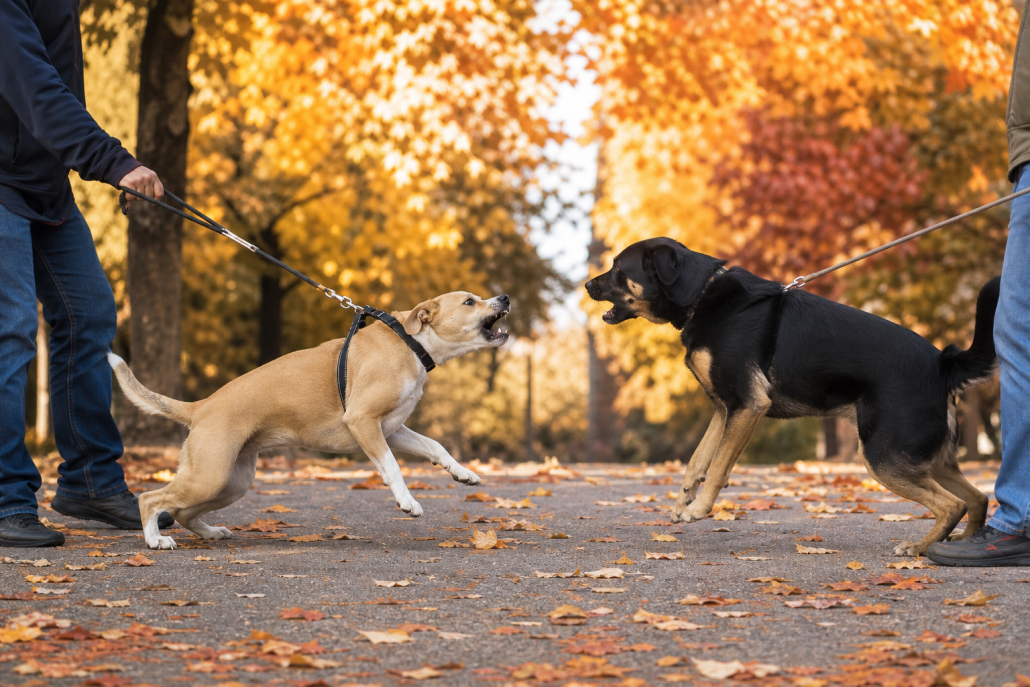
Managing Leash Reactivity During Fall Outdoor Training Sessions in 2026
Understanding Leash Reactivity in Seasonal Training Environments
How fall conditions trigger heightened reactive behavior
Your dog’s leash reactivity doesn’t exist in a vacuum. It shifts and intensifies with the seasons, and fall creates a perfect storm of environmental triggers that can turn a moderately reactive dog into a challenging handful on the leash. The drop in temperature, the crisp air, the changing light patterns, and the explosion of new scents all converge to create heightened arousal states that directly fuel reactive behaviors.
When temperatures drop, dogs experience physiological changes. Their metabolism shifts. Energy levels spike.
Combined with the natural increased alertness that comes with seasonal transitions, your dog’s nervous system is essentially primed for reactivity. Dogs that were manageable during summer walks suddenly lunge, bark, or fixate on triggers they previously ignored. This isn’t random.
There’s a biological component at play here.
Fall also brings migration patterns. Birds shift their routes. Small mammals become more active as they prepare for winter. Wildlife activity increases significantly during autumn months compared to summer. Your dog’s prey drive, which might have been dormant or suppressed during hot months, awakens with a vengeance. A dog that calmly passed squirrels in June is now straining the leash every five seconds in October. Understanding the science behind helps trainers recognize that this behavioral shift isn’t disobedience or lack of training—it’s neurobiological.
Seasonal environmental factors that intensify leash aggression
Fall introduces specific environmental stressors that directly amplify leash reactivity. The sensory landscape transforms entirely. Decomposing leaves release volatile compounds that create an overwhelming olfactory environment for dogs.
That rich, earthy smell you find pleasant? Your dog experiences it as sensory chaos. This overstimulation alone pushes reactive dogs toward aggression and fixation.
Shorter daylight hours trigger seasonal behavioral changes. Research indicates that reduced light exposure affects canine mood and stress hormones. Your dog’s natural circadian rhythm shifts.
Evening walks that once felt calm now occur in near-darkness, which increases anxiety and defensive reactivity. Dogs become more territorial, more protective, more likely to react aggressively to perceived threats. A dog walker or jogger approaching from the dimly lit path becomes a much more serious trigger than they would have been at 7 PM in July.
Weather pattern changes compound the issue. Cold fronts, pressure changes, and humidity shifts all affect canine stress hormones. Dogs are sensitive to barometric pressure changes.
When those dramatic fall weather swings occur, reactive dogs show measurable increases in cortisol levels. Windy days amplify reactivity. Unpredictable weather creates unpredictable canine behavior.
If your dog is already managing leash reactivity, fall’s erratic weather becomes an additional stressor layer.
More people outdoors creates density challenges. Fall weather draws walkers, joggers, cyclists, and other dogs out in larger numbers than summer sometimes allows. Higher foot traffic means more triggers.
More triggers mean more reactive episodes. Dogs that perform well in controlled settings during summer training now face constant stimulation during outdoor sessions. The cumulative exposure exhausts their emotional regulation capacity.
Recognizing early signs of reactivity before escalation
Prevention beats management every time. Learning to read your dog’s subtle signals before full reactivity erupts is foundational to successful fall training. When you understand canine body language, you catch problems at stage one rather than stage four.
Early reactivity signals are quiet. Watch for ear position changes. Ears that perk up or pinch back indicate heightened attention and emerging stress.
Notice weight shifts. A dog that leans forward slightly, transferring weight to their front legs, is beginning the physical preparation for reactive behaviors. Their pupils dilate.
Their breathing pattern changes from regular to shallow and rapid. These happen before the lunge, before the bark, before the full reactive display.
Body stiffening is a critical early indicator. The dog’s musculature tightens. Movement becomes wooden rather than fluid.
This postural change precedes reactivity by seconds to minutes. Tail position matters too. A tail that raises, curls, or holds rigidly signals elevated arousal.
Mouth tension changes. You might notice lip licking, yawning, or jaw clenching when the dog is actually stressed rather than tired.
During fall outdoor sessions, watch for tunnel vision behaviors. Your dog stops noticing treats, ignores verbal cues, becomes fixated on a single stimulus. This tunnel vision state represents the point where your dog’s cognitive function has shifted into reactive mode. Once they’re there, recovery takes significantly longer. Catching the behavior at the earlier stages—when your dog is alert but still responsive—gives you the intervention window you need for successful management and dog training outcomes.
Pre-Training Assessment and Behavioral Planning
Conducting thorough baseline evaluations in autumn settings
Before you hit the trails or neighborhood streets with your reactive dog this fall, you need a solid baseline assessment. This isn’t about guessing or relying on what worked last spring. Seasonal changes shift everything: cooler temperatures, new smells from fallen leaves, different wildlife activity, and altered daylight hours all impact how your dog behaves on leash.
Start with structured observations in low-stress environments. Take your dog out during quieter times in familiar fall settings and simply watch. How does he respond to leaves rustling?
Does the sound of crunching underfoot trigger alertness or anxiety? Note his body language carefully: ear position, tail tension, whether he’s pulling toward stimuli or away from it. These details matter because leash reactivity rarely looks the same twice, especially when environmental variables shift with the season.
Document baseline heart rate and breathing patterns before training sessions begin. A baseline gives you concrete data to compare against once you introduce protocol work. Some dogs show subtle signs of stress that owners miss entirely (lip licking, yawning, slow-motion movements) before they escalate into reactive behavior. Fall’s environmental density can mask these early indicators, so you need to be extra vigilant about what you’re actually seeing versus what you think you’re seeing.
Assess how your dog performed during summer training using leash training programs or previous protocols. What worked then? What fell apart? Your dog’s response patterns from warmer months provide crucial reference points, but don’t assume they’ll translate directly to autumn. Temperature drops, schedule changes, and reduced daylight can fundamentally alter how reactive tendencies manifest.
Identifying specific triggers unique to fall training scenarios
Fall isn’t just summer with sweaters. The season introduces triggers that don’t exist during other times of year, and your assessment must account for this reality. Fallen leaves create visual and auditory stimulation that residential areas might not have experienced since last November.
Some dogs fixate on leaf movement; others react to the crunchiness beneath their paws. Neither response is “normal” if your dog hasn’t encountered it in recent months.
Wildlife activity shifts dramatically in autumn. Squirrels preparing for winter become hyperactive, birds migrate through in larger groups, and some areas see increased deer movement. If your dog has a prey drive component to his leash reactivity, fall becomes a minefield of novel stimuli. You need to identify which specific fall triggers activate reactive behavior and which ones your dog simply finds interesting but manageable.
Temperature changes affect physiology too. Cooler air can increase alertness and arousal in some dogs, making them more reactive overall. Others become more anxious due to discomfort. Behavioral changes often signal that your baseline protocols need modification.
Create a trigger log during your first two weeks of fall training. Document specific situations: the time of day, location, what triggered the reaction, your dog’s response intensity (on a scale of 1 to 10), and your response. Did he react to another dog, a rustling noise, movement in peripheral vision, or a combination? This data becomes invaluable for developing targeted protocols that actually address what’s happening in your particular environment during autumn conditions.
Developing individualized management protocols for reactive dogs
Generic reactive dog protocols fail because they ignore individual nuance. Your neighbor’s Golden Retriever’s management plan won’t work for your Border Collie’s specific trigger profile. Fall training demands protocols tailored to your dog’s particular reactivity pattern combined with seasonal environmental factors.
Start by ranking triggers in order of severity. A dog might tolerate leaf movement but lose his mind at unexpected movement in his periphery. Address the most impactful triggers first. Your protocol should include distance management (how far away from the trigger you need to stay), threshold adjustments (starting closer than you think you can handle, then backing up), and specific counter-conditioning sequences relevant to fall scenarios.
Build protocols around your dog’s learning style and arousal threshold. Some dogs need shorter, more frequent sessions; others benefit from longer, lower-intensity work. Fall’s daylight limitations mean you might be training in lower light conditions.
That changes everything about visual clarity and your dog’s confidence. Your protocol should account for these environmental realities, not ignore them.
Consider whether in home dog support or animal behavioral consultation services would help you refine your approach. Professional assessment ensures your protocols are actually addressing the right variables rather than chasing symptoms.
Equipment and Environmental Setup for Fall Sessions
Selecting appropriate leashes and harnesses for reactive dogs
The right equipment foundation directly impacts your ability to manage leash reactivity during fall sessions. Reactive dogs need tools that provide both control and comfort, especially when outdoor stimuli spike with seasonal changes. A standard 6-foot leash remains the gold standard for most training scenarios because it offers enough length for natural movement while keeping your dog close enough to respond to directional cues without slack that invites pulling.
Front-clip harnesses deserve serious consideration for reactive dogs. Unlike traditional back-clip designs that reward pulling forward, front-clip systems redirect your dog’s weight toward you when tension builds. This mechanical advantage matters significantly when managing a dog who lunges toward other animals or people.
The front-clip design doesn’t eliminate the reactivity, but it gives you immediate control without the jarring sensation that can escalate emotional responses. Many trainers find that combining a front-clip harness with a properly fitted collar (for backup safety) creates redundancy that feels more secure during high-stress autumn environments.
Material choice matters more in fall than many handlers realize. Heavier nylon or leather leashes absorb moisture better than thinner materials, and autumn dampness can make wet fabric uncomfortable to grip. Metal chains, conversely, can become uncomfortably cold in fall temperatures. A padded or rubberized handle provides better traction when your hands are cold or slightly damp from morning training sessions.
Avoid retractable leashes entirely when working with reactive dogs. The unpredictable slack and sudden tension snaps can trigger escalation rather than calm responses. You need consistent, controlled pressure that your dog learns to respond to during dog training sessions.
Creating controlled training spaces in outdoor fall environments
Fall transforms outdoor training spaces in ways that spring and summer don’t. Leaves scatter the ground, creating visual noise that can amplify a reactive dog’s uncertainty. Bare trees expose wider sight lines, meaning your dog might spot potential triggers from much greater distances than during leafy seasons. Smart trainers adjust their location selection based on these seasonal realities.
Look for training spaces with natural boundaries that limit your dog’s field of view. A parking lot next to a wooded buffer works better than an open field. Fence lines, building walls, or dense shrubbery all help narrow your dog’s visual environment so fewer unexpected triggers appear suddenly. Early morning sessions typically offer fewer pedestrians and off-leash dogs than midday training, which reduces reactive episodes before they begin.
If you’re considering professional support for your training progression, advanced dog training offers seasonal expertise in managing reactive dogs across environmental changes. Programs structured around fall-specific challenges can accelerate your dog’s adaptation.
Distance matters more in fall. With autumn’s lower vegetation and clearer sight lines, maintain 15-20 feet minimum between your dog and potential triggers. This buffer gives you space to redirect focus before your dog’s nervous system fully registers the stimulus. As your dog shows improvement, gradually reduce distance over weeks, never rushing the progression.
Temperature also influences behavior. Cooler fall air tends to increase canine arousal because dogs experience less thermal fatigue. A dog that remained relatively calm during summer heat might display more energy and reactivity as temperatures drop. Account for this by using more frequent breaks, shorter training blocks, and increased reward intensity to match the elevated arousal state.
Managing distractions common to autumn training locations
Autumn brings specific environmental triggers that spring and summer trainers don’t encounter. Falling leaves create unpredictable movement that can startle reactive dogs or capture their attention intensely. Wind-blown debris drifting across your training path might trigger prey drive in dogs with high reactivity. These seem like minor details, but they fundamentally change the difficulty level of your training environment.
Strategically position yourself upwind so your dog relies on visual cues rather than scent-based alerts. This reduces the sensory overload during sessions. If wind is particularly strong, consider shifting your session to a sheltered location like a tree-lined path or area near buildings that block harsh wind patterns.
School schedules shift in fall, meaning more children and parents on sidewalks during morning hours. Joggers increase activity as temperatures cool. Bicycle traffic often rises in autumn. These human-related distractions layer onto your dog’s existing reactivity challenges. Scout locations before scheduling sessions to understand timing patterns in your chosen training spot.
Wildlife activity picks up noticeably as animals prepare for colder months. Squirrels, birds, and other small animals move more visibly and frantically in fall. Dogs with prey-based reactivity face heightened challenges.
When wildlife triggers appear unexpectedly, have high-value rewards ready to redirect focus immediately. The goal isn’t to ignore the trigger but to make your presence and rewards more interesting than the distraction itself.
Evidence-Based Training Techniques for Autumn Conditioning
Desensitization strategies tailored to fall outdoor conditions
Fall presents unique training opportunities because the environmental changes naturally create lower-stress starting points. Shorter daylight hours, cooler temperatures, and reduced pedestrian traffic mean fewer triggers are firing simultaneously, which makes it easier to introduce desensitization protocols at manageable intensity levels.
Start by identifying your dog’s specific threshold distance for reactivity during autumn outings. This is the distance at which your dog notices a trigger (another dog, cyclist, or person) but hasn’t yet escalated into barking or lunging. In fall conditions, this threshold often sits 15-25 feet further back than during peak summer months, simply because there’s less environmental chaos competing for attention.
Once you’ve established that baseline, remain consistently below threshold during initial sessions. If your dog reacts when another dog appears 30 feet away, you’re working at 40-50 feet minimum. The goal isn’t to prove your dog can “handle it” yet. It’s to build neural pathways that associate the presence of triggers with calm behavior and handler focus.
Practical application: walk routes during off-peak hours (early morning or late afternoon in fall works perfectly). Use the quieter fall season to your advantage by practicing in low-distraction corridors before progressing to busier environments. Many handlers overlook how seasonal variation affects training difficulty. If you’re planning to use doggy day camp or group training as part of your program, autumn is the ideal window to build baseline desensitization before winter crowds increase.
Vary the contexts within desensitization work. Practice the same protocols on different trails, in different neighborhoods, at different times. Fall’s changing landscapes (leaf-covered paths, Halloween decorations, adjusted lighting angles) actually provide natural variation that strengthens generalization. Your dog learns the skill applies broadly, not just in one specific location.
Counter-conditioning approaches for seasonal trigger exposure
Counter-conditioning flips the emotional association with triggers entirely. Instead of teaching avoidance, you’re teaching your dog that the appearance of a trigger predicts good things happen. This requires pairing trigger exposure with something genuinely rewarding, and fall conditions allow for exceptional clarity in this work.
The mechanics are straightforward: your dog sees another dog in the distance, and immediately receives high-value treats before any reactivity surfaces. The timing matters more than the reward value. Most handlers mistime the pairing by waiting too long after trigger exposure. You need simultaneous or near-simultaneous pairing. Trigger appears, treat appears. Not trigger appears, dog stays calm for three seconds, treat appears. That’s desensitization. Counter-conditioning is faster because you’re changing the underlying emotional response.
Fall creates natural advantages for counter-conditioning because lower ambient temperatures actually keep dogs more alert and food-motivated. Your dog’s stomach isn’t working as hard to regulate body temperature, so appetite remains consistent throughout longer training windows. This is measurably different from summer training where heat dampens enthusiasm for treats.
Implement counter-conditioning during walks where trigger exposure is somewhat predictable. A specific street corner where dogs frequently walk, a neighborhood park entrance, or a popular trail junction. Consistency creates faster learning. Handlers working with in-home dog training or similar professional services often accelerate progress because trainers control the delivery timing more precisely than handlers managing it alone initially.
Track your pairing accuracy across sessions. Some handlers pair the trigger with treats successfully 60% of the time, which creates inconsistent learning. Aim for 80%+ pairing accuracy. Use notes or phone records to log whether triggers appeared as expected and whether you delivered rewards appropriately. This accountability dramatically shifts outcomes.
Building positive associations in reactive dog training sessions
Positive associations extend beyond treats. They include the handler’s emotional state, the environment’s sensory profile, the leash tension patterns, and the presence of movement in peripheral vision. Autumn training is uniquely effective for building associations because there are fewer sensory conflicts.
Create specific rituals around training sessions. A particular leash you use only for this work. A specific treat container your dog hears opening.
A designated route or training zone. These consistent markers help your dog compartmentalize the learning as distinct from everyday walks. Fall’s seasonal clarity (cooler air, different light quality, altered sounds) naturally helps dogs discriminate between training context and casual outings.
Build positive associations with handler focus by rewarding attention before rewarding calm near triggers. Many reactive dogs aren’t actually reacting to the trigger itself. They’re reacting to the handler’s anticipatory tension. By establishing reliable attention patterns beforehand, you reduce the pressure intensity during actual trigger exposure. Practicing dog walking or other varied locations helps generalize these attention cues across different environments.
Finally, recognize that positive associations build through accumulated repetition under slightly challenging but manageable conditions. Fall’s moderate temperatures and naturally lower trigger density create ideal conditions for 4-6 week training blocks. Each successful session rewires neural associations incrementally.
Stay patient with the timeline. Meaningful behavioral change requires consistency across dozens of sessions, not perfection within a few.
Managing Handler Stress and Building Consistency
Addressing handler anxiety during reactive dog training
Your dog picks up on everything. The tension in your shoulders, the tightness in your grip, the quickened pace when another dog appears on the trail. Handler stress during leash reactivity training isn’t a minor issue (it’s actually one of the biggest invisible obstacles you’ll face). Your anxiety directly amplifies your dog’s reactive behavior, creating a feedback loop that undermines months of progress.
Here’s what happens physiologically: when you tense up, your dog feels the leash become rigid. That signal travels straight through to their nervous system, essentially confirming their suspicion that the approaching dog IS a threat. You’ve just accidentally reinforced the exact behavior you’re trying to eliminate. It’s not intentional, but it’s real, and it derails training faster than poor equipment or inconsistent sessions.
Start by identifying your personal trigger points. Are you most anxious during peak park hours? When you encounter larger dogs? On narrow trail sections where escape feels limited? Write these down. Awareness is the foundation. Once you know your patterns, you can prepare specific mental strategies before those situations arise.
Practice breathing exercises before and during training sessions. Box breathing works well: inhale for four counts, hold for four, exhale for four, hold for four. Repeat five times before heading out.
During walks, this rhythm keeps your nervous system regulated and prevents the shallow chest breathing that signals stress to your dog. It sounds simple, but the neurological connection between handler breathing and dog behavior is well-documented in canine training research.
Consider recruiting a training partner or enrolling in structured programs where accountability helps. Working with a professional trainer, whether through in home dog or group settings, removes the isolation of solo training and gives you real-time feedback on your own body language. You’re not the first handler to struggle with this, and you won’t be the last.
Maintaining training consistency through seasonal schedule changes
Fall brings unpredictable schedules: back-to-school transitions, holiday planning starting earlier than you’d like, weather fluctuations that mess with outdoor training windows. One of the hardest parts of managing leash reactivity is that progress requires consistency. Miss two weeks of training, and you’ll feel like you’ve lost ground (sometimes you have, sometimes you just feel like you have).
Build flexibility into your training plan before autumn hits. Instead of a rigid “Tuesday and Thursday at 2 PM” structure, identify three or four time windows each week when training is feasible. Morning walks before work? Weekend mornings? Shorter midday sessions on unpredictable days? The key is maintaining frequency, not maintaining exact timing.
Fall weather also demands adaptability. Shorter daylight hours mean earlier sessions, different lighting conditions, and dogs behaving differently as temperatures drop. Some reactive dogs actually show improvement in cooler weather because they’re less overstimulated.
Others become more reactive due to seasonal anxiety. Track these patterns and adjust your training intensity accordingly. A dog that’s reactive year-round might need lighter exposure work in early fall, then gradually progress back to standard intensity as they acclimate.
Document your sessions with simple notes: date, weather, other dogs encountered, your dog’s baseline reactivity level, and how they responded to your training interventions. This record becomes invaluable for spotting patterns and adjusting your approach. You might discover your dog is always worse on cloudy days, or that Tuesday sessions consistently produce better results than Thursdays. Data informs strategy.
Setting realistic progress expectations for fall training cycles
Leash reactivity improvement isn’t linear. You won’t wake up one morning with a perfectly calm dog on walks. Instead, you’ll notice your dog takes one or two fewer lunges per walk.
You’ll handle a trigger encounter with less panic. You’ll see two successful passes by reactive dogs where previously there were none. These are wins.
Celebrate them, even though they feel small compared to your ultimate goal.
Fall training cycles often show slower visible progress than summer months, partly because environmental variables increase and handler stress peaks during seasonal transitions. Set monthly benchmarks rather than weekly ones. Ask yourself: has my dog’s overall threshold improved since September?
Are there specific trigger scenarios we’re handling better? Can we walk past more dogs with minimal reaction than we could four weeks ago?
Realistic timelines for meaningful behavioral change in reactive dogs range from 8 to 16 weeks, depending on severity and starting point. If you’re beginning your fall training cycle in September, expect solid foundation work through November, with noticeable improvements emerging in December. Some handlers find that complementary services, like doggie day care or similar socialization programs, accelerate progress by providing controlled exposure in lower-stress environments.
Finally, understand that perfection isn’t the goal. Your dog doesn’t need to ignore every other dog on earth. They need to walk calmly past triggers without lunging, pulling, or barking excessively. That’s the realistic, achievable standard. Fall training success means building toward that specific behavior change, not eliminating reactivity entirely.
Safety Protocols and Emergency Response Planning
Establishing safe distance guidelines for reactive dogs outdoors
Safe distance is your first line of defense when managing leash reactivity during fall training sessions. The concept is straightforward but requires precision: give your reactive dog enough space to remain below threshold (the point where they notice a trigger but haven’t crossed into reactive behavior). This threshold distance varies dramatically between individual dogs and even between the same dog on different days depending on stress levels, environmental factors, and training progress.
Start by identifying your dog’s current threshold distance through controlled observation. During calm fall walks, note how far away other dogs, cyclists, or pedestrians need to be before your dog shows early signs of reactivity like stiffening, staring, or forward lunging. Most reactive dogs require somewhere between 15 to 40 feet initially, though some need considerably more space.
Mark this distance mentally and use it as your baseline for structured training sessions. As your dog improves through dog training techniques, you’ll gradually reduce this distance over weeks or months.
Fall environments present unique distance challenges. Fallen leaves obscure ground level hazards, reduced visibility in shorter daylight hours means spotting triggers later, and crowded parks fill with autumn visitors unfamiliar with reactive dog management. Always add a buffer to your threshold distance when conditions reduce visibility or increase unpredictability. If your dog normally reacts at 20 feet, bump that to 30 feet on busy fall afternoons or during training near wooded areas where animals might emerge suddenly.
Preparing contingency plans for escalated reactivity incidents
Even with perfect planning, escalation happens. Your dog sees an off-leash dog sprint toward you. Another handler’s dog lunges despite your distance management. A sound triggers an unexpectedly intense reaction. Having predetermined contingency protocols means you’ll respond calmly and effectively rather than improvising under stress.
Build your contingency plan around three core responses. First, the immediate retreat: designate a safe direction you’ll move if reactivity escalates beyond your dog’s current threshold. During fall training near trails or parks, identify an exit route before starting your session. This might be moving back toward your vehicle, stepping into a nearby building, or walking toward quieter park areas. Practice these routes beforehand so your dog understands the movement pattern as a neutral behavior, not a panicked flight response.
Second, establish blocking and redirecting techniques. If you can’t move away fast enough, position your body between your dog and the trigger source. Use a high-value reward (training treats reserved specifically for emergency moments) to redirect focus onto you. Many handlers find that dropping treats on the ground near their feet creates an immediate redirect for reactive dogs, breaking the trigger fixation long enough to create distance.
Third, prepare for handler intervention by others. If another dog or person approaches despite your communication, have a clear verbal signal ready (like “my dog isn’t friendly” delivered firmly and early). Some trainers use whistle signals or specific verbal cues their dog recognizes as emergency commands. Practice these in low-stress settings so your dog responds automatically when you need it most.
Monitoring physical and emotional well-being during training sessions
Leash reactivity training creates genuine physiological stress for reactive dogs. Their heart rate spikes, cortisol levels rise, and muscles tense during reactive episodes. Fall’s cooler temperatures can mask overheating signs, but the mental and emotional load of managing triggers remains intense. Responsible trainers monitor both physical indicators and emotional state throughout sessions.
Physical signals require constant attention. Watch for excessive panting unrelated to exercise, trembling, repeated yawning (often a stress signal dogs use), or refusing treats you know your dog values. These indicators suggest your dog has reached their stress capacity, and continuing will actually harm progress rather than support it. Quality training sessions typically last 15 to 25 minutes for reactive dogs, with built-in breaks for genuine play or calm walking unrelated to trigger exposure.
Emotional well-being extends beyond the training session itself. Some dogs withdraw or exhibit behavioral changes for hours after intense reactivity management. Others become clingy or reactive in unrelated contexts.
These are signs of accumulated stress. If your dog shows these patterns, reduce training intensity and increase recovery time. Consider consulting with a professional trainer if escalation patterns develop, especially since your dog’s temperament matters significantly in any training program.
The ultimate goal throughout fall training sessions involves creating sustainable progress without overwhelming your reactive dog. By maintaining safe distances, preparing for escalation, and monitoring genuine well-being, you’re building a training approach that respects your dog’s limitations while gradually expanding their comfort zone. Stay committed to these safety protocols, remain flexible when circumstances change, and celebrate small improvements as legitimate progress toward a more relaxed, confident dog.